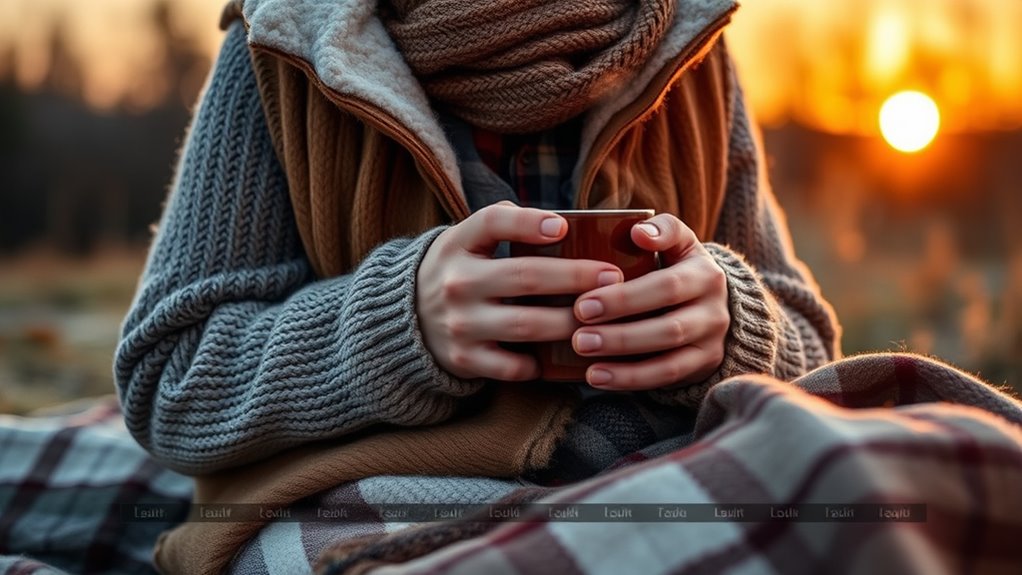

To stay warm after sunset, layer your clothing wisely by starting with a moisture-wicking base layer that pulls sweat away from your skin. Add an insulating mid-layer like fleece or down to trap heat, and top it with a windproof, water-resistant outer layer to block cold air and dampness. Don’t forget accessories like gloves, hats, and thermal socks. Adjust layers as needed to stay comfortable, and discover more tips to optimize your warmth strategy.

Get movie nights delivered free with Prime
- Fast, free delivery on millions of items
- Prime Video, Amazon Music and more included
- Member-only deals all year
Key Takeaways
- Wear a moisture-wicking base layer to keep sweat away from your skin and prevent chill.
- Use an insulating mid-layer like fleece or down to trap heat and create a warm buffer.
- Choose windproof, water-resistant outerwear to block cold air and moisture while remaining breathable.
- Add accessories such as hats, gloves, and thermal socks to reduce heat loss through extremities.
- Adjust your layers based on activity level to maintain warmth without overheating or feeling restricted.

As the sun sets and temperatures drop, staying warm becomes a priority, especially if you’re outdoors or planning an evening activity. Proper layering is essential, and understanding effective insulation techniques can make all the difference. You need to think about how each layer works together to trap heat and block out cold air. The first layer should be close to your skin, made from moisture-wicking materials like synthetic fibers or merino wool. These fabrics pull sweat away from your body, preventing chill caused by dampness. Next, add an insulating layer that traps heat—fleece, down, or synthetic insulations are excellent choices. They create a buffer zone that retains your core warmth even as the temperature drops. The key is to choose insulation techniques that maximize warmth without adding unnecessary bulk, so you can move comfortably during outdoor activities.
Layer effectively with moisture-wicking base, insulating mid-layer, and breathable outerwear for outdoor warmth.
Your outdoor gear selection plays a critical role in maintaining warmth after sunset. Opt for clothing that is windproof and water-resistant, especially if conditions are damp or breezy. A well-fitted jacket with insulation can considerably boost your heat retention, but make sure it doesn’t restrict your movement. Pair this with thermal leggings or insulated pants, which serve as an effective barrier against cold air reaching your legs. Gloves, hats, and scarves are equally important, as a considerable amount of body heat escapes through your head and hands. Look for accessories made from insulating materials that also wick moisture, keeping you dry and warm. Incorporating proper layering techniques is also key to optimizing warmth and mobility.
When it comes to outdoor gear selection, don’t overlook the importance of layering pieces that can be easily added or removed. As your activity level fluctuates, so should your insulation. For instance, if you’re sitting around a campfire, a heavier jacket or vest might be necessary. Conversely, if you’re walking or hiking, lighter layers will help prevent overheating. The right gear also includes footwear—insulated, waterproof boots with thick socks are crucial, especially if you’re on uneven or cold surfaces. Using hand warmers or heated insoles can give you an extra boost of heat, particularly during chilly nights.
Ultimately, staying warm after sunset hinges on a combination of effective insulation techniques and smart outdoor gear selection. By layering properly, choosing gear designed for cold conditions, and adjusting as needed, you’ll keep your core temperature stable and enjoy your time outdoors well into the evening. Proper preparation guarantees you don’t just survive the cold but thrive in it, making your outdoor experience comfortable and enjoyable even after the sun goes down.
moisture-wicking base layer shirt
As an affiliate, we earn on qualifying purchases.
As an affiliate, we earn on qualifying purchases.
Frequently Asked Questions
What Are the Best Fabrics for Evening Layering?
For evening layering, you should choose fabrics with thermal insulation and moisture-wicking properties. Opt for merino wool or fleece, which trap heat and keep you warm without bulk. These fabrics also wick away moisture, preventing chills. Layer a moisture-wicking base layer next to your skin, followed by insulating materials like fleece or wool, and top with a windproof shell if needed. This combination keeps you comfortable and warm after sunset.
How Do I Prevent Overheating During Layered Outdoor Activities?
To prevent overheating during layered outdoor activities, imagine your body turning into a boiling kettle! You need to manage thermal insulation and moisture control carefully. Use breathable fabrics that wick sweat away and allow heat to escape, like merino wool or technical synthetics. Adjust your layers as you go—remove a jacket or unzip a vent when you feel too warm. Staying active and listening to your body’s signals keeps you comfortable and safe.
Can Layering Help Reduce Wind Chill Effectively?
Layering can definitely help reduce wind chill effectively. You should wear windproof jackets to block the wind, and thermal leggings to insulate your legs. These layers create a barrier against the wind and trap body heat, keeping you warmer. Make sure to add a hat and gloves for extra protection. By combining windproof and insulating layers, you’ll stay comfortable even when the wind picks up after sunset.
What Accessories Are Essential for Staying Warm After Sunset?
You’ll feel like you’re battling a winter storm without the right accessories! Grab thermal gloves and an insulated hat to keep your extremities warm and shielded from icy winds. These essentials create a fortress of heat around you, preventing heat loss and keeping you comfortable long after sunset. Don’t underestimate the power of these small but mighty items—they’re your best defense against the biting cold.
How Do I Choose Layers for Different Nighttime Activities?
When choosing layers for different nighttime activities, prioritize thermal insulation to keep warmth in, and moisture wicking to stay dry. For active pursuits like hiking, opt for breathable, moisture-wicking base layers, add insulating mid-layers, and top with a windproof shell. For relaxed evenings, lightweight thermal tops and cozy fleece or down jackets work well. Adjust layers based on activity intensity and weather to stay comfortable and warm all night.
insulated fleece jacket for outdoor
As an affiliate, we earn on qualifying purchases.
As an affiliate, we earn on qualifying purchases.
Conclusion
Staying warm after sunset is simple when you layer wisely. By combining a moisture-wicking base, an insulating middle, and a windproof outer layer, you’ll defy even the coldest nights. Remember, a well-layered outfit can turn a chilly evening into a cozy adventure—almost like wielding a magic shield against the cold. So, don’t underestimate the power of smart layering; it’s your best weapon against slipping into winter’s icy grip. Stay warm, stay confident!
As an affiliate, we earn on qualifying purchases.
As an affiliate, we earn on qualifying purchases.
Fall Picks
fall essentials
As an affiliate, we earn on qualifying purchases.