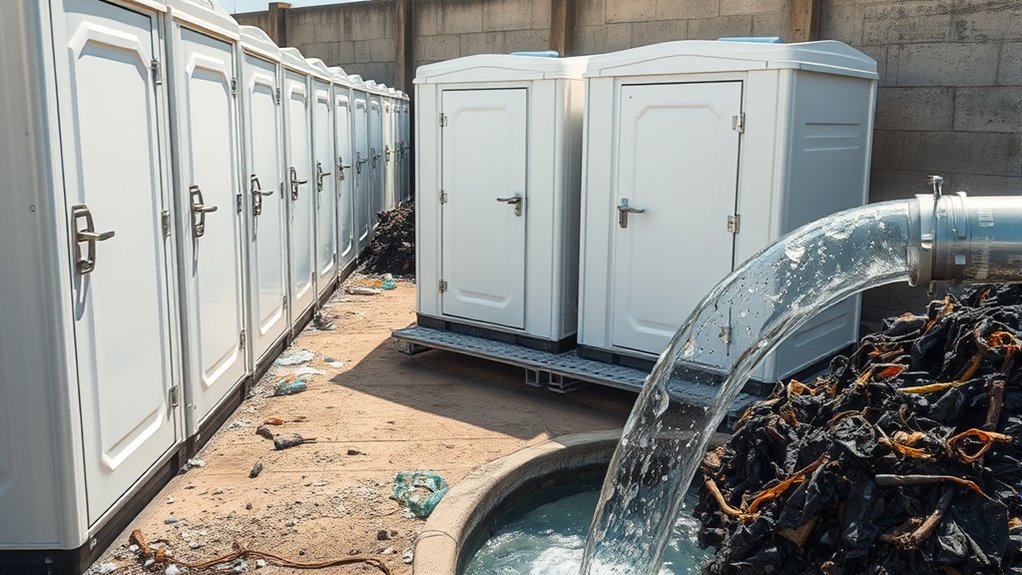

Sanitation logistics involve managing toilets, greywater, and waste to keep your community clean and healthy. Efficient systems depend on proper infrastructure, like sewer lines and waste collection points, combined with effective waste management processes. Accessibility and community engagement ensure everyone benefits, while technology integration helps monitor and optimize operations. When these elements work together seamlessly, they prevent health hazards and environmental damage. Keep exploring to understand how coordinated sanitation strategies make cities safer and more sustainable.
Key Takeaways
- Efficient sanitation logistics involve strategic placement and maintenance of toilets, sewer lines, and waste collection points.
- Proper management of greywater includes treatment and recycling to prevent environmental contamination.
- Waste collection schedules and transportation ensure timely removal and disposal of solid waste.
- Technology integration, like sensors and data analytics, optimizes route planning and system monitoring.
- Community engagement and accessibility initiatives promote proper waste disposal and equitable sanitation services.
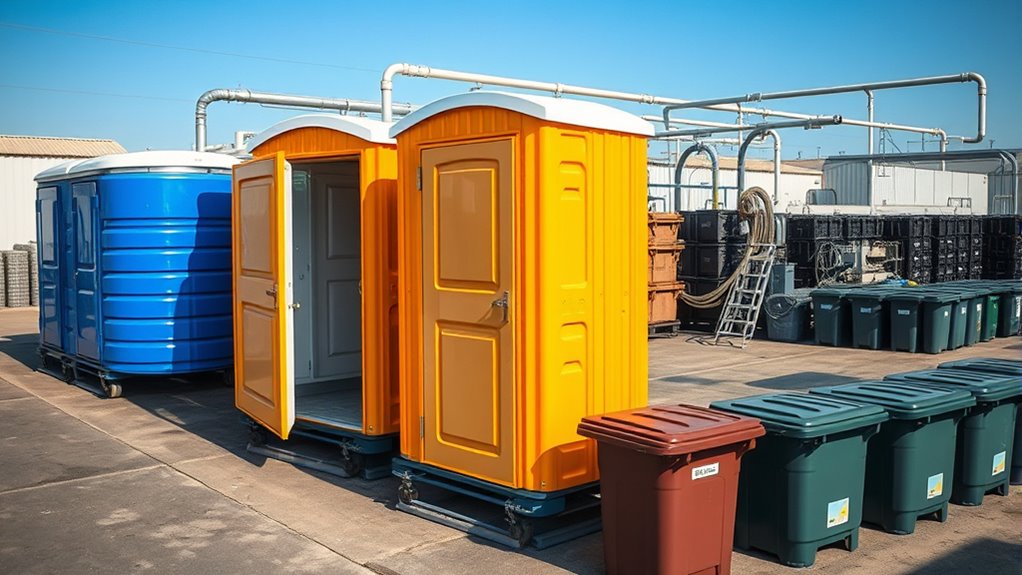
Have you ever wondered how cities manage the complex task of distributing sanitation resources efficiently? It’s a question that touches on the core of urban planning and public health. At the heart of this challenge lies waste management and sanitation infrastructure. These systems are crucial for keeping cities clean, healthy, and functioning smoothly. Without effective waste management, waste can pile up, causing health hazards and environmental damage. Conversely, well-planned sanitation infrastructure ensures that waste is collected, transported, and treated properly, preventing contamination and disease spread.
The first step in managing sanitation logistics involves establishing an extensive network of sanitation infrastructure. This includes everything from public toilets and sewer lines to waste collection points and treatment plants. Your city’s infrastructure must be designed to handle the volume of waste generated daily, which varies depending on population density and urban layout. To do this effectively, city officials rely on data and planning to determine ideal locations for waste collection facilities and sewer connections. A well-maintained infrastructure minimizes blockages, leaks, and overflows, which can cause health risks and environmental pollution.
Waste management plays a central role in this process. It involves more than just collecting waste; it’s about organizing its flow from source to disposal. You need reliable collection schedules, efficient transport vehicles, and designated disposal sites. Proper segregation of waste at the source can make a significant difference, especially when it comes to recyclable materials or hazardous waste. Recycling and composting programs reduce the burden on treatment facilities and help conserve resources. Effective waste management also requires monitoring and adapting to changing city dynamics—populations grow, new neighborhoods develop, and waste volumes fluctuate. Utilizing data-driven approaches can greatly enhance the efficiency of these efforts.
Another critical aspect of sanitation logistics is ensuring accessibility. You want every resident, regardless of where they live, to have access to sanitation services. This means planning routes that reach underserved areas and investing in infrastructure upgrades where needed. It also involves community engagement, educating residents about proper waste disposal practices, and encouraging participation in recycling initiatives.
Finally, integrating technology can vastly improve sanitation logistics. Digital tracking of waste collection trucks, sensor-based monitoring of sewer systems, and data analytics can help predict issues before they become crises. These tools enable city managers to optimize routes, reduce costs, and respond swiftly to sanitation emergencies. All of this hinges on a solid foundation of waste management and sanitation infrastructure, which forms the backbone of any effective city sanitation system. When these elements work together seamlessly, cities can maintain cleanliness, protect public health, and promote sustainable urban living.

Laveo Dry Flush Toilet – Waterless, Portable, Self Contained and Easier to Use than an Incinerating or Composting Toilet. Great for Tiny Homes, Vans, Boats, Camping, RVs and Off Grid, LDPE, White
What's Included – Every Dry Flush Waterless Toilet comes with a Battery and Charger, Cable, 2 Cartridges and…
As an affiliate, we earn on qualifying purchases.
As an affiliate, we earn on qualifying purchases.
Frequently Asked Questions
How Are Sanitation Logistics Managed in Disaster Zones?
In disaster zones, you manage sanitation logistics through emergency response teams that quickly set up sanitation infrastructure like portable toilets and greywater systems. You coordinate with local authorities and aid organizations to guarantee proper waste disposal, preventing disease outbreaks. You also monitor the sanitation facilities regularly, adapt to changing needs, and prioritize safety and hygiene. This proactive approach helps restore sanitation services efficiently, protecting vulnerable populations from health risks.
What Are Innovative Technologies for Greywater Recycling?
Imagine you’re in the 21st century, but using Victorian-era greywater systems. You can now leverage innovative filtration and recycling systems that treat greywater on-site, making it safe for reuse in irrigation or flushing toilets. These advanced technologies use bio-filtration, membrane filters, and UV sterilization to efficiently recycle water, reduce waste, and conserve resources—transforming greywater management into a sustainable, smart solution for disaster zones and beyond.
How Is Waste Transported in Remote Areas?
In remote areas, waste is often transported using portable toilets and specialized waste collection systems. You set up portable toilets at key locations, guaranteeing easy access, then regularly collect the waste with trucks or manual methods suited to the terrain. This approach minimizes environmental impact, keeps the area sanitary, and ensures proper disposal or treatment of the waste, even in challenging, hard-to-reach locations.
What Are Cost-Effective Sanitation Solutions for Low-Income Communities?
You should consider affordable pit latrines and community-led sanitation initiatives for low-income communities. These solutions are cost-effective, easy to implement, and promote local ownership. By involving the community in planning and maintenance, you guarantee the system remains functional and culturally appropriate. This approach reduces costs, improves hygiene, and encourages sustainable sanitation practices, making it a practical choice for those with limited resources.
How Is Waste Treatment Environmentally Sustainable?
You can make waste treatment environmentally sustainable by adopting biodegradable systems that naturally break down waste without harming the environment. Eco-friendly disposal methods, like composting or using natural filters, reduce pollution and conserve resources. By choosing these approaches, you help protect ecosystems, lower carbon footprints, and promote cleaner communities. Implementing biodegradable systems and eco-friendly disposal guarantees waste management supports long-term environmental health and sustainability.

Pure RV Grey Water Tank Treatment 32oz – RV Grey Tank Cleaner & Odor Eliminator | Enzyme Formula Breaks Down Grease, Soap & Food Waste | Septic Safe for Camper, Boat & Marine
ELIMINATES GREY TANK ODOR & SOAP BUILDUP – Pure RV enzymatic formula breaks down grease, soap scum, food…
As an affiliate, we earn on qualifying purchases.
As an affiliate, we earn on qualifying purchases.
Conclusion
You now understand the importance of sanitation logistics—how toilets, greywater, and waste management work together to protect health, conserve resources, and support communities. You see their roles in creating safe environments, reducing pollution, and promoting dignity. You recognize that effective sanitation isn’t just about infrastructure; it’s about planning, innovation, and commitment. By prioritizing these elements, you can help build healthier, cleaner, and more sustainable spaces for everyone.
Garbage Truck Driving Simulator Games – Waste Collection Adventure
Realistic Driving
As an affiliate, we earn on qualifying purchases.
As an affiliate, we earn on qualifying purchases.

Kcapyn Sewer Camera 100FT/30M Pipe Inspection Borescope Endoscope Camera with Light 6 LEDs 5" IPS Screen 17MM Plumbing Snake 5000 Mah Battery,1080P High-Definition Industrial Sewer Camera
【Real 1080P High Definition Waterproof Lens】 Drain camera Equipped with a 1080P full HD camera and high brightness…
As an affiliate, we earn on qualifying purchases.
As an affiliate, we earn on qualifying purchases.