
To build a stage from blueprint to bass drop, start by developing a detailed plan that outlines all measurements and materials needed. Prepare the site by clearing debris and leveling the ground. Construct a solid foundation using reinforced materials, then assemble the main structure carefully according to your blueprint. Add safety features, inspect for stability, and reinforce weak points during construction. If you want to guarantee your stage is safe, durable, and ready for any performance, keep exploring the process step-by-step.
Key Takeaways
- Develop a detailed blueprint to guide measurements, materials, and structural elements throughout the construction process.
- Prepare and level the site, ensuring a stable foundation suitable for indoor or outdoor conditions.
- Construct a durable foundation with reinforced framing, securely anchored to support the entire stage structure.
- Erect the main structural components, such as trusses and decking, following the blueprint with precision and safety.
- Incorporate safety features, conduct inspections, and reinforce as needed to ensure a stable, secure stage ready for performances.
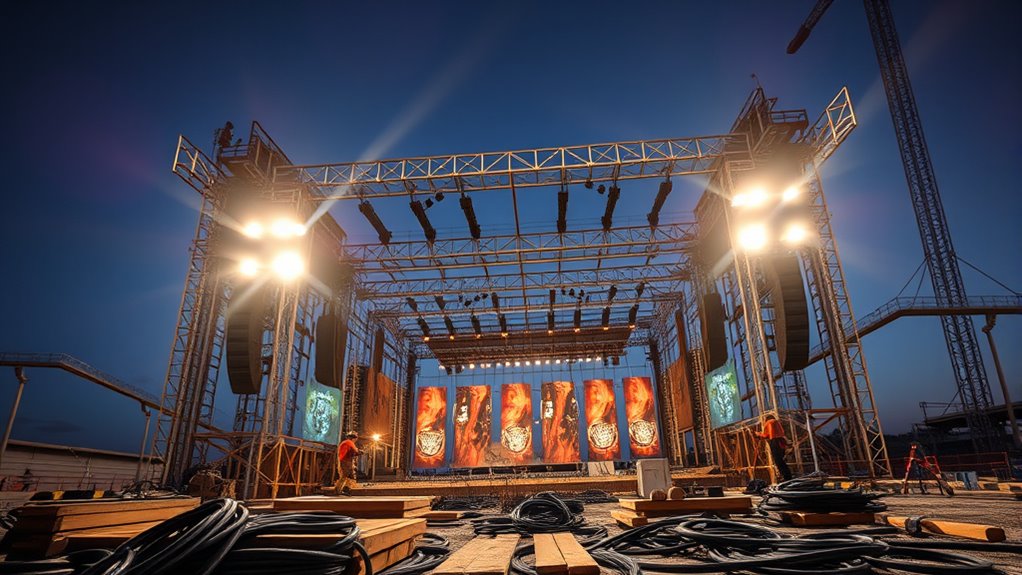
Have you ever wondered what it takes to build a sturdy, safe stage for a performance? It all begins with careful planning. You need a detailed blueprint that outlines every measurement, material, and structural element. Think of the blueprint as your roadmap; it guides you through each step, guaranteeing nothing gets overlooked. Before you start assembling, you should verify the design’s stability and load capacity, considering the weight of performers, equipment, and special effects. Once your plans are solidified, you can start gathering materials—steel, plywood, trusses, bolts, and more. Quality matters here; using durable, high-grade materials guarantees your stage can handle the demands of the show and last through multiple performances.
Next, you’ll want to prepare your site. Clear the area where the stage will stand, removing debris and leveling the ground if necessary. Proper groundwork is vital for stability. If you’re working indoors, guarantee the flooring can support the weight you plan to put on the structure. For outdoor setups, consider weather conditions—moisture, wind, and rain—that might affect your build. Once the site is ready, you can begin assembling the foundation. Typically, this involves constructing a robust frame or platform, often using steel or reinforced wood, that will serve as the base. Secure the foundation tightly to prevent shifting or collapsing, especially if the stage will be used for an extended period or hold heavy equipment.
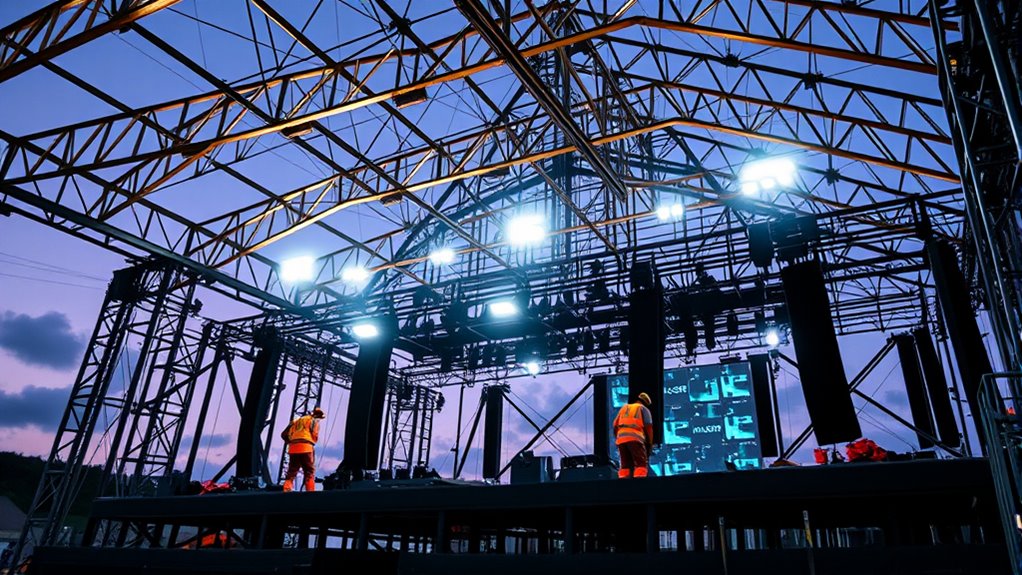
From there, it’s about erecting the main structure—trusses, supports, and decking—following your blueprint closely. Use cranes or lifts to position heavy components safely. Bolting sections together with precision guarantees the entire frame is solid and capable of supporting loads. As you build upward, double-check measurements and alignments. Safety is paramount, so don’t rush this process. Once the main framework is in place, you can add flooring, railings, and other safety features like guardrails or netting. These additions protect performers and crew, giving everyone peace of mind.
Throughout this process, inspections are essential. Regularly review the structure for stability and integrity, tightening bolts and reinforcing weak spots as needed. Keep safety gear on hand—helmets, gloves, harnesses—especially when working at heights or with heavy materials. The goal is to create a stage that’s not only functional and visually appealing but also safe and reliable under any performance conditions. Building a stage from blueprint to bass drop involves precision, patience, and a focus on safety, but when done right, it becomes the impressive centerpiece for any event or show. Additionally, understanding the load capacity of your structure is crucial to prevent accidents and ensure longevity.
Frequently Asked Questions
How Do I Choose the Right Location for My Stage?
You should pick a location that’s accessible, safe, and suits your event size. Consider proximity to transportation and parking, ensuring guests can arrive easily. Check the space’s acoustics and power supply, so sound quality and equipment work smoothly. Think about noise restrictions and neighborhood impact. Ultimately, choose a spot that aligns with your vision, budget, and audience needs, making the event enjoyable and stress-free for everyone involved.
What Safety Precautions Are Essential During Stage Construction?
You must prioritize safety during stage construction by wearing protective gear like helmets, gloves, and goggles. Keep the area clear of unnecessary personnel, and make sure all tools and materials are secure. Always double-check structural supports before proceeding, and never rush the process. Suspense builds as you realize that overlooking even one safety measure could lead to disaster. Stay vigilant, follow safety protocols, and you’ll build a stage that’s both impressive and safe.
How Can I Incorporate Lighting Effects Effectively?
You can incorporate lighting effects effectively by planning your design early, matching lights to your theme, and using layered lighting for depth. Use software to choreograph your effects, ensuring synchronization with music and performance cues. Experiment with color, intensity, and movement to create dynamic visuals, and always test your setup beforehand. Remember to prioritize safety by securing all equipment properly and avoiding overloading circuits for a smooth, impactful show.
What Permits Are Needed for Outdoor Stage Setups?
You need to obtain permits from your local government or city council to set up an outdoor stage. These might include building permits, event permits, and special use permits, depending on your location and event size. Don’t forget to check for noise ordinances and safety regulations. Securing these permits guarantees your event runs smoothly without facing what could feel like insurmountable legal hurdles. Always apply early to avoid last-minute surprises.
How Do I Ensure Accessibility for All Performers and Audience Members?
You guarantee accessibility by choosing a flat, stable surface for the stage and providing ramps alongside stairs for easy access. Make sure pathways are wide enough for wheelchairs and mobility devices. Use clear signage, ample lighting, and designated seating areas for those with special needs. Communicate with performers and audience members beforehand to address specific requirements, and regularly check that accessible features are well-maintained throughout the event.
Conclusion
Now that you’ve learned the key steps, imagine designing a stage for a local music festival. Picture yourself creating a sturdy blueprint, selecting vibrant lighting, and adding those perfect sound systems. When everything comes together, the crowd cheers as the bass drops perfectly in sync. Building a stage is about turning your vision into reality—so grab your tools and start crafting your own unforgettable space where music comes alive!