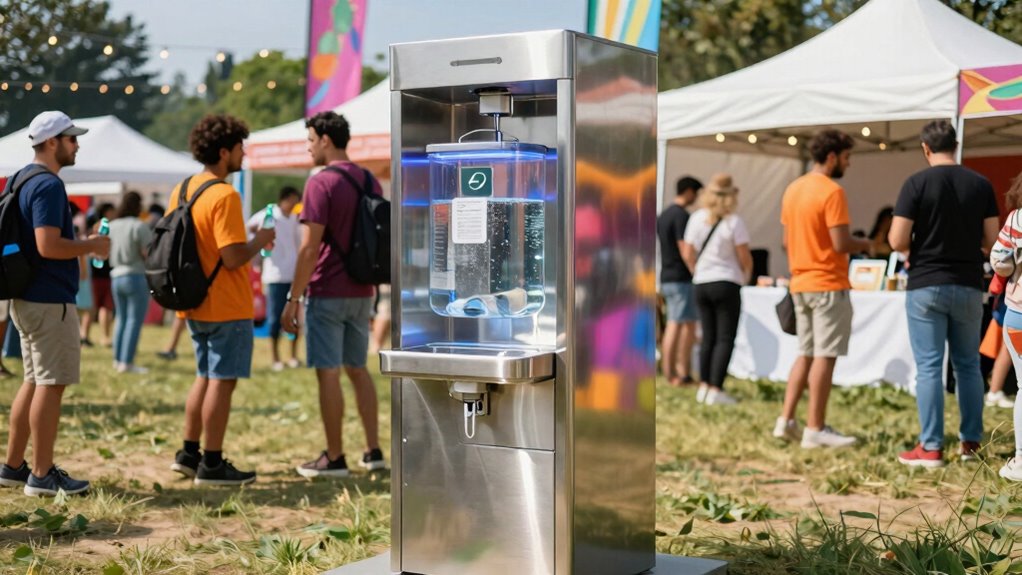

You plan festival water refill stations by strategically placing them in high-traffic areas like stages, food courts, and rest zones, ensuring easy access for everyone. You consider flow to prevent crowding and make stations user-friendly, including features like touchless faucets for hygiene. Using eco-friendly, durable materials, you prioritize sustainability and accessibility, ensuring stations are easy to maintain. If you keep exploring, you’ll discover even more ways to create an inclusive, environmentally responsible hydration experience.
Listen free for 30 days with Audible
Thousands of audiobooks and originals — cancel anytime.
As an affiliate, we earn on qualifying purchases.
Key Takeaways
- Strategic placement near high-traffic, accessible areas to ensure easy attendee access and smooth foot traffic flow.
- Use of sustainable, durable fixtures made from eco-friendly materials that are easy to clean and refill.
- Design considerations for inclusivity, including accessible heights, touchless features, and clear signage for diverse needs.
- Regular maintenance and monitoring to ensure hygiene, functionality, and gather user feedback for improvements.
- Overall focus on reducing plastic waste, promoting responsible hydration, and enhancing attendee experience through thoughtful planning.
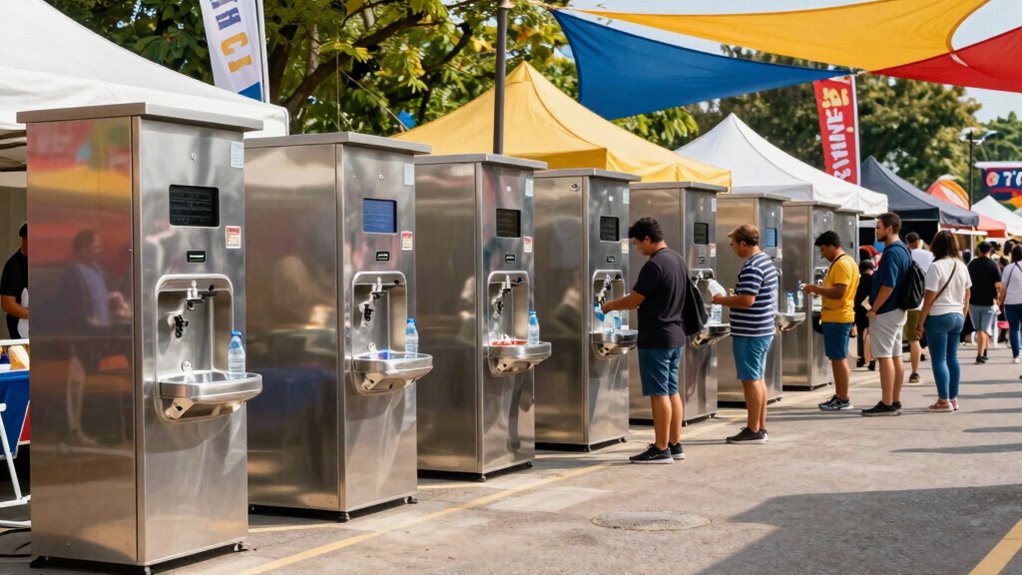
Another critical aspect to address is location accessibility. You need to strategically place refill stations throughout the festival grounds, making sure they are easily reachable from key areas like main stages, food courts, restrooms, and camping zones. When you plan their placement, think about foot traffic flow and convenience; you want to avoid bottlenecks or areas where attendees might struggle to find the stations. Accessibility also means guaranteeing that stations are usable by everyone, including those with mobility challenges. Installing stations at a comfortable height and providing clear signage helps make sure all attendees can benefit from the refill stations without difficulty.
To effectively plan for sustainable materials and accessibility, you should conduct a site assessment early in the process. Walk through the festival grounds and identify high-traffic zones where refill stations will have the most impact. You might also think about partnering with vendors who specialize in eco-friendly fixtures or consulting with accessibility experts to ensure your locations meet all needs. Once you’ve identified ideal spots, you can determine the number of stations required to prevent long lines and guarantee smooth hydration access. Incorporating sustainable materials into your planning ensures the fixtures are environmentally friendly and durable, reducing waste and maintenance needs. Additionally, considering visitor behavior during the planning phase can help optimize station placement and usage, while also encouraging smart infrastructure to support efficient water distribution. Conducting ongoing monitoring and feedback can further improve station design and placement over time.
In addition to placement, you need to think about the design and maintenance of these stations. Using sustainable materials means choosing fixtures that are easy to clean and refill, reducing waste and downtime. Consider features like touchless faucets or foot pedals to improve hygiene and accessibility. Regular maintenance is also key to keeping stations functional, clean, and well-stocked, which encourages attendees to use them consistently. By planning carefully around sustainable materials and accessibility, you create a seamless experience that promotes environmental responsibility and attendee comfort. Incorporating innovative designs can also enhance user experience and encourage more frequent use.
Ultimately, your goal is to create refill stations that are eco-friendly, conveniently located, and accessible to all. This thoughtful approach not only supports sustainability but also enhances the overall festival experience, encouraging responsible hydration practices and reducing single-use plastic waste. By focusing on these core elements, you help foster an event that’s enjoyable, inclusive, and environmentally conscious.
As an affiliate, we earn on qualifying purchases.
Frequently Asked Questions
How Is the Environmental Impact of Refill Stations Assessed?
You assess the environmental impact of refill stations by focusing on water conservation and community engagement. You track how much plastic waste is reduced and monitor water usage to guarantee efficiency. Engaging the community helps gather feedback and encourages responsible usage. By analyzing these aspects, you determine if refill stations effectively minimize environmental harm, promote sustainability, and foster a culture of conservation among festival attendees.
What Safety Measures Are Implemented for Water Quality?
You can trust that safety measures are in place to protect water quality at refill stations. Water filtration systems are regularly maintained to guarantee clean, fresh water, while contamination prevention protocols are strictly followed. Staff monitor for any signs of pollution, and testing is frequent to catch issues early. These measures work together to keep your hydration safe, so you can enjoy the festival without worry.
How Are Refill Stations Funded and Maintained?
You’ll find that refill stations are funded through a mix of community engagement efforts and sponsorships from local businesses, which helps cover costs. Maintenance involves regular checks and technological innovations, like sensor-based systems, to guarantee cleanliness and functionality. Your participation in community initiatives encourages ongoing support, and these technological advances make it easier to keep refill stations safe, efficient, and accessible for everyone during the festival.
What Criteria Determine Refill Station Locations?
Ever wonder what makes a perfect spot for hydration stations? You focus on areas with high foot traffic, accessibility, and safety. Community outreach helps identify where people gather and need hydration most. Planners consider convenience, visibility, and environmental impact to guarantee stations serve attendees effectively. By combining these factors, they create accessible, well-placed hydration stations that promote health, reduce waste, and enhance the festival experience for everyone involved.
How Do Refill Stations Accommodate Large Crowds?
You’ll find refill stations designed to handle large crowds by strategically placing multiple units throughout the festival, ensuring easy access. Clear refill station signage guides you quickly, helping with festival attendee hydration needs. These stations are stocked frequently, minimizing wait times. As a participant, you benefit from the well-planned layout, making it simple to stay hydrated without long lines, even during peak hours.
eco-friendly festival water station
As an affiliate, we earn on qualifying purchases.
As an affiliate, we earn on qualifying purchases.
Conclusion
So, you see, planning festival water refill stations isn’t just about convenience; it’s about saving the planet one sip at a time—because who needs plastic bottles clogging up the landfill when you can politely remind everyone to refill and reuse? Next time you’re at a festival, just imagine how impressed the environment will be with your eco-friendly choices. After all, saving the Earth is the real festival spirit—hydrated, waste-free, and oh-so-sustainable.
As an affiliate, we earn on qualifying purchases.
As an affiliate, we earn on qualifying purchases.
Fall Picks
fall essentials
As an affiliate, we earn on qualifying purchases.