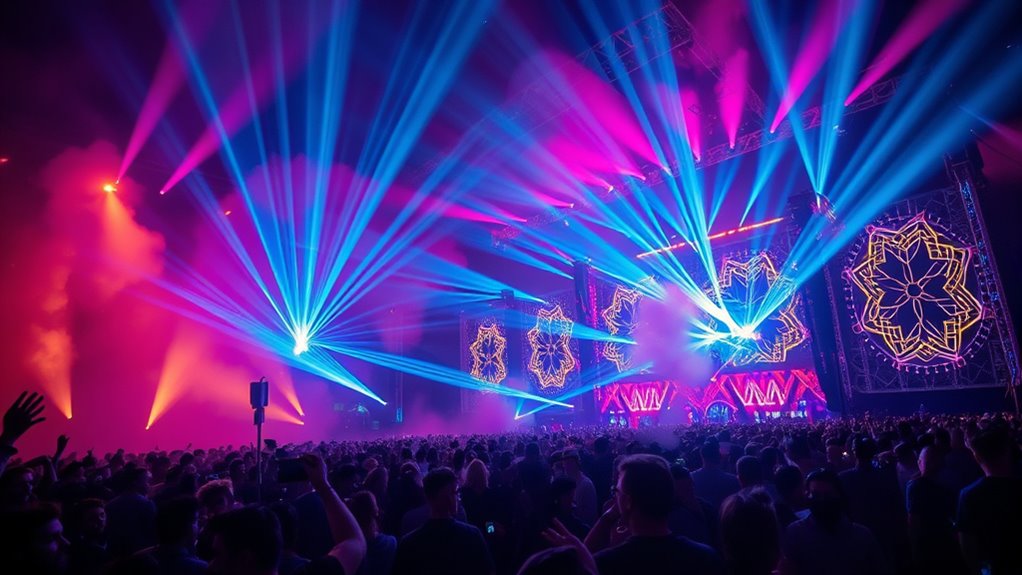
When planning festival lighting, use previsualization tools to map out fixture placement, colors, and layered effects. This helps you understand how different elements interact and permits adjustments before the event. Strategic positioning of lights highlights key areas and creates ambiance, while color choices set the mood. From concept to showtime, careful planning ensures your lighting design enhances the atmosphere seamlessly. Keep exploring to discover how to bring your creative vision vividly to life.

Get movie nights delivered free with Prime
- Fast, free delivery on millions of items
- Prime Video, Amazon Music and more included
- Member-only deals all year
Key Takeaways
- Utilize lighting software for previsualization to plan fixture placement, color schemes, and effects before the event.
- Design a cohesive color palette aligned with the festival theme to enhance atmosphere and visual impact.
- Strategically position fixtures to create layered, dynamic effects that adapt from energetic to relaxed moods.
- Focus on key areas like stages and entryways to maximize audience engagement and spatial flow.
- Conduct thorough planning and adjustments in previsualization to ensure smooth execution and immersive experiences.
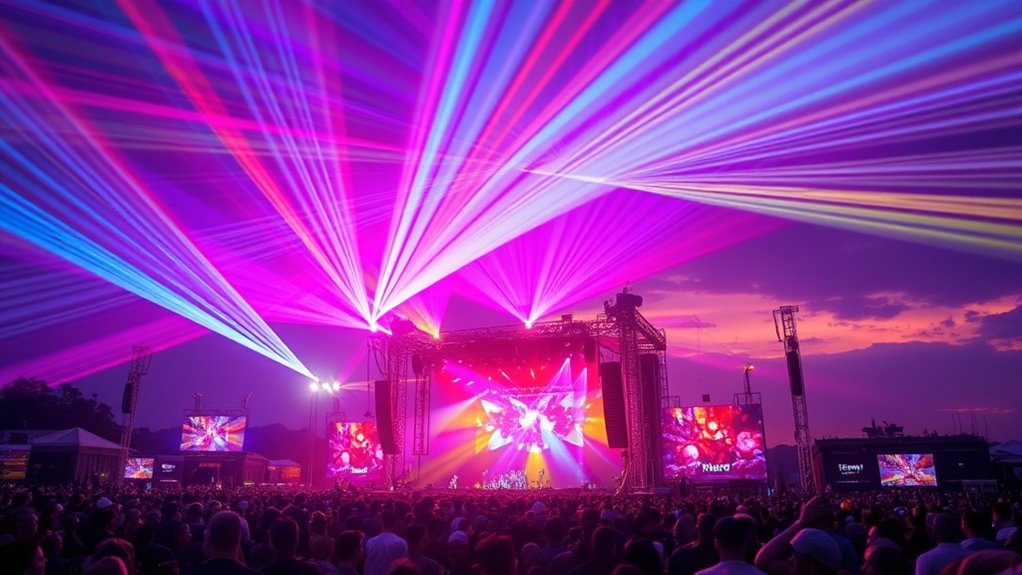
Lighting plays a crucial role in shaping the atmosphere and experience at festivals. When you’re designing the lighting, you want to think about how the color palette and fixture placement work together to create a cohesive environment. The color palette sets the mood, whether it’s vibrant and energetic or soft and intimate. You’ll choose colors that complement the overall theme and enhance the visual impact, often mixing bold hues with subtle shades to keep the audience engaged. Fixture placement is equally critical; it determines how light interacts with the space, performers, and audience. Carefully planning where you position lights ensures that every corner of the festival feels intentional and immersive.
Effective festival lighting combines thoughtful fixture placement with a vibrant color palette to craft immersive atmospheres.
Start by visualizing the festival’s vibe. If you’re aiming for a lively, party atmosphere, bright, saturated colors like reds, blues, and greens will energize the audience. For a more relaxed, contemplative event, softer pastels or warm tones might be better. Once you settle on your color palette, you can begin considering fixture placement. Think about focal points—stage areas, entryways, and main gathering spots—and plan your lighting around them. Placing fixtures strategically ensures that these key areas are well-lit and visually striking. Use a combination of overhead lights, ground-based fixtures, and moving heads to add depth and dynamism to the scene.
You should also consider how the fixture placement influences the flow of movement. For example, uplights at ground level can create a sense of grandeur or mystery, while spotlights on performers can draw attention directly to them. When positioning fixtures, keep in mind sightlines and avoid cluttering the space with too many lights that can cause glare or distraction. Balancing fixture placement with the color palette allows you to craft layered lighting effects that can change throughout the event, shifting from energetic to calm or vice versa. Additionally, understanding the importance of lighting design principles ensures that your setup is both effective and aesthetically pleasing.
In the previsualization phase, you’ll experiment with different arrangements and colors using lighting software. This helps you see how fixture placement and color choices interact, giving you a clearer picture of the final look. As you move toward the actual event, adjustments may be necessary, but having a detailed plan ensures smooth execution. Ultimately, thoughtful fixture placement combined with a carefully selected color palette transforms a festival from just an event into an immersive experience that captivates attendees from start to finish.
Popular right now

TCL 85 Designer Series QD-Mini LED TV (Model 85A400U) with Google Smart TV

TCL 85-Inch QM6K Series QLED Mini LED 4K HDR Smart Google TV

Hisense 85 U6 Pro Series Mini-LED ULED 4K UHD HDR Gaming AI Smart Fire TV (85U6SF Pro)
As an affiliate, we earn on qualifying purchases.
Frequently Asked Questions
How Do Lighting Designers Collaborate With Other Festival Departments?
You collaborate with other festival departments through ongoing, open communication, engaging in creative brainstorming sessions to align your lighting design with overall event goals. During collaborative planning, you share your ideas and listen to feedback, ensuring everyone’s vision fits seamlessly. This teamwork helps you adapt lighting cues, coordinate schedules, and troubleshoot issues quickly, resulting in a cohesive festival experience where lighting enhances the performances and atmosphere effectively.
What Are the Latest Technological Advancements in Festival Lighting?
You’ll find that the latest festival lighting advancements include LED integration, which offers vibrant, energy-efficient visuals, and drone displays that create dynamic, mesmerizing aerial effects. These technologies let you push creative boundaries, ensuring your lighting design captivates audiences. By leveraging LED systems and drone displays, you can achieve synchronized, immersive experiences that elevate the overall festival atmosphere, making your lighting setup both innovative and unforgettable.
How Do Weather Conditions Impact Outdoor Lighting Setups?
Weather challenges can turn your outdoor lighting setup into a relentless battle, with rain, wind, and extreme temperatures threatening to wreck your equipment. You must guarantee equipment resilience by using waterproof fixtures, sturdy mounts, and weatherproof cables. Strong winds can shake your lights loose, while moisture can cause short circuits. Preparing for these conditions keeps your lighting intact, ensuring your festival shines brightly regardless of nature’s tantrums.
What Safety Protocols Are Essential During Lighting Installation?
You should follow rigid safety protocols during lighting installation by conducting thorough equipment checks before starting. Always wear appropriate personal protective gear and guarantee the power is off when handling electrical components. Use secure rigging techniques and double-check all fixtures and cables to prevent accidents. Keep clear communication with your team, and never rush the process. These steps safeguard everyone involved and ensure a smooth, safe setup.
How Is Audience Engagement Measured Through Lighting Design?
You measure audience engagement through lighting design by observing audience interaction and emotional impact. When your lighting evokes strong reactions or encourages movement and participation, it indicates successful engagement. You can also use surveys, social media feedback, and real-time reactions to gauge how well your lighting creates a memorable experience. By analyzing these responses, you refine your design to deepen emotional impact and foster a stronger connection with your audience.
Conclusion
So, after all the planning and precision, it’s funny how festival lighting often steals the show unexpectedly. Just when you think you’ve nailed every cue, a spontaneous burst of sunlight or a last-minute crowd surge can turn your masterpiece into chaos. But that’s the magic, isn’t it? Sometimes, the most unpredictable moments create the most unforgettable memories. In the end, your perfect lighting might just be the one you never saw coming.