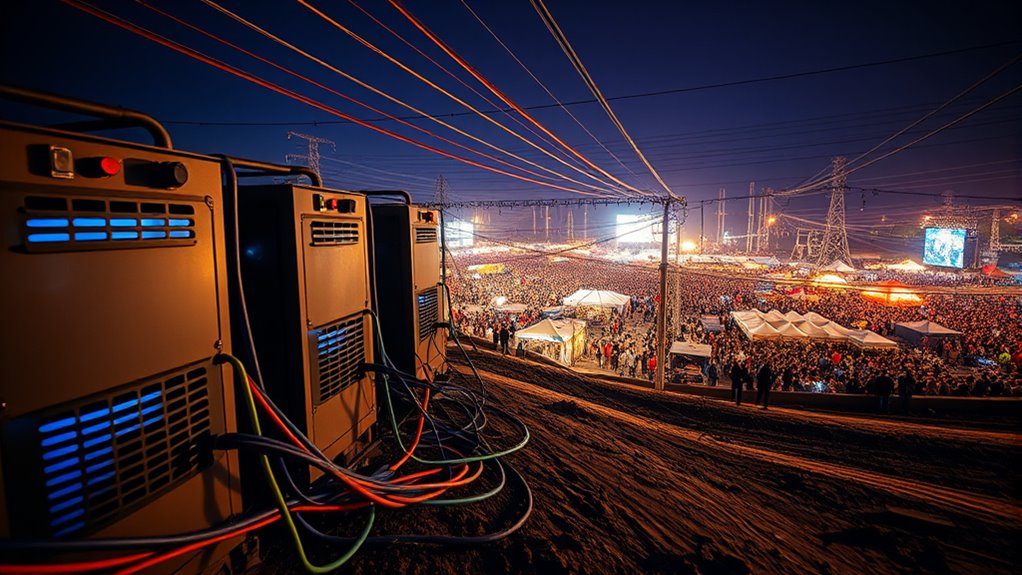

At a festival, your power distribution system combines generators, grids, and loads to deliver reliable electricity. You should balance the load across circuits, guarantee generator capacity matches demand, and integrate renewable sources like solar or wind to reduce emissions. Proper placement of equipment and real-time monitoring help prevent overloads and outages. Want to discover how to optimize these elements for a smooth, sustainable event? Keep exploring for expert insights.
Key Takeaways
- Effective power distribution ensures reliable operation of all festival equipment and prevents outages.
- Load balancing optimizes generator and grid capacity, reducing overload risks and prolonging equipment lifespan.
- Integrating renewable energy sources like solar and wind enhances sustainability and reduces reliance on fossil fuels.
- Proper generator placement and capacity planning ensure efficient, safe power delivery with minimal transmission losses.
- Centralized monitoring and control systems facilitate real-time load management and seamless power integration.

Festivals rely heavily on a well-planned power distribution system to keep everything running smoothly. A reliable setup ensures that stages, lighting, sound systems, food vendors, and security all have the electricity they need without interruption. To achieve this, you need to understand how to balance power loads and incorporate renewable sources effectively. Load balancing is essential because it prevents overloads that could cause outages or damage equipment. When you distribute power efficiently, you avoid stressing individual circuits and ensure a steady supply across the entire festival site.
In recent years, integrating renewable sources into festival power systems has gained popularity. Solar panels and portable wind turbines can supplement traditional generators, reducing reliance on fossil fuels and lowering carbon footprints. When you incorporate renewable sources, you create a more sustainable operation. However, these sources can be intermittent, so your power distribution system must be adaptable. Properly managing how renewable energy feeds into your grid requires careful planning to ensure a stable supply, especially during peak usage times. This often involves using energy storage solutions, such as batteries, to store excess renewable energy for later use.
Load balancing comes into play here, as it’s your tool for ensuring that all parts of the festival receive consistent power without overloading any single source. You might set up a central control system that monitors power consumption across different zones, automatically shifting loads to less busy circuits or renewable sources when available. This dynamic approach helps prevent blackouts and equipment failures, which can ruin the event for attendees and vendors alike. Proper load management is crucial for maintaining a reliable and efficient power system during large-scale events.
You also need to contemplate the placement and capacity of your generators. These backup power sources should be capable of handling the maximum expected load, but it’s equally important to coordinate their output with renewable contributions. When you effectively balance the load, you minimize fuel consumption, reduce emissions, and improve overall efficiency. This not only makes your festival more environmentally friendly but also cost-effective in the long run.
Frequently Asked Questions
How Do Festivals Ensure Backup Power During Outages?
You guarantee backup power at festivals by implementing power redundancy, which involves having multiple backup generators ready. Regular generator maintenance keeps them reliable, so they can quickly take over if the main power source fails. This proactive approach minimizes outages and maintains a seamless experience for attendees. You coordinate with technicians to monitor the systems constantly, ensuring backup generators are always ready to activate when needed, preventing disruptions.
What Are the Environmental Impacts of Festival Generators?
Festival generators can cause noise pollution, disturbing nearby residents and wildlife. They also consume significant amounts of fuel, releasing greenhouse gases that contribute to air pollution and climate change. By relying heavily on these generators, you increase environmental impacts, including emissions and noise. To reduce these effects, organizers should consider cleaner energy options like solar power or implement noise-reduction measures to lessen the environmental footprint of festival power needs.
How Is Power Load Balanced Across Large Festival Sites?
You manage power load balancing by carefully planning festival power management, ensuring generators and grids are synchronized to handle peak demands. You monitor energy consumption in real-time, adjusting loads dynamically to prevent overloads and outages. Using advanced distribution systems, you distribute power efficiently across the site, prioritizing critical areas. This proactive approach keeps the festival running smoothly, maintaining safety and comfort for attendees while optimizing resource use.
What Safety Protocols Are in Place for High-Voltage Equipment?
You must follow strict safety protocols for high-voltage equipment, including grounding standards to prevent electrical shocks and guarantee safe operation. Insulation requirements are also critical, as they protect personnel from accidental contact and equipment from damage. Regular inspections, proper signage, and trained personnel are essential. Always ensure equipment is correctly maintained and compliant with safety regulations to minimize risks and maximize safety at festival sites.
How Do Organizers Coordinate With Local Utility Companies?
You coordinate with local utility companies through utility negotiations to guarantee reliable power supply. During infrastructure planning, you discuss load requirements, backup options, and safety measures. You work closely with utility reps to align on connection points, permits, and outage schedules, preventing disruptions. This collaboration ensures your festival’s power needs are met safely and efficiently, minimizing risks and maintaining a seamless experience for attendees and staff alike.
Conclusion
As you navigate the vibrant pulse of a festival, remember that behind the scenes, power flows like an unseen river fueling every beat and light. Generators, grids, and loads work together like a well-orchestrated symphony, keeping the energy alive and your experience shining bright. Respect this hidden web of electricity, for it’s the silent hero turning chaos into harmony. Stay mindful, and let the power keep your festival memories alive long after the last song fades.