In weather operations, you monitor atmospheric conditions using advanced sensors, satellites, and radar to gather real-time data on wind, precipitation, and temperature. You set clear thresholds based on safety margins to trigger operational decisions, ensuring safety and efficiency. When conditions reach these limits, you make swift calls—alerting teams, adjusting flights, or activating protocols—to prevent accidents. To master this process and enhance your understanding, keep exploring how monitoring, thresholds, and decision-making work together seamlessly.

Get movie nights delivered free — and shop member deals
- Fast, free delivery on millions of items
- Access to Prime Big Deal Days deals on October 6–7
- Prime Video, Amazon Music and more included
Key Takeaways
- Utilize advanced sensors, satellites, and radar for real-time atmospheric data collection and monitoring.
- Establish clear weather parameter thresholds based on historical data and safety margins to trigger operational decisions.
- Ensure coordinated communication among meteorologists, command centers, and field personnel for timely decision-making.
- Interpret monitoring data accurately, considering local climate nuances to avoid false alarms and ensure safety.
- Implement swift, decisive actions such as warnings or schedule adjustments when thresholds are exceeded to maintain safety.
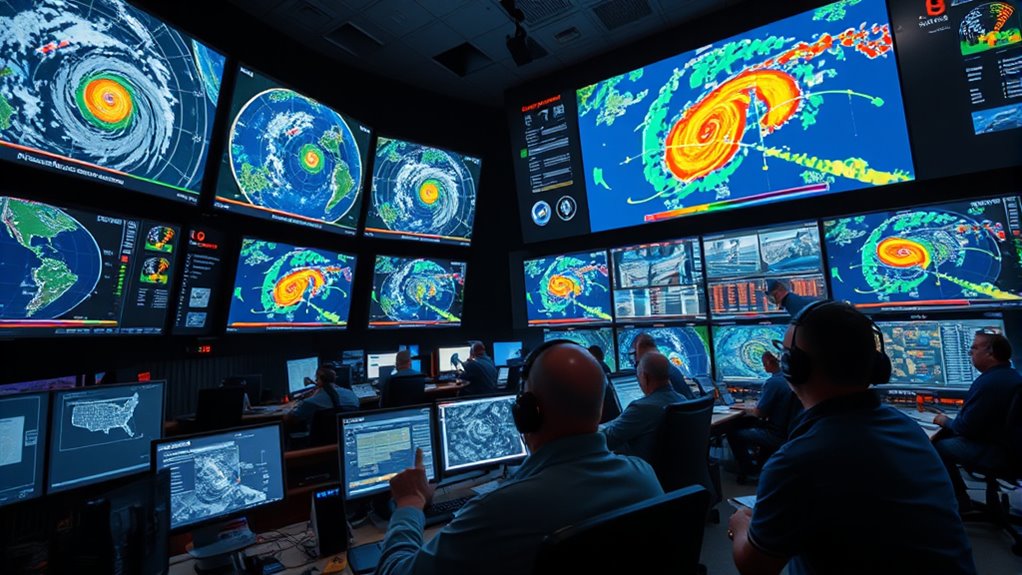
Have you ever wondered how airlines and military missions stay safe despite unpredictable weather? The answer lies in meticulous weather operations that focus on monitoring conditions, understanding thresholds, and making timely calls. At the heart of these efforts is climate adaptation, which involves adjusting procedures and infrastructure to cope with changing weather patterns. Whether it’s shifting flight routes or modifying training protocols, you need to stay ahead of climate trends to guarantee safety and efficiency. Emergency preparedness also plays a crucial role; it means having plans, resources, and communication channels ready to respond swiftly when weather suddenly turns hazardous. By integrating climate adaptation and emergency preparedness into daily operations, you create a resilient system that can handle even the most unpredictable conditions.
Monitoring is the foundation of effective weather operations. Advanced sensors, satellites, and radar systems constantly gather data on atmospheric conditions, wind patterns, precipitation, and temperature. You need real-time information to make informed decisions. This continuous surveillance helps identify early signs of severe weather, allowing you to act proactively rather than reactively. The key is to interpret data accurately and to understand local climate nuances—what might be normal weather in one region could be a warning sign elsewhere. This vigilance is essential for both aviation and military activities, where even a small change in weather can have significant consequences. Incorporating insights from sound healing science can also promote mental clarity among personnel involved in decision-making, enhancing overall response effectiveness.
Once you have reliable data, establishing thresholds becomes critical. These are predefined limits that determine when operations should be altered or halted. For instance, a certain wind speed or storm intensity might trigger a decision to delay takeoff, reroute aircraft, or suspend training exercises. Setting these thresholds requires careful analysis of historical weather patterns, safety margins, and operational capabilities. They act as clear markers that help you avoid ambiguous situations, ensuring everyone knows when to hold or proceed. In this way, thresholds serve as a safety net, minimizing risk and protecting lives.
Making the right call when thresholds are reached is perhaps the most vital aspect of weather operations. This process involves coordination among meteorologists, command centers, and field personnel. Clear communication ensures that everyone understands the current situation and the rationale behind decisions. Your readiness to act swiftly, whether by issuing warnings, adjusting schedules, or activating emergency protocols, can prevent accidents and save lives. Ultimately, weather operations are about balancing safety with operational needs, and that balance hinges on vigilant monitoring, well-defined thresholds, and decisive actions. By integrating climate adaptation strategies and robust emergency preparedness, you create a resilient system capable of steering through the unpredictable nature of weather with confidence.
advanced weather sensors for monitoring
As an affiliate, we earn on qualifying purchases.
As an affiliate, we earn on qualifying purchases.
Frequently Asked Questions
How Accurate Are Weather Forecasts for Operational Decisions?
Forecast accuracy greatly influences your operational decisions, providing timely, reliable information. While short-term forecasts tend to be quite accurate, long-term predictions can vary, especially with rapidly changing weather patterns. You should always consider the forecast’s confidence level and stay updated with real-time data. This way, you can make informed decisions, minimize risks, and optimize safety and efficiency based on the most current weather insights available.
What Technologies Are Used for Real-Time Weather Monitoring?
Did you know that Doppler radar can detect precipitation movements with 95% accuracy? You rely on satellite imagery and Doppler radar for real-time weather monitoring. Satellite imagery provides detailed views of cloud formations, while Doppler radar tracks storm intensity and movement. These technologies enable you to make quick, informed decisions during weather events, ensuring safety and operational efficiency. Together, they form the backbone of effective weather monitoring systems.
How Are Weather Thresholds Determined for Different Operations?
You set weather thresholds based on operational criteria that match your specific needs. To do this, you analyze historical data, consider safety margins, and consult industry standards. Threshold setting involves defining critical values for weather conditions, like wind speed or visibility, which trigger alerts or actions. By tailoring these thresholds, you guarantee timely responses, minimizing risks and optimizing safety across various operations.
Who Makes the Final Call During Severe Weather Alerts?
During severe weather alerts, you make the final call, guided by clear decision-making procedures. You rely on inter-agency coordination, ensuring all relevant parties share information and expertise. This collaborative approach helps you assess risks, evaluate thresholds, and determine the best action swiftly. Your role is crucial in ensuring safety and clarity, prioritizing precise, prompt decisions that protect lives and property amid unpredictable weather conditions.
How Do Weather Operations Adapt to Climate Change?
You adapt to climate change by enhancing resilience planning and implementing climate adaptation strategies. You review and update weather thresholds regularly, incorporate new climate data, and improve forecasting tools. You also train staff on climate impacts and emergency response. By proactively adjusting operations and infrastructure, you guarantee your weather operations remain effective, safeguarding communities and assets against increasingly unpredictable weather patterns caused by climate change.
As an affiliate, we earn on qualifying purchases.
Conclusion
By mastering weather monitoring, thresholds, and calls, you become the guardian of safe operations. Think of it as steering a ship through shifting seas—your vigilance guides everyone to calmer waters. Remember, the right decisions at the right moments can make all the difference. So stay alert, trust your training, and let your proactive approach be the compass that keeps your team safe amid unpredictable skies. After all, the weather may change, but your preparedness keeps you steady.
As an affiliate, we earn on qualifying purchases.
As an affiliate, we earn on qualifying purchases.
Fall Picks
fall essentials
As an affiliate, we earn on qualifying purchases.