To create an efficient camp kitchen, focus on organizing your workflow around tasks like chopping, cooking, and cleaning rather than relying on fancy gear. Set up a dedicated prep area with all your essentials nearby and keep your storage tidy with labeled containers and easy-to-access labels. Opt for simple, versatile meals to reduce prep and cleanup time. Continually tweak your setup for better flow, and you’ll find that processes matter more than products, so keep exploring for more tips.
Key Takeaways
- Organize tasks around specific processes like chopping, cooking, and cleaning to streamline workflow.
- Designate a dedicated prep area with essential tools within easy reach to improve efficiency.
- Use clear storage solutions to keep ingredients and utensils accessible and reduce clutter.
- Plan simple, versatile recipes and pre-prepare ingredients to minimize cooking and cleanup time.
- Arrange the setup in a logical flow from storage to prep to cooking, optimizing movement and task completion.

Setting up a camp kitchen transforms outdoor cooking from a challenge into an enjoyable part of your adventure. When you plan your space carefully, you’ll find meal prep becomes smoother, and managing your supplies feels effortless. The key is to focus on processes rather than just products. Think about how you organize your workflow and storage solutions, making everything accessible and efficient. Instead of packing a mountain of gear, consider what tasks you need to complete—chopping, cooking, cleaning—and then design your setup around those needs. This way, you eliminate clutter and reduce the time spent searching for utensils or ingredients.
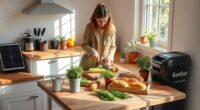
Start by establishing a dedicated prep area. Use a sturdy table or flat surface where you can comfortably chop vegetables, portion ingredients, and assemble meals. Keep your meal prep tools close at hand—sharp knives, cutting boards, bowls—so nothing disrupts your rhythm. When it comes to storage solutions, prioritize organization. Use labeled containers, zip-top bags, and stackable bins to separate dry ingredients, snacks, and utensils. This not only keeps your supplies tidy but also makes it easy to find what you need quickly. Reusable containers with secure lids are a smart choice because they prevent spills and keep food fresh longer.
Create a dedicated prep area with organized, labeled containers for quick, clutter-free meal prep.
Efficiency in your camp kitchen also depends on how you plan your meals. Think about simple, versatile recipes that require minimal ingredients and preparation steps. Prepare some ingredients beforehand—like chopped veggies or pre-cooked grains—so you can assemble meals on-site without fuss. This approach minimizes cooking time and reduces the number of pots and utensils you need to wash afterward. Additionally, selecting compact gear that is easy to store and transport can make setup and teardown more efficient.
Remember that your process should be adaptable. Create a logical flow from storage to prep to cooking. Keep frequently used items within arm’s reach and store less-used gear away. Regularly reassess your setup: if something isn’t working, tweak your storage solutions or layout. The goal is to streamline your workflow, so outdoor cooking becomes a seamless part of your trip rather than a stressful chore. By focusing on processes—how you organize, prepare, and clean—you make your camp kitchen more efficient. This mindset saves time, reduces clutter, and allows you to enjoy more of your outdoor experience. The right setup, combined with thoughtful meal prep and smart storage solutions, turns outdoor cooking into a satisfying, hassle-free activity.

Outdoor Cooking Station for Camping,Grill Table for Blackstone Griddle
- Portable foldable design: Quick setup without tools, easy to store
- High load capacity: Supports up to 440 lbs
- Spacious tabletop: 56.5 x 20.28 inches for cooking
As an affiliate, we earn on qualifying purchases.
As an affiliate, we earn on qualifying purchases.
Frequently Asked Questions
How Can I Reduce Waste in My Camp Kitchen?
You can reduce waste in your camp kitchen by adopting composting methods for organic scraps and using reusable containers instead of disposables. Prioritize shopping with minimal packaging, plan meals to avoid overbuying, and store leftovers properly in reusable containers. Educate everyone on waste reduction practices, and set up designated areas for compost and recycling. These steps help cut down waste, making your camp kitchen more sustainable and efficient.
What Safety Tips Are Essential for Camp Kitchen Setups?
Think of your camp kitchen as a well-choreographed dance floor—every step matters. You must prioritize fire safety by keeping fire extinguishers handy and ensuring proper stove ventilation. Pest prevention is equally essential; cover food tightly, clean spills promptly, and dispose of trash away from cooking areas. Always wash hands before handling food, and stay alert to prevent accidents. These safety measures keep your outdoor kitchen running smoothly and safely.
How Do I Manage Food Storage in Outdoor Environments?
To manage food storage outdoors, focus on proper food preservation by keeping perishables in cool, shaded areas. Use airtight storage containers to prevent contamination and pests. Keep raw and cooked foods separate to avoid cross-contamination. Regularly check and clean storage areas, and consider using coolers with ice packs for added freshness. Properly managing your food storage guarantees safety and prevents spoilage, making your camp experience enjoyable and hassle-free.
What Are Eco-Friendly Cleaning Practices for Camp Kitchens?
Think of your camp kitchen as a forest needing gentle care. You should use biodegradable cleaning products and opt for reusable cleaning tools to minimize waste. This eco-friendly approach keeps the environment pristine, much like a steward tending to a sacred grove. By choosing sustainable cleaning practices, you safeguard nature while maintaining hygiene. Your mindful actions ensure the beauty of the outdoors endures for future adventurers.
How Can I Organize Camp Kitchen Tools Efficiently?
You can organize your camp kitchen tools efficiently by focusing on camp utensil organization and optimizing your camp cooking station layout. Keep utensils in labeled containers or hanging racks for easy access. Arrange your tools by frequency of use, placing essentials nearby your cooking area. Use designated zones for prep, cooking, and cleaning to streamline workflows. Regularly tidy your station, and store infrequently used items separately to maintain a clutter-free, functional space.

Collapsible Silicone Food Storage Containers Set with Lid & Air Vent,Foldable Lunch Containers(4PCS,Blue,27oz)
- Set Includes Four Containers: 4-piece collapsible food storage set in blue
- Generous 27oz Capacity: Each container holds 27 ounces of food
- Secure Lid with Buckles: Snap buckles and silicone seal for freshness
As an affiliate, we earn on qualifying purchases.
As an affiliate, we earn on qualifying purchases.
Conclusion
So, next time you stumble into your chaotic campsite kitchen, remember: it’s not about fancy gadgets or shiny tools. It’s about streamlining your process and thinking smart. Who needs a million pots when a simple plan keeps everything cooking smoothly? Embrace efficiency, and maybe, just maybe, you’ll avoid turning your outdoor culinary adventure into a disaster movie. After all, a little planning can save you from the horror of a burnt breakfast!

BeGrit Backpacking Camping Cookware Mini Picnic Camping Cooking Mess Kit with Pot and Pan Set for Hiking 8pcs Set
- Lightweight and Compact: Weighs 1.72 lbs with foldable handle
- Durable and Easy to Clean: Made from 410 stainless steel for longevity
- Versatile Cooking Set: Suitable for 1-2 people, multiple cooking styles
As an affiliate, we earn on qualifying purchases.
As an affiliate, we earn on qualifying purchases.

Geesta Grill Caddy for Outdoor Grill, BBQ Picnic Camping Caddy with Paper Towel Holder & Magnetic Tool Holder, Condiment Storage Utensil Kitchen Organizer for RV Camper, Tailgate Accessories
- Magnetic Stripe & Paper Towel Holder: Strong magnet for utensil organization and stable towel holder
- Large Capacity Design: Measures 16.7×13.6×9.5 inches for ample storage
- Multi-Functional with Adjustable Grids: Divides into 6 compartments with removable grids
As an affiliate, we earn on qualifying purchases.
As an affiliate, we earn on qualifying purchases.