
To save on trains, shuttles, and rideshares, plan your routes carefully using apps or real-time updates, and look for fare discounts like student or low-income passes. Combine modes wisely—use rideshares to reach transit hubs and take advantage of integrated tickets. Avoid peak hours for cheaper and less crowded trips. Staying informed about promotions can boost your savings. Keep exploring these strategies to make every trip more affordable and efficient.
Key Takeaways
- Use fare discounts for students, seniors, or low-income riders, and opt for weekly or monthly passes for savings.
- Plan routes with real-time updates to find the fastest, least crowded, and most cost-effective options.
- Combine different transit modes like rideshares and trains to maximize discounts and reduce expenses.
- Stay informed on schedule changes and promotions via agency alerts and social media to seize savings opportunities.
- Avoid peak hours and consider longer routes to lower costs and experience less crowded, more comfortable trips.
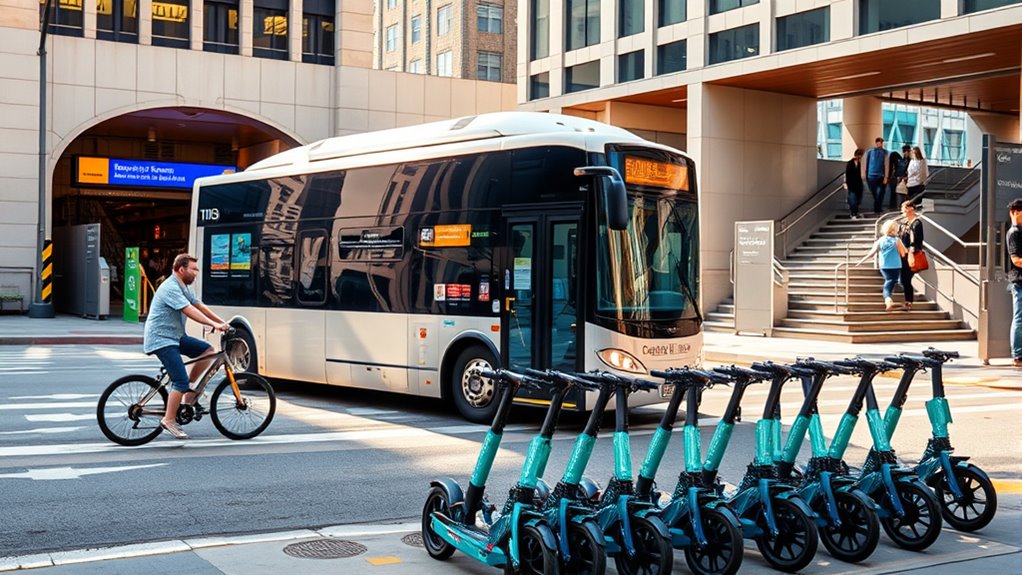
Traveling public transit can be smoother and more affordable with a few simple hacks. One of the most effective ways to save money is by taking advantage of fare discounts. Many transit agencies offer reduced fares for students, seniors, or low-income riders, so be sure to check your local options. Additionally, look into weekly or monthly passes, which often provide unlimited rides at a lower overall cost. These passes can be especially useful if you commute daily, saving you both money and time spent purchasing individual tickets. Some transit systems also run special promotions or discounts during certain times of the year, so staying informed about these deals can help you maximize your savings.
Save money on transit with discounts, passes, and seasonal promotions.
Another essential tip is route planning. Before heading out, spend a few minutes mapping your journey. Many transit agencies now provide real-time updates and route planners through their websites or smartphone apps. Using these tools, you can identify the fastest, most direct routes, avoiding unnecessary transfers or delays. This not only saves you time but can also reduce your fare costs, especially if some routes offer cheaper fares or discounts. Also, understanding the network helps you avoid peak hours and crowded vehicles, making your trip more comfortable. Sometimes, a slightly longer route might be cheaper or less crowded and could end up saving you both time and stress.
When planning your trips, consider combining different modes of transit. For example, using a rideshare to reach a nearby transit hub can be more cost-effective than taking a long direct route on a bus or train. This approach allows you to take advantage of fare discounts on certain routes while avoiding expensive direct rides. Also, check if your city offers integrated ticketing options that cover trains, buses, and shuttles with a single ticket or pass. This simplifies your trip and can save you money compared to purchasing separate tickets for each leg of your journey.
Finally, stay updated on fare policies and route changes. Transit agencies often modify schedules or introduce new discounts, so subscribing to alerts or following their social media pages helps you stay informed. Planning your routes in advance and knowing about available discounts can turn a potentially stressful commute into a smooth, budget-friendly experience. Being aware of special promotions and how they apply to your routes can significantly increase your savings. With a little preparation and awareness, public transit can become a convenient, affordable way to get around without breaking the bank.
Frequently Asked Questions
How Do I Find Real-Time Transit Updates for My Route?
You can find real-time transit updates for your route by using transit tracking apps or websites that offer real-time alerts. These tools provide live updates on schedules, delays, and cancellations, so you stay informed. Enable notifications for instant alerts, and check the app regularly to plan your trip efficiently. Many transit agencies also offer SMS or email alerts, ensuring you get real-time updates wherever you are.
What Are the Best Apps for Comparing Transit Options?
Think of apps as your transit compass, guiding you through the urban maze. For transit planning and fare comparison, Google Maps and Moovit stand out, offering real-time updates and route options. Citymapper is another great choice, blending route choices with cost insights. These apps help you compare transit options effortlessly, so you can choose the fastest, cheapest, or most scenic route, making your journey smoother and more budget-friendly.
How Can I Save Money on Multiple Transit Modes?
To save money on multiple transit modes, look for fare discounts and multi-ride passes offered by local transit agencies. These passes often provide significant savings compared to buying individual tickets each time. Additionally, some apps let you compare prices and find the best deals. Using these options, you can ride more affordably across trains, shuttles, and rideshares, making your trips cheaper and more convenient.
Are There Any Safety Tips for Using Rideshares at Night?
To stay safe when using rideshares at night, always verify the driver’s identity before getting in. Share your trip details with a trusted friend or family member for added personal safety. Check the license plate and driver info in the app, and trust your instincts—if something feels off, don’t hesitate to cancel. Stay alert, keep your valuables close, and sit in the back seat for better personal safety.
How Do I Navigate Transit Systems in Unfamiliar Cities?
Imagine stepping into an unfamiliar city, your heart pounding with anticipation. To navigate transit systems, first study local transit maps online or at stations, revealing hidden routes and shortcuts. Use smart ticketing strategies—buy day passes or reloadable cards to save time and avoid hassles. Keep your phone charged, stay alert, and follow signs closely. With these tips, you’ll confidently explore new places, turning uncertainty into adventure.
Conclusion
Now that you know these transit hacks, imagine what you could save—or discover—next. Will you brave the busy train during rush hour, or find a secret shuttle route that’s quicker? The city’s full of hidden tricks, just waiting for you to uncover them. One ride, one shortcut, one clever move could change your entire commute. So, are you ready to open the next level of your travel game? The journey’s just beginning.