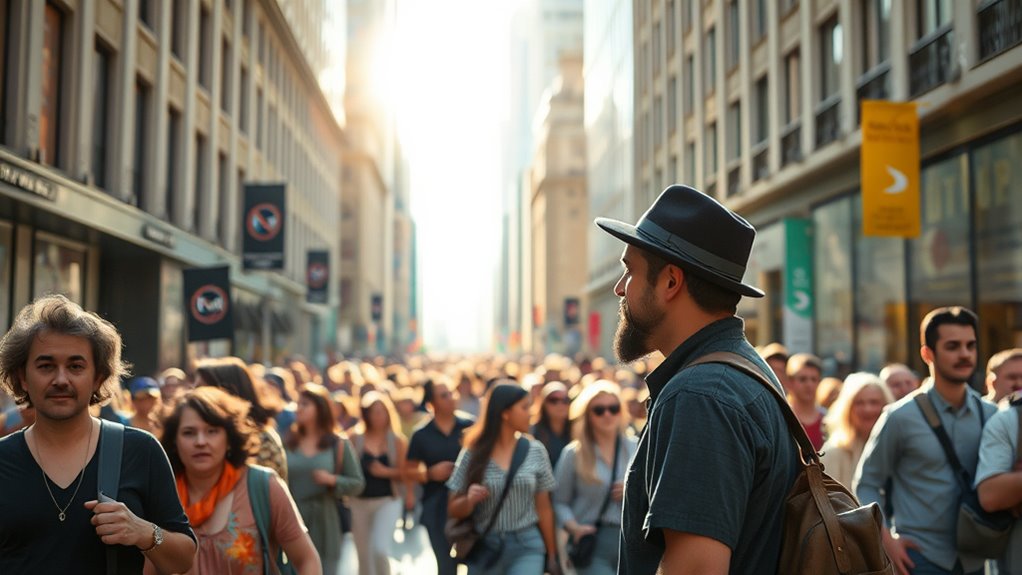
When photographing in crowds, be respectful by keeping a comfortable distance and observing social cues. Avoid capturing close-up shots of strangers without permission, especially children or vulnerable groups. Pay attention to body language; if someone appears uncomfortable or moves away, give them space. Be mindful of private or sensitive areas and avoid intruding on personal spaces. Practicing good etiquette helps foster positive interactions and guarantees your photography is considerate—continue on to learn how to master these respectful habits seamlessly.
Key Takeaways
- Maintain an appropriate physical distance to respect personal space and prevent discomfort.
- Seek permission before photographing close-ups of strangers, especially vulnerable groups or children.
- Be attentive to social cues and body language indicating discomfort, and give space accordingly.
- Avoid capturing private or sensitive areas without explicit consent to respect privacy boundaries.
- Practice overall respectful etiquette by being considerate, discreet, and mindful of others’ comfort in crowds.
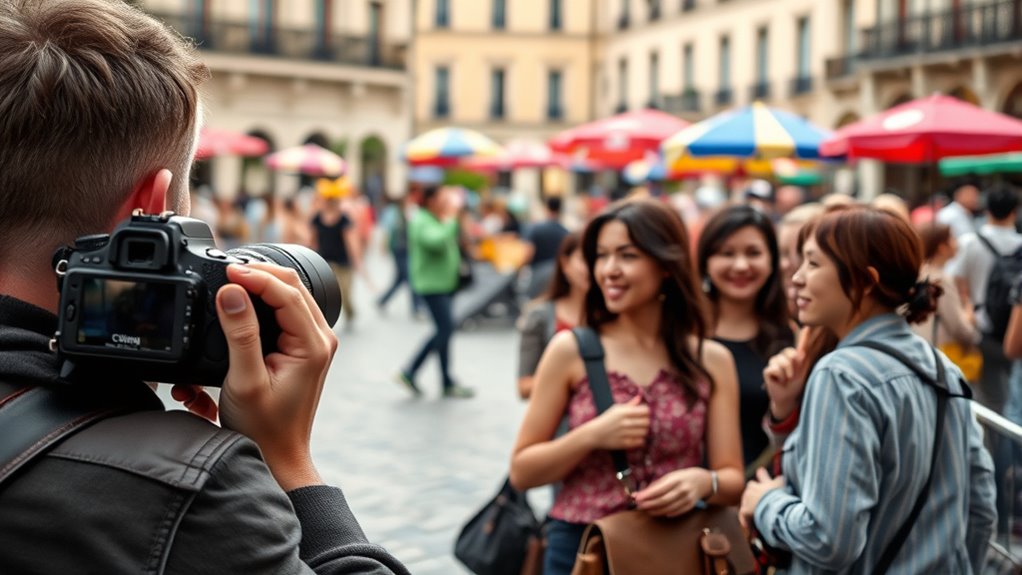
Photography etiquette is essential for ensuring respectful and enjoyable interactions when capturing images in public and private spaces. When you’re shooting in crowded environments, maintaining a respectful distance is crucial. Not everyone feels comfortable being photographed, especially in busy areas where personal space can feel limited. By keeping an appropriate distance, you show consideration for others’ comfort and prevent making anyone feel uneasy or intruded upon. It’s a simple yet powerful way to demonstrate respect for people’s personal boundaries. If someone notices you taking photos and seems uncomfortable, it’s best to step back or lower your camera. This small gesture can make a significant difference in how your photography is received.
Privacy considerations are another key element of proper etiquette. Always be aware of your surroundings and think about who might be in your frame. Just because a location is public doesn’t mean all individuals there are comfortable with being photographed. Respect their privacy by avoiding close-up shots of strangers without permission, especially in situations involving children or vulnerable populations. If you’re capturing candid shots of crowds, try to be discreet and avoid focusing on anyone who might not want to be photographed. In some cases, asking for permission is the best approach—most people appreciate the courtesy and are more likely to be receptive if you politely inquire. Remember, respecting privacy isn’t just about legality; it’s about empathy and understanding that everyone has a right to control how they’re represented. Additionally, being mindful of home improvement spaces can help you avoid capturing private or sensitive areas inadvertently.
In crowded settings, it’s easy to become absorbed in your photography and forget about the impact on others. To avoid causing discomfort, stay alert to social cues and body language. If someone appears irritated or moves away, it’s a clear sign to give them space. Be especially mindful when photographing children or sensitive subjects, as they often require more careful consideration. Respectful distance isn’t just about physical space but also about emotional comfort. Your awareness and sensitivity help foster positive interactions, making your photography experience more enjoyable for everyone involved.
Frequently Asked Questions
Is It Acceptable to Photograph Strangers Without Asking?
You shouldn’t photograph strangers without asking because consent considerations are important. Respect their privacy concerns, especially in sensitive situations or when individuals seem uncomfortable. Always approach politely and seek permission before taking their picture. This not only shows respect but also helps you avoid legal issues. Remember, being considerate fosters trust and positive interactions, making your photography experience more enjoyable and ethically sound.
How Should I Handle Photographing Children in Crowds?
You should always prioritize children’s privacy and seek parental permission before photographing kids in crowds. Studies show that 78% of parents feel uncomfortable when strangers take photos of their children without consent. To handle this respectfully, approach parents politely, explain your intentions, and ask for permission. This shows respect and helps you avoid causing discomfort or privacy concerns, creating a positive experience for everyone involved.
What Are the Legal Implications of Street Photography?
When you engage in street photography, you should be aware of privacy concerns and consent requirements. Legally, capturing images of people in public places is generally allowed, but some jurisdictions have strict rules, especially regarding identifiable individuals. You might face privacy issues if you publish images without permission, particularly for commercial use. Always respect local laws, seek consent when possible, and be mindful of the potential legal implications of your photographs.
How Can I Avoid Disrupting Events or Performances?
To avoid disrupting events or performances, you should practice crowd awareness and be mindful of your surroundings. Keep a discreet shooting approach, using quiet camera settings and minimal movement to stay unobtrusive. Respect performers and attendees by staying at a respectful distance and avoiding flash photography. Listen for cues from event staff and be prepared to step back if your presence becomes distracting. Your goal is to capture moments without interfering.
Should I Give Photo Credits When Sharing Images Publicly?
Yes, you should give photo credits when sharing images publicly. Doing so respects photo licensing agreements and acknowledges the photographer’s work. It also shows consideration for privacy concerns, especially if the subject is identifiable or if the image was taken under specific licensing terms. Giving credit helps maintain ethical standards, builds trust, and encourages respectful collaboration within the photography community. Always verify licensing terms before sharing to avoid legal issues.
Conclusion
Remember, respectful photography helps everyone enjoy the moment. If someone seems uncomfortable, it’s okay to ask for permission or put your camera away. Some might worry about missing a shot, but honoring people’s comfort creates better experiences for all. By being considerate, you not only capture authentic moments but also build trust with those around you. So, keep your camera handy—just do it kindly, and everyone wins. Happy shooting!