

To adapt your rain plan, monitor weather forecasts closely and develop backup options like indoor or covered spaces. Secure tents with proper weights, use waterproof covers, and prepare for water drainage to prevent pooling. Communicate clearly with your team and guests about any changes, assigning responsibilities for quick adjustments. Staying flexible guarantees minimal disruption, so keep your plan simple yet effective. Explore these strategies to stay prepared and keep your event running smoothly despite the weather.
Key Takeaways
- Monitor weather forecasts regularly and update plans accordingly.
- Prepare indoor or covered alternative locations for quick transition.
- Use waterproof equipment, tents, and protective covers to safeguard assets.
- Communicate clearly with team, vendors, and guests about weather procedures.
- Assign responsibilities for securing setups and managing sudden weather changes.
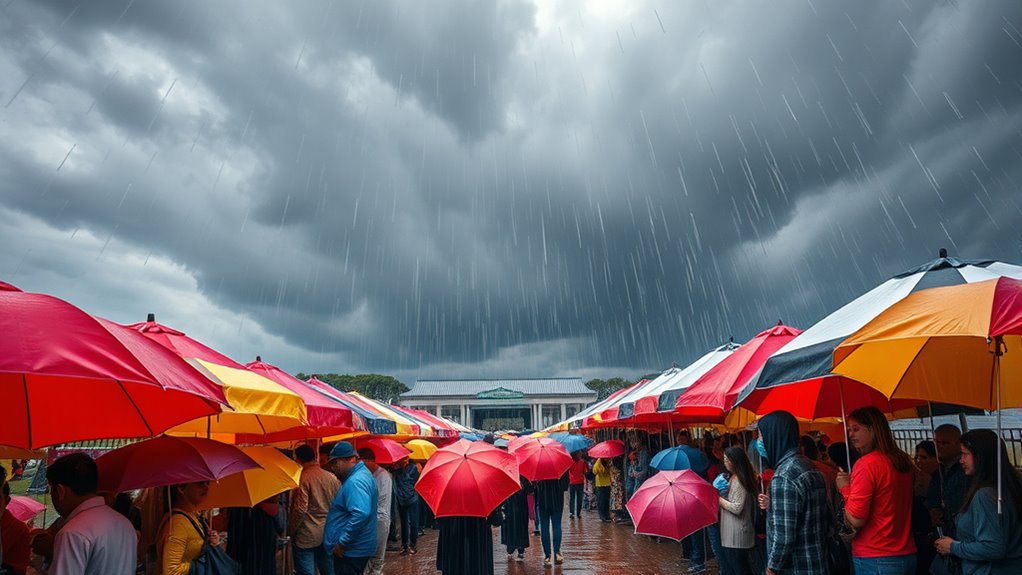
When planning outdoor events, having a rain plan is crucial to guarantee everything runs smoothly despite unpredictable weather. You need to be prepared for sudden rainstorms that can disrupt your plans and cause chaos if you’re not ready. Storm preparations are essential; they help you anticipate potential issues and set up strategies to minimize their impact. Start by monitoring weather forecasts closely as your event date approaches. If there’s a high chance of rain, it’s wise to develop a contingency plan that includes alternative locations, such as an indoor venue or a covered pavilion. This way, you won’t be caught off guard when the skies open up unexpectedly.
Preparing a rain plan ensures your outdoor event runs smoothly despite unpredictable weather.
In terms of equipment considerations, think about what you’ll need to protect your guests and event materials from the rain. Tents and canopies are your primary defenses—they keep guests dry and create sheltered spaces for activities. When selecting equipment, ensure your tents are waterproof and sturdy enough to withstand gusty winds or heavy rain. It’s also important to have enough weights or stakes to secure them firmly to the ground, preventing accidents caused by shifting or collapsing tents. Consider using sidewalls or roll-up sides to provide additional shelter and protect against wind-driven rain. Portable heaters, fans, and lighting should also be considered, especially if you’re moving your event indoors or under a covered area, as they can improve comfort and visibility despite the weather. Being aware of storm preparations and understanding how to implement them effectively can make a significant difference in managing weather challenges.
You should also plan for how to handle equipment and supplies if the weather worsens. Have waterproof covers or plastic sheeting ready to protect valuables, seating, and technical gear. Power sources, such as generators, need to be placed on elevated, dry surfaces to prevent water damage. Make sure you have a reliable way to drain accumulated water around your setup, like sandbags or drainage mats, to avoid pooling that could cause slips or damage your equipment.
Lastly, communicate your rain plan clearly to your team, vendors, and guests. Everyone needs to know what to do if the weather changes suddenly. Assign responsibilities so that securing tents, moving equipment, or guiding guests becomes a coordinated effort rather than a chaotic scramble. By paying attention to storm preparations and equipment considerations, you’re creating a resilient plan that adapts to weather challenges and ensures your outdoor event can proceed smoothly, rain or shine.
Frequently Asked Questions
How Do I Notify Attendees About Rain Plan Changes?
You should use digital communication to notify attendees about rain plan changes quickly. Send out contingency messaging through emails, text alerts, or event apps, ensuring your message reaches everyone promptly. Clearly explain the new arrangements, including any location or time adjustments. Confirm that attendees received and understood the updates, and consider posting reminders on your event’s social media platforms. This proactive approach keeps everyone informed and minimizes confusion.
What Equipment Is Essential for a Rain Plan?
You need vital equipment like sturdy umbrellas for attendee comfort, selecting the right umbrella size and style for effective coverage. A tent setup is also essential, providing shelter for key areas or activities. Make certain your umbrellas are reliable, and your tents are properly anchored to withstand wind. These items guarantee your rain plan is effective, keeping everyone dry and safe during unexpected weather changes.
How Do Weather Forecasts Impact Rain Plan Decisions?
Weather forecasts greatly influence your rain plan decisions because accurate weather prediction helps you determine when to activate your plan. You should monitor forecast accuracy regularly, as updates can change your approach. If the forecast predicts rain or storms, you might need to postpone or modify your event. Staying informed allows you to adapt swiftly, ensuring safety and minimal disruption, even when weather conditions shift unexpectedly.
Are There Legal Considerations for Outdoor Event Cancellations?
You should consider legal aspects like liability concerns and permit requirements before canceling an outdoor event. If weather conditions threaten safety, cancellation can help you avoid liability issues. However, verify you review your permits, as some may have specific clauses about weather-related cancellations. Communicate clearly with your team and attendees to minimize legal risks, and document your decision process in case questions arise later.
How Can I Ensure Safety During a Rain Plan Implementation?
To guarantee safety during a rain plan implementation, you should clearly communicate emergency protocols to your staff and verify everyone understands their roles. Conduct staff training beforehand so they can respond efficiently in rainy conditions. Keep emergency contact information accessible, monitor weather updates closely, and have a designated safe area. Regularly review safety measures with your team, ensuring they’re prepared to act swiftly and protect guests during inclement weather.
Conclusion
Now that you know the rain plan basics, you’re ready to adapt confidently. Changing weather might seem unpredictable, but with a solid plan, you stay prepared and in control. You won’t be caught off guard, nor will you let rain dampen your plans. Instead, you embrace the shift, turning challenges into opportunities. Rain may fall, but your readiness keeps you steady, resilient, and always one step ahead—ready to face whatever weather comes next.