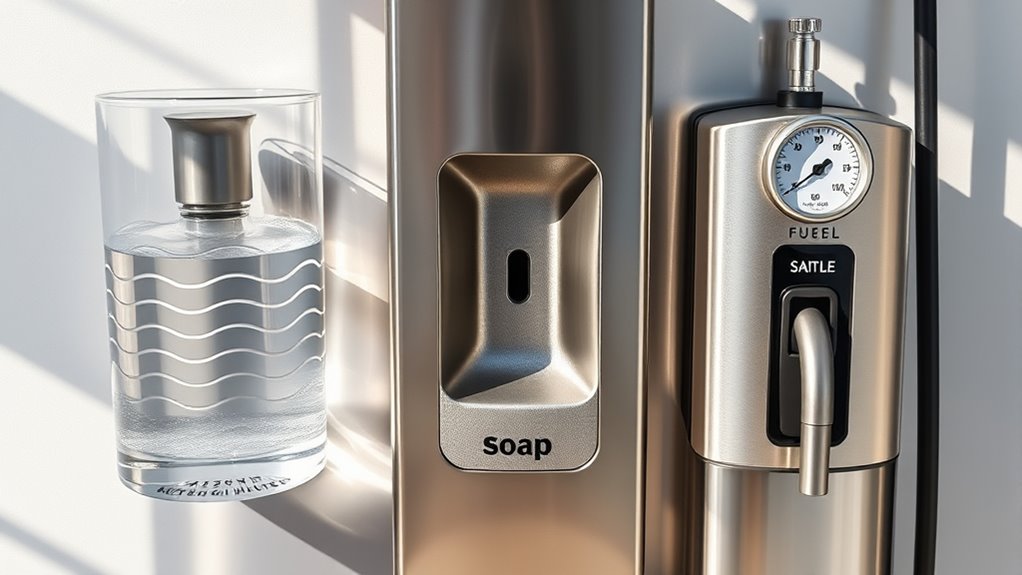
Refillable solutions for water, soap, and fuel help you cut down on plastic waste and support sustainable living. Using durable bottles and systems, you can reuse and refill without relying on single-use containers. This reduces environmental pollution, saves money, and promotes eco-friendly habits. Whether you’re refilling water at stations, using concentrated soap, or fueling up, these options make a positive impact. Stay with us to learn more about how these systems can transform your eco-practices.
Key Takeaways
- Refillable water systems reduce plastic waste by eliminating bottled water and promoting reusable bottles at stations.
- Soap refill systems support bulk purchasing, decreasing single-use plastic bottles and promoting sustainable cleaning practices.
- Fuel refill solutions at gas stations minimize disposable containers, decreasing plastic waste and environmental impact.
- Durable materials like stainless steel extend the lifespan of refillable containers, enhancing sustainability and cost savings.
- Overall, refillable solutions promote a circular economy by reducing waste and encouraging eco-friendly resource reuse.
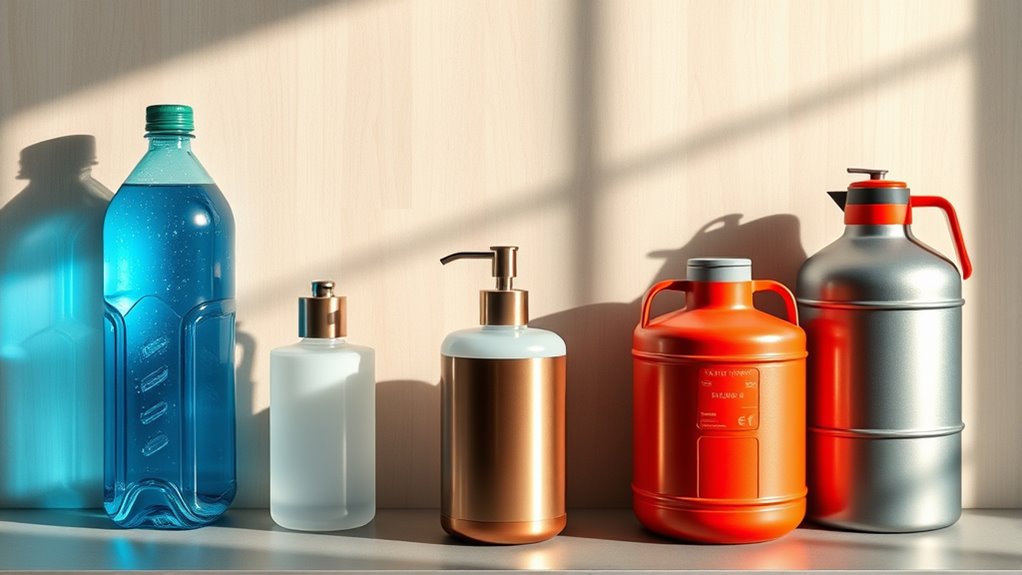
Have you ever considered how switching to refillable solutions can make a real difference for both the environment and your wallet? Moving away from single-use containers and embracing refillable technology offers tangible benefits. By choosing refillable water bottles, soap dispensers, and fuel systems, you’re actively reducing waste and supporting sustainable packaging practices. These options are designed to last longer, often made from durable materials like stainless steel or high-quality plastic, which can be refilled countless times. This shift not only minimizes the amount of plastic ending up in landfills but also encourages companies to develop innovative, eco-friendly packaging solutions.
Switching to refillable solutions reduces waste and promotes eco-friendly packaging for a healthier planet.
Refillable technology makes it simple to manage everyday needs while cutting down on waste. For water, refillable bottles eliminate the constant purchase of bottled water, which often comes in non-recyclable packaging. Instead, you can carry a sturdy, reusable bottle that you refill from home or at public stations. This reduces plastic waste and the environmental toll of producing and transporting bottled water. Similarly, for soap and cleaning products, refillable dispensers are designed to fit standard containers, allowing you to buy concentrates or bulk refills. This approach supports sustainable packaging by decreasing the demand for single-use plastic bottles, which often take centuries to decompose. Plus, refilling your soap dispenser is more cost-effective over time, making it a smart choice for your budget.
Fuel systems are another area where refillable solutions make a significant impact. Many gas stations now offer fuel tanks designed for refillable use, reducing the need for disposable fuel containers. Portable fuel systems with refillable tanks are safer and more environmentally friendly because they limit spills and emissions. Using refillable fuel systems promotes sustainable practices by cutting down on plastic waste and decreasing the environmental footprint of fuel transportation. It also offers convenience; instead of constantly buying new containers, you simply top off your existing tank, saving money and reducing waste.
Adopting refillable solutions is a straightforward way to contribute to a healthier planet while saving money in the long run. It encourages innovation in sustainable packaging, pushing manufacturers to develop more eco-conscious products. As you make these changes, you’re not just benefiting from personal savings—you’re supporting a shift toward a circular economy where resources are reused and waste is minimized. Whether it’s water bottles, soap dispensers, or fuel tanks, refillable technology empowers you to live more sustainably and reduces the environmental impact of everyday products. Additionally, choosing durable materials for refillable containers enhances their longevity and sustainability, further reducing waste. So, think about the impact of your choices and consider switching to refillable options—you’ll be making a positive difference for the planet and your wallet.
Frequently Asked Questions
How Long Do Refillable Water, Soap, and Fuel Systems Typically Last?
Refillable water, soap, and fuel systems typically last between 3 to 10 years, depending on container durability and material longevity. If you use high-quality materials like reinforced plastics or stainless steel, your systems can withstand longer. Proper maintenance, regular cleaning, and avoiding exposure to harsh elements also extend their lifespan. Keep an eye on signs of wear to replace them promptly and ensure safe, efficient operation.
Are Refillable Solutions Safer Than Single-Use Containers?
Refillable solutions are generally safer than single-use containers, acting like sturdy shields against leaks and contamination. You’re more likely to trust their safety because they adhere to strict safety regulations and container durability standards. Unlike disposable options, they’re built to last, reducing the risk of cracks or damage. When properly maintained, refillable systems offer a reliable, safer choice, giving you peace of mind with every refill.
What Are the Environmental Benefits of Refillable Systems?
Refillable systems offer significant environmental benefits by reducing waste and preventing pollution. When you choose refillables, you cut down on single-use containers that often end up in landfills or oceans. This decrease in waste helps protect ecosystems and conserves resources. Additionally, refilling minimizes pollution caused by manufacturing and disposal processes, making it an eco-friendly choice that promotes sustainability and helps preserve the planet for future generations.
How Do I Properly Clean and Maintain Refillable Containers?
Imagine your refillable container as a trusted partner, constantly in contact with different substances. To keep it in top shape, regularly clean it based on its materials—plastic, metal, or glass—using appropriate cleaning agents. For water and soap systems, wash at least once a week; for fuel, clean more frequently. Always rinse thoroughly and dry completely to prevent residue buildup and make certain of safe, effective use.
Can Refillable Systems Be Used for All Types of Liquids?
You can’t use refillable systems for all types of liquids because of liquid compatibility and container design. Some liquids, like certain chemicals or corrosive substances, may damage the container or pose safety risks. Always check if the container’s materials match the specific liquid you’re refilling. Properly designed containers ensure safe storage and prevent leaks, so choose systems made for the particular liquid to avoid contamination or damage.
Conclusion
Refillable solutions aren’t just about saving money or reducing waste; they’re like planting seeds for a sustainable future. When you choose to refill water, soap, and fuel, you’re nurturing a cycle of renewal—transforming single-use into everlasting impact. Think of each refill as a ripple in a pond, spreading change far beyond your hands. Embrace these systems, and watch how small actions grow into a mighty wave of positive change for our planet.