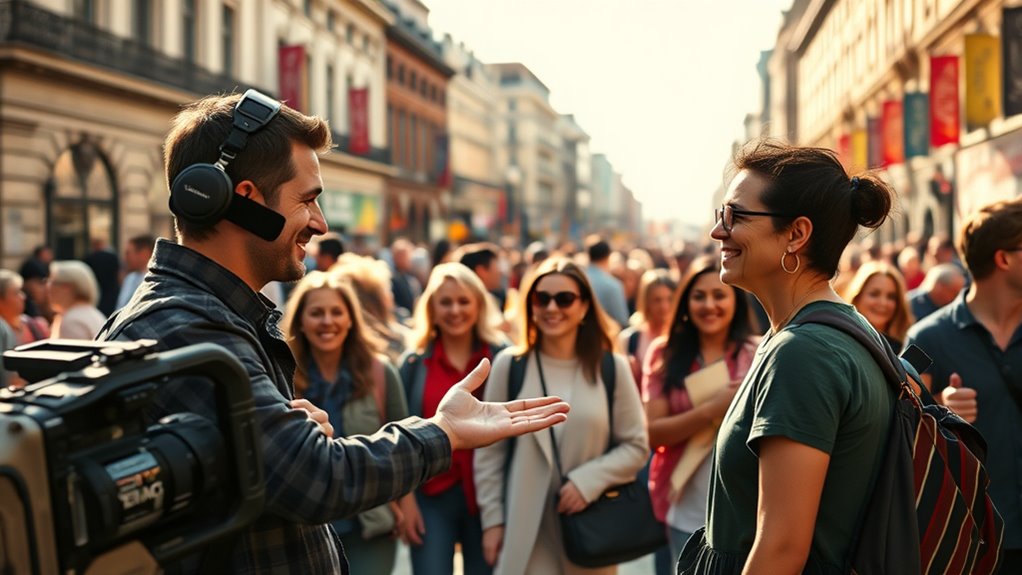

When filming in crowds, always approach individuals politely and clearly explain your intent to gain consent. Respect their comfort levels, and if someone declines, honor their wishes without persuasion. Be mindful of cultural sensitivities and private moments, avoiding intrusive shots. Keeping your approach respectful builds trust and ensures you stay within ethical boundaries. If you continue exploring, you’ll discover how to navigate consent smoothly while maintaining good relationships with those around you.
Key Takeaways
- Politely approach individuals, briefly explain your purpose, and ask for their permission before filming in crowded areas.
- Respect declines graciously, and do not pressure or persuade anyone to be filmed.
- Focus on scenes with clear consent, and avoid filming private conversations or sensitive moments.
- Be aware of cultural norms and sensitivities that may influence comfort levels with filming.
- Maintain discretion in large crowds, minimizing disturbance and respecting personal boundaries.
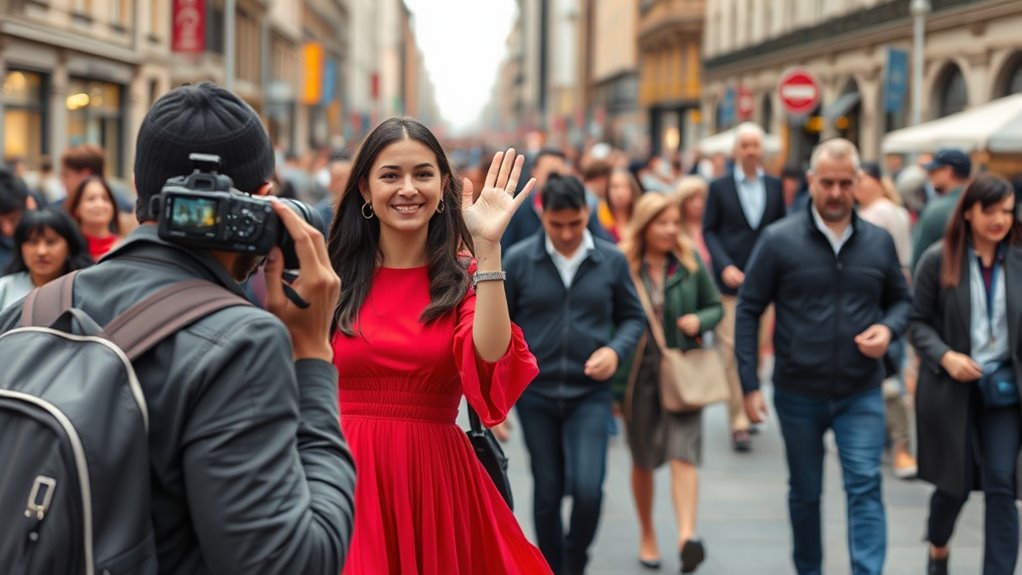
Filming in public spaces requires more than just technical skill; it demands respect for the people around you. When you’re capturing moments in busy streets, parks, or events, you’re sharing space with individuals who may not want to be filmed or may have concerns about their privacy. Recognizing and addressing these privacy concerns is essential. People have different comfort levels regarding being recorded, and some may feel vulnerable or exposed if they’re unknowingly caught on camera. You need to be mindful of their right to privacy, especially in situations where they might not expect to be filmed, such as private conversations, children, or people in sensitive circumstances. Respecting privacy isn’t just about legal boundaries; it’s about showing consideration and understanding that everyone deserves control over their image and personal space.
Additionally, cultural sensitivities play a significant role in how you approach filming in diverse communities. Different cultures have unique norms about photography and videography. In some cultures, taking pictures of individuals without permission can be seen as intrusive or disrespectful. In others, it might be entirely unacceptable to film certain rituals, ceremonies, or individuals in specific contexts. Before you start filming, it’s vital to educate yourself about these cultural nuances. What might be acceptable in one setting could be offensive or taboo in another. Showing respect involves more than just asking for permission—you should also be aware of cultural boundaries and adapt your approach accordingly. If you’re unsure, a simple gesture or asking politely can go a long way toward building trust and avoiding misunderstandings.
Getting consent is a fundamental part of respectful filming. Whenever possible, approach people politely and explain what you’re doing and why you want to film them. Most individuals appreciate being asked rather than surprised by a camera. If someone declines, respect their decision without protest or persuasion. For situations where asking isn’t practical, such as large crowds or spontaneous moments, it’s wise to be discreet and limit your focus to scenes where consent has been given. Remember, filming isn’t just about capturing footage; it’s about cultivating trust and demonstrating that you value the dignity and comfort of those around you.
Furthermore, understanding the Louisiana alimony laws can help filmmakers and content creators navigate legal requirements and avoid potential legal issues related to privacy and consent. By being attentive to privacy concerns and cultural sensitivities, you ensure your work remains respectful, ethical, and ultimately more authentic.
Frequently Asked Questions
How Can I Identify When Someone Doesn’T Want to Be Filmed?
You can tell someone doesn’t want to be filmed by paying attention to non-verbal cues like avoiding eye contact, stepping back, or turning away. They might also show discomfort through crossed arms, tense posture, or avoiding your gaze. Respect personal boundaries by observing these signals carefully, and if you notice any signs of hesitation or discomfort, it’s best to ask for their consent or give them space.
What Are the Legal Consequences of Filming Without Consent?
If you film without consent, you risk serious legal penalties that can threaten your freedom and reputation. Authorities may pursue charges related to invasion of privacy concerns, leading to fines or even jail time. Laws vary by location, but the consequences are clear: ignoring consent can result in costly legal trouble. Stay vigilant, respect others’ privacy, and always seek permission to avoid these potentially devastating legal repercussions.
How Do Cultural Differences Affect Filming Etiquette?
Cultural differences greatly influence filming etiquette, so you should always respect local customs and cultural norms. In some cultures, filming customs are strict, and asking for permission is essential to avoid offense. You might need to adapt your approach, such as seeking consent more formally or avoiding certain subjects altogether. By understanding and respecting these cultural norms, you show sensitivity and prevent misunderstandings or disrespect during your filming.
Can I Record in Public Spaces Without Restrictions?
In public spaces, you can generally record without restrictions, but you should consider privacy concerns and ethical considerations. For example, if you film a crowded street, people expect a certain level of privacy, especially in sensitive situations. Always respect individuals’ rights, seek consent when possible, and be aware of local laws. This approach helps you avoid legal issues and maintains respectful, responsible filming.
How Should I Handle Objections From Bystanders During Filming?
When someone objects during filming, respect their privacy concerns and personal boundaries. Calmly listen and acknowledge their feelings, then politely offer to stop recording or move away. You should prioritize their comfort and avoid pressuring them, as this shows respect and helps maintain trust. If they still decline, it’s best to cease filming in that area to prevent infringing on their rights and make sure you’re acting ethically.
Conclusion
By always asking for consent, you turn filming into a powerful act of respect—like wielding a magic wand that transforms strangers into allies. Remember, a simple “may I film you?” can turn a potential awkward moment into a shared moment of trust. Respectful filming isn’t just polite; it’s your secret weapon for capturing genuine moments without causing a scene. So, keep those questions coming—your camera will thank you, and so will everyone around you!