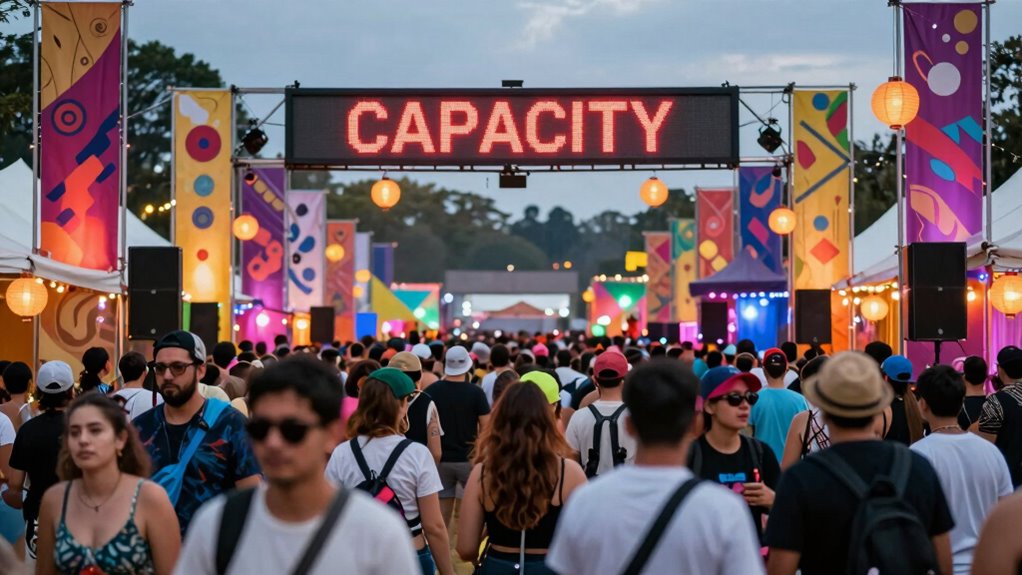

When festival capacity is limited, you’ll notice fewer tickets available and higher prices, making it more competitive to attend. Entry might take longer due to stricter security checks, and your movement around the site could be easier with lower crowd density. This often results in a more comfortable experience, but some popular areas might fill up quickly or be restricted. Understanding these changes helps you plan better—keep going to discover how to make your festival experience smoother.
Key Takeaways
- Reduced capacity leads to fewer tickets, making attendance more competitive and potentially more expensive.
- Increased security and entry procedures can cause longer wait times and require early planning.
- Lower crowd density creates a more comfortable and accessible environment for attendees.
- Limited space may restrict activity options and access to certain areas or performances.
- Higher ticket prices and new procedures require early budgeting and preparation for a smoother experience.
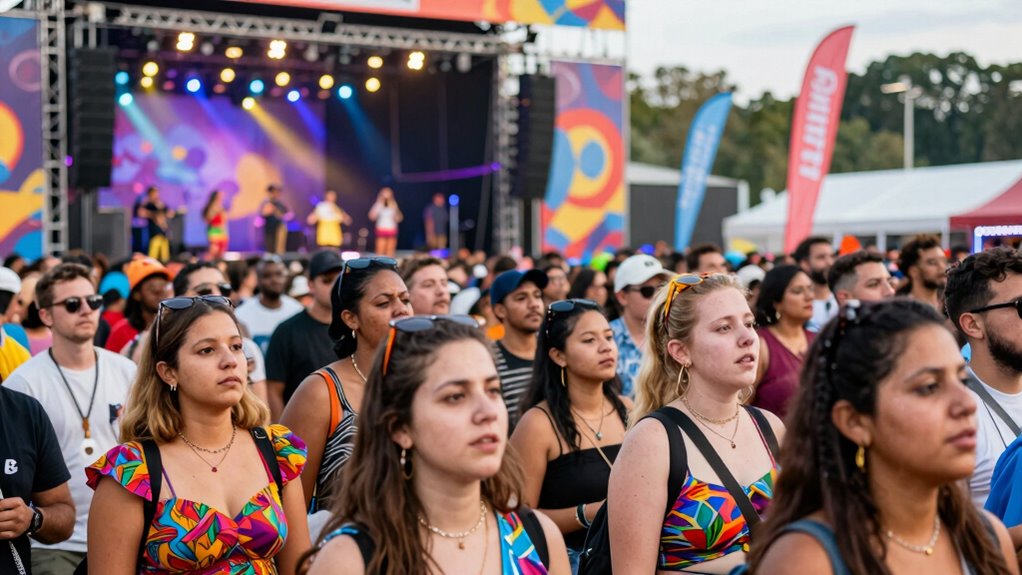
Recent updates on festival capacity limits are directly impacting your experience as an attendee. With fewer tickets available due to new restrictions, you might find yourself facing higher ticket pricing. Organizers often adjust prices to offset the reduced capacity, which can mean paying more for a spot at the event. This shift can make it more challenging for you to attend if you’re working within a tight budget. On the flip side, higher ticket prices may reflect better planning and resources allocated toward ensuring safety and a more enjoyable experience. You might notice that the ticketing process now feels more competitive, with some tickets selling out faster or only being available through premium packages. This can create a sense of urgency, pushing you to purchase your tickets early to secure your spot.
Alongside ticket pricing, security measures are also evolving in response to the capacity constraints. To manage the limited space effectively and maintain safety standards, event organizers are ramping up security protocols. You can expect more thorough bag checks, increased staffing at entry points, and possibly digital verification steps like contactless tickets or health screenings. These measures aim to prevent overcrowding and ensure everyone’s safety, but they can also extend wait times at entry. If you’re enthusiastic to get inside, you might need to plan for extra time and patience. Additionally, heightened security can sometimes mean stricter rules on what you can bring into the venue, affecting your overall experience. Staying informed about security procedures can help you prepare accordingly and avoid surprises at the gate.
The impact of capacity news isn’t limited to ticket prices and entry procedures. It can also influence your overall enjoyment of the festival. With fewer attendees allowed, the crowd density might decrease, leading to a more comfortable environment. You may find it easier to move around, catch your favorite acts, and interact with other festival-goers. Moreover, a more manageable crowd can lead to a better festival atmosphere, making the event more memorable. However, it could also mean that some popular areas or performances are more limited or become overcrowded quickly, depending on how organizers allocate the available space. Additionally, capacity limits can influence the variety of activities and amenities available during the event, shaping your overall festival experience.
Furthermore, the cost of attending may shift as organizers balance safety measures with ticket sales. This can affect your budgeting and planning for the event, emphasizing the importance of early ticket purchase and awareness of potential additional expenses. Ultimately, these capacity adjustments are reshaping your festival experience. While they might mean paying more and enduring stricter security, they also aim to create a safer, more manageable environment. Being aware of these changes helps you plan better—arriving early, budgeting for increased ticket costs, and preparing for enhanced security checks will make your festival experience smoother and more enjoyable despite the new limitations.
festival security bag check backpack
As an affiliate, we earn on qualifying purchases.
As an affiliate, we earn on qualifying purchases.
Frequently Asked Questions
How Is Festival Capacity Determined and Adjusted Over Time?
Festival capacity is determined through crowd management strategies and capacity planning, considering factors like venue size, safety regulations, and expected attendance. Organizers regularly adjust capacity over time by analyzing ticket sales, real-time crowd flow, and safety assessments. This dynamic process guarantees the event remains enjoyable and safe, preventing overcrowding. You can expect updates as organizers fine-tune capacity to optimize your experience and maintain effective crowd management throughout the festival.
What Safety Measures Are in Place for Larger Crowds?
You’ll see that crowd management plans are in place to keep larger crowds safe, including designated entry and exit points and barriers to control flow. Emergency protocols are clearly communicated, with trained staff ready to respond quickly. Medical stations and safety announcements are also available to guarantee everyone stays safe. These measures work together to minimize risks and create a secure environment, even during peak attendance.
How Does Capacity News Influence Ticket Prices?
Capacity news causes costs to climb or cool, creating a cascade of consequences. When capacity increases, ticket prices often jump due to high demand and limited availability, driven by dynamic pricing strategies. Conversely, lower capacity can cool costs, offering more availability and affordability. You’ll notice prices fluctuate based on how many tickets are available and how organizers adjust to capacity updates, ultimately impacting your budget and decision-making.
Are There Differences in Attendee Experience Between Capacity Levels?
Yes, attendee experience varies with capacity levels. When crowd dynamics are manageable, you enjoy smoother movement, better access to stages, and more personal interactions, boosting your satisfaction. In larger crowds, you might feel overwhelmed or less engaged, which can diminish your overall experience. Smaller capacities often foster a more intimate atmosphere, enhancing your connection with performers and fellow attendees, ultimately making the festival more memorable and enjoyable.
How Do Organizers Communicate Capacity Changes to Attendees?
Think of organizers as conductors guiding an orchestra—they communicate capacity changes through clear ticketing strategies and timely updates. You’re kept informed via emails, app notifications, or social media, ensuring you’re aware before arrival. This approach boosts attendee engagement, so you feel connected and prepared. By being transparent and quick to share updates, organizers help you adapt seamlessly, maintaining a positive experience even when capacity adjustments occur unexpectedly.
contactless festival ticket scanner
As an affiliate, we earn on qualifying purchases.
As an affiliate, we earn on qualifying purchases.
Conclusion
As the curtain falls on this discussion, remember that festival capacity news shapes your experience much like the whispers of a Greek chorus—subtle yet impactful. Staying informed lets you navigate crowds with the grace of a seasoned performer, turning potential chaos into a harmonious celebration. Just as the gods of Olympus watched over mortal revelers, let awareness guide your journey, ensuring every moment remains as memorable as the legends of old.
As an affiliate, we earn on qualifying purchases.

Rave Hydration Pack, Hydration Backpack with 2L Hydration Bladder, Festival Essential Water Backpack for Hiking, Running, Cycling, and Music Festivals
- Ergonomic and Adjustable Fit: Customizable chest strap for comfort
- Breathable Mesh Back: Keeps back cool with airflow
- Safety Survival Whistle: Built-in for outdoor safety
As an affiliate, we earn on qualifying purchases.
As an affiliate, we earn on qualifying purchases.