
Recent security screening changes mean you should pack liquids in containers of 3.4 ounces or less and place them in a clear quart-sized bag, with liquids easily accessible for quick removal. Electronics like tablets and laptops must be taken out of your bag and screened separately. Be prepared for possible extra checks, especially if you’re randomly selected. Staying calm and cooperative helps speed things up. Keep exploring to learn more about these new protocols and how to stay prepared.
Key Takeaways
- Liquids over 3.4 ounces must be in a single, quart-sized clear bag for screening.
- Laptops and large electronics must be removed from bags and placed separately for inspection.
- Passengers should keep ID and boarding pass accessible for multiple security checks.
- Additional screening may be randomly conducted or based on risk assessments using advanced technology.
- Follow TSA officer instructions promptly to ensure smooth and quick security processing.

Have you noticed recent changes in security screening procedures at airports? If so, you’re not alone. The TSA security measures have evolved considerably in recent months, aiming to enhance safety while making the process smoother for travelers. These updates primarily focus on streamlining passenger protocols and improving security checks, but they can also introduce some confusion if you’re not familiar with the latest rules.
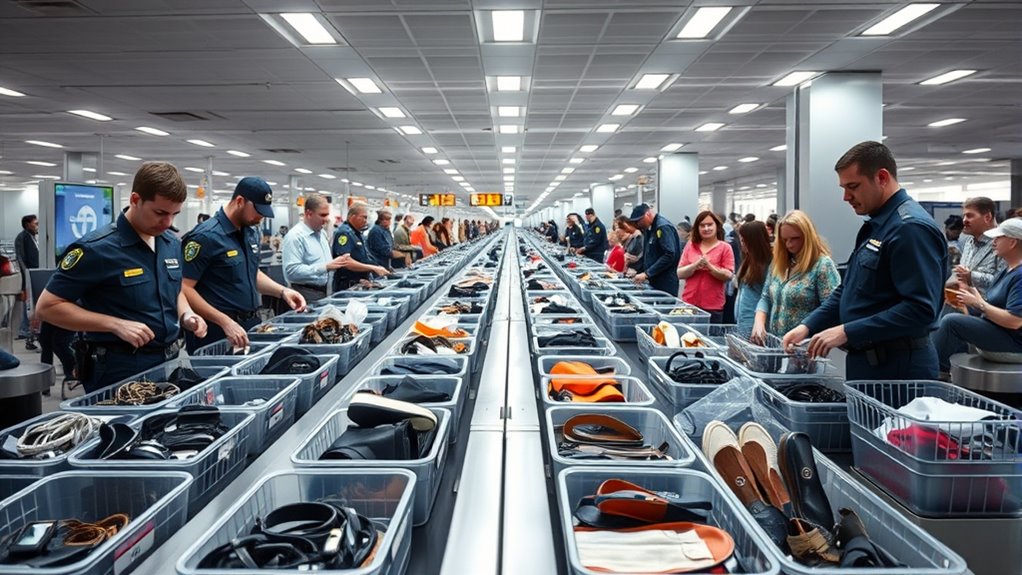
When you go through TSA security, you’ll find that passenger protocols now emphasize efficiency without sacrificing safety. You’ll be expected to remove certain items from your carry-on, such as laptops and liquids over 3.4 ounces, and place them separately in bins. The TSA security staff are trained to quickly identify prohibited items, but it helps to prepare ahead of time to avoid delays. Keep your boarding pass and ID ready and easily accessible, as officers may ask for them multiple times during the screening process.
One of the most noticeable TSA security updates involves the new screening procedures for liquids, gels, and aerosols. You’re now limited to one quart-sized bag containing containers of 3.4 ounces or less. This change aims to speed up the process and reduce the number of items that need additional screening. It’s a good idea to pack these items in an accessible spot in your bag so you can quickly remove them when needed. Also, keep in mind that some items, like breast milk or medication, are exempt from these restrictions but may require additional verification at the security checkpoint.
In addition to these liquid restrictions, the TSA has introduced enhanced screening for electronic devices. Larger gadgets like tablets, laptops, and gaming consoles must be removed from your bag and placed in separate bins for inspection. This step is part of the new passenger protocols designed to detect threats more effectively. While this can slow down your journey through security, it’s a necessary measure to ensure everyone’s safety. Be patient and cooperate with the officers—they’re trained to handle these procedures efficiently.
Another notable change involves the use of advanced imaging technology and new metal detector protocols. You might notice that the security officers now use more sophisticated scanning equipment, which sometimes results in additional screening for some travelers. If you’re randomly selected for extra screening, stay calm and follow instructions. These measures are based on risk assessments and are intended to protect everyone. Being aware of the Vetted security guidelines can help you better understand these procedures and reduce any anxiety during the process.
Frequently Asked Questions
Are There Any New Prohibited Items Not Previously Banned?
Yes, there are new prohibited electronics you should be aware of. The latest carry-on restrictions now ban certain electronic devices, like large tablets and e-cigarettes, in some regions. These changes aim to enhance security screening. Always check the specific airline and destination rules before traveling, as prohibited electronics can vary. Staying informed helps you avoid surprises and ensures a smoother screening process. Remember, what’s restricted today might change tomorrow, so stay updated.
How Do Security Screening Procedures Differ for International Flights?
For international flights, security screening procedures focus heavily on verifying your passenger identification and using advanced screening technology. You’ll need to present your passport or other accepted ID, and your belongings undergo more thorough scans, often including additional layers of screening. Be prepared for TSA agents to ask more questions, and remember, these procedures aim to guarantee safety, so staying cooperative and organized makes the process smoother for you.
Can I Carry Medically Necessary Liquids Through the Security Checkpoint?
You can carry medically necessary liquids through security, and screening exemptions make this easier. While regular liquids are subject to restrictions, medically necessary liquids are excused from the 3-1-1 rule. Just declare these items at the checkpoint, and they’ll be screened separately. Think of it as a special pass that ensures your health needs are met without delay, giving you peace of mind during your travel.
Are There Special Screening Protocols for Travelers With Disabilities?
Yes, there are accessible procedures and assistance services for travelers with disabilities. You should inform the TSA officers at the start of your screening about your needs. They’ll provide accessible screening procedures, such as private rooms or help with physical or sensory disabilities. Assistance services are available to guarantee your screening process is smooth and respectful, making travel more comfortable and accessible for you.
How Often Do Security Screening Policies Change Currently?
Like shifting sands beneath your feet, security regulation changes happen quite frequently. You should expect screening policy updates to occur several times a year, often driven by evolving threats or new technology. Agencies regularly review and adjust protocols to stay ahead of potential risks, so stay informed through official websites or airline notifications. Keeping up with these updates guarantees smoother security checks and helps you navigate the process confidently.
Conclusion
Remember, honesty is the best policy. As security screening changes, make sure you stay informed about what’s allowed and what’s not. Double-check your belongings before heading to the airport, and follow the rules carefully. Staying prepared not only makes the process smoother but also keeps everyone safe. Don’t let surprises catch you off guard—being proactive is always better than being caught unprepared. Stay vigilant, and travel with confidence!