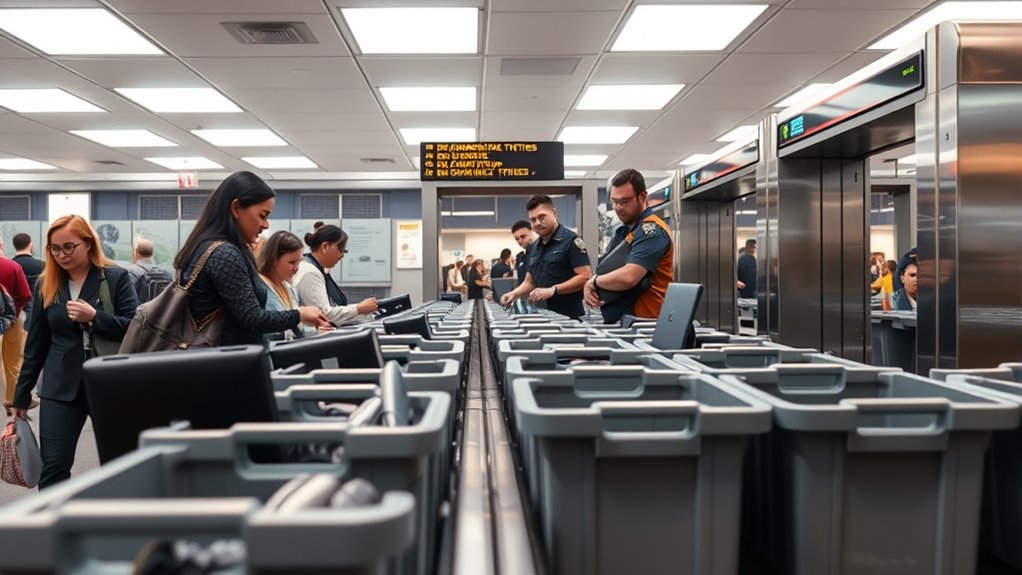

With recent upgrades, security screening now uses advanced metal detectors, high-resolution baggage scanners, and clearer imaging to be more efficient and accurate. You’ll need to remove metal items like belts, watches, and coins before passing through. Prohibited items such as large liquids, sharp objects, or firearms are still not allowed. Improved procedures aim to make your process faster and safer, and by staying informed, you’ll guarantee a smooth experience every time—as you’ll discover when you continue.
Key Takeaways
- Metal items like belts, watches, and coins must be removed before passing through metal detectors.
- High-resolution baggage scanners help identify prohibited items more accurately and quickly.
- Follow security personnel instructions and cooperate during secondary screenings if required.
- Be aware of updated prohibited items list, including new threats detected by advanced technology.
- Organize belongings to facilitate faster screening and reduce the risk of delays.

Recent security screening procedures have undergone significant updates to enhance safety and efficiency at airports. As a traveler, you’ll notice these changes firsthand as you go through the security checkpoint. One of the most visible updates involves the use of advanced metal detectors and baggage scanners. Metal detectors now operate with greater sensitivity, reducing the chances of missed threats while also decreasing false alarms. This means you’ll often pass through more smoothly, but it’s essential to follow the instructions carefully to avoid delays. Baggage scanners have also advanced, utilizing high-resolution imaging technology that allows security personnel to examine your belongings more thoroughly without opening your bags. These scanners can detect a wider variety of prohibited items and do so more quickly, helping to keep lines moving and reducing inconvenience for travelers. Additionally, the new screening protocols emphasize the importance of being aware of prohibited items, so travelers can prepare accordingly before reaching the checkpoint.
When you approach the security area, you’ll typically be required to remove metal items such as belts, watches, and coins before passing through the metal detector. This step helps prevent unnecessary alarms, allowing for a quicker passage. If the metal detector signals an alert, security personnel will discreetly conduct a secondary screening, which might involve a handheld metal detector or a pat-down. It’s important to cooperate and follow instructions to keep the process smooth for everyone. Meanwhile, your carry-on luggage will go through the baggage scanner. You’ll need to place your bags and electronics into bins, which are then sent through the scanner. The imaging technology creates detailed visuals that security staff analyze for any suspicious items. If anything questionable appears, security will open your bag for further inspection, but most screenings are completed swiftly.
The updates in security screening aim to strike a balance between safety and convenience. These new metal detectors and baggage scanners are designed to detect potential threats more effectively while minimizing disruption. To make your experience easier, be prepared by packing your belongings in an organized manner, removing unnecessary metal items, and following security personnel’s instructions carefully. Remember, these procedures are in place to keep everyone safe, and complying with them helps expedite the process. As airports continue to adopt newer technologies, you can expect faster, more accurate screenings in the future. Staying aware of what’s allowed and what’s not, especially regarding prohibited items, will further streamline your journey through security. Ultimately, these updates to security measures are about creating a safer environment for all travelers without sacrificing the convenience you deserve.
metal detector travel accessories
As an affiliate, we earn on qualifying purchases.
As an affiliate, we earn on qualifying purchases.
Frequently Asked Questions
Are There New Prohibited Items Not Previously Banned?
Yes, there are new prohibited items added to the banned items list. You should check the latest updates before your trip because security screening now bans certain items that weren’t previously prohibited. These new prohibited items include specific liquids, aerosols, and sharp objects. Always review the current banned items list to avoid delays, and remember that security policies can change, so stay informed to guarantee smooth travel through security checkpoints.
How Do Screening Procedures Differ at Various Airports?
At different airports, screening procedures vary in how they handle boarding protocols and baggage checks. You might find some airports conduct more thorough security, requiring you to remove laptops or liquids earlier, while others streamline the process. Always stay alert to posted signs and staff instructions, as procedures can change based on local security policies. Being prepared guarantees a smoother experience, regardless of where you’re traveling.
Can I Carry Electronic Devices Through Security?
You can carry electronic devices through security, but there are electronic device restrictions you need to follow. At the security checkpoint procedures, you’ll typically need to remove laptops, tablets, and large electronics from your bag and place them in a bin for screening. Smaller devices like smartphones usually stay in your carry-on. Always check your airline’s specific guidelines, as some airports may have additional rules or restrictions.
What Are the Consequences of Carrying Banned Items?
If you carry banned items, security will likely confiscate them, and you could face legal penalties depending on the item. Item confiscation happens at the security checkpoint, which can delay your journey. In some cases, you might also encounter fines or other legal consequences if authorities determine the item poses a risk. Always check the list of prohibited items before traveling to avoid these issues and guarantee a smooth security process.
Are There Exemptions for Medical Devices or Supplies?
Yes, there are medical device exemptions and medical supply allowances at security screenings. You can bring necessary medical devices and supplies, such as insulin, inhalers, or mobility aids, without penalty. Make sure to declare these items to security personnel beforehand, and be prepared for additional screening. Carry supporting documentation if possible, to verify their medical necessity. These exemptions help guarantee your health needs are accommodated while maintaining security protocols.
As an affiliate, we earn on qualifying purchases.
Conclusion
Staying informed about security screening changes is like maneuvering a shifting maze—you need to keep your eyes open and adapt quickly. Remember, knowing what’s allowed and what’s not keeps your journey smooth and stress-free. By following the new guidelines, you’re steering your travel plans through calm waters rather than stormy seas. Keep updated, stay prepared, and let these changes be your compass, guiding you safely through the airport’s ever-changing landscape.
As an affiliate, we earn on qualifying purchases.
As an affiliate, we earn on qualifying purchases.