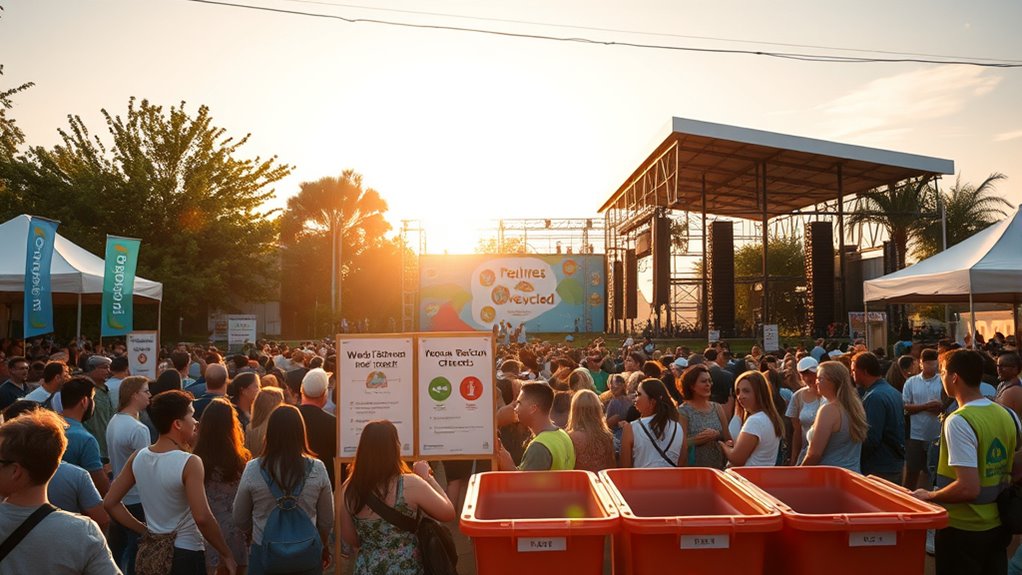

Festivals report their sustainability impact by sharing measurable data on waste diversion, renewable energy use, and operational resilience. They set clear targets for waste reduction, track energy consumption, and showcase milestones like increased recycling rates or renewable power adoption. Transparent reporting builds trust and demonstrates genuine commitment. By regularly evaluating and sharing progress, festivals show they’re making a difference. To discover more about how these reports are crafted and their benefits, keep exploring further.

Get movie nights delivered free — and shop member deals
- Fast, free delivery on millions of items
- Access to Prime Big Deal Days deals on October 6–7
- Prime Video, Amazon Music and more included
Key Takeaways
- Festivals transparently share waste diversion rates and renewable energy usage through detailed reports and data dashboards.
- They set clear targets for waste reduction and renewable energy integration, tracking progress over time.
- Impact is measured via data collection on waste, energy consumption, and milestone achievements.
- Regular reporting highlights milestones, operational resilience, and ongoing sustainability efforts to stakeholders.
- Transparent communication fosters trust, accountability, and continuous improvement in sustainability commitments.
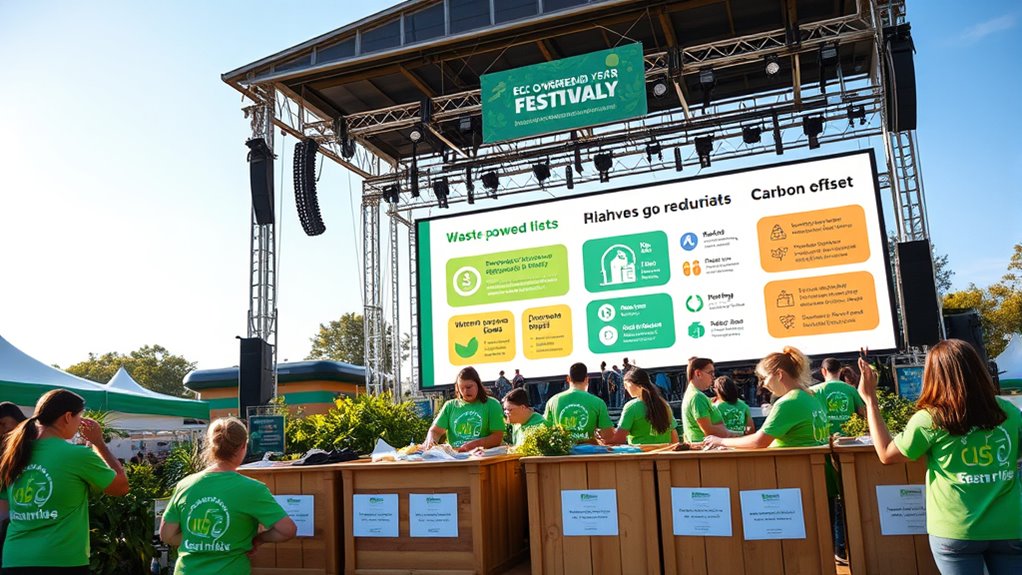
Are your organization’s sustainability commitments making a real difference? If you’re involved in organizing festivals, you know how critical it is to turn good intentions into tangible results. Many festivals aim for zero waste by implementing thorough recycling programs and encouraging attendees to reduce their plastic use. Achieving zero waste means that almost nothing ends up in landfills, and it requires meticulous planning, from waste sorting stations to composting efforts. But simply claiming to be zero waste isn’t enough; you need to track your progress carefully. This involves measuring waste diverted from landfills, evaluating the effectiveness of recycling initiatives, and setting clear, achievable targets for continuous improvement. By doing so, you demonstrate genuine commitment and build trust with your audience, sponsors, and community. Additionally, integrating renewable energy sources into your festival operations can markedly lower your carbon footprint. Solar panels, wind turbines, and other renewable energy solutions can power stages, lighting, and food vendors, reducing reliance on fossil fuels. When you report on your use of renewable energy, you show stakeholders that your sustainability efforts are rooted in real, measurable actions rather than just words. Transparency is key—share your energy consumption data, the percentage of renewable energy used, and future plans for scaling these efforts. When you openly communicate your progress, you inspire others to follow suit and reinforce your festival’s reputation as an environmentally responsible event. Tracking the impact of these initiatives is essential; it provides insights into what works and what needs improvement. Data collection helps you identify gaps in your zero waste strategy or opportunities to increase renewable energy usage. Celebrating milestones, such as reaching a certain percentage of waste diverted or renewable energy employed, motivates your team and attendees alike. It also provides concrete evidence to report to stakeholders, investors, and the public, showcasing your festival’s commitment to sustainability. Remember, reporting isn’t just about numbers; it’s about telling a story of progress and accountability. When you effectively communicate your efforts and results, you foster a culture of sustainability within your festival community. This transparency encourages others to adopt similar practices, creating a ripple effect that extends beyond your event. Incorporating reliable backup power solutions can ensure your festival operates smoothly even during power outages, reinforcing your commitment to resilient and sustainable operations. Ultimately, your goal is to turn sustainability commitments into lasting change. By focusing on measurable actions like zero waste initiatives and renewable energy adoption, you can create a festival experience that’s not only memorable but also environmentally responsible. When you regularly evaluate and report your impact, you demonstrate that your commitment is genuine and that your festival is helping to shape a more sustainable future.
solar panel portable power station
As an affiliate, we earn on qualifying purchases.
As an affiliate, we earn on qualifying purchases.
Frequently Asked Questions
How Do Festivals Measure Their Overall Environmental Impact?
You can measure a festival’s overall environmental impact by tracking key metrics like carbon offsetting and waste diversion. This involves calculating emissions from energy use, transportation, and activities, then evaluating how much is offset through initiatives like tree planting. Additionally, monitoring waste diversion rates shows how much waste is recycled or composted instead of landfilled. These data points help you understand the festival’s true environmental footprint and guide sustainability improvements.
What Metrics Are Used to Evaluate Sustainability Success?
Think of sustainability success as a garden you nurture; metrics like carbon offsetting and waste diversion are your tools. You evaluate your progress by measuring reductions in greenhouse gases and the percentage of waste diverted from landfills. These indicators show how well your festival minimizes its environmental footprint. Tracking these metrics helps you see if your efforts grow stronger or need more attention, ensuring your event remains eco-friendly and sustainable.
How Transparent Are Festivals in Reporting Their Sustainability Efforts?
You’ll find that many festivals are increasingly transparent in reporting their sustainability efforts, especially regarding sponsorship transparency and vendor accountability. They often publish detailed reports or share updates on their websites, openly discussing their environmental impact and progress. While some festivals excel at this, others could improve clarity. Overall, your ability to access clear, honest information depends on the festival’s commitment to transparency and their willingness to communicate openly about their sustainability practices.
How Do Festivals Engage Attendees in Sustainability Initiatives?
Imagine turning attendees into eco-warriors—festivals do this by actively engaging you in sustainability initiatives. They encourage eco-friendly transportation options, like shuttles and bike rentals, making it easy to reduce your carbon footprint. Waste reduction strategies, such as recycling and composting stations, invite you to participate directly. Through interactive signage, workshops, and social media challenges, they motivate you to embrace sustainability as part of the festival experience, transforming participation into action.
What Challenges Do Festivals Face in Implementing Sustainability Measures?
You face challenges implementing sustainability measures, especially with waste management and renewable energy. It’s tough to manage large volumes of waste efficiently and guarantee proper recycling. Relying on renewable energy sources can be costly and logistically complex, especially in remote locations. You need to coordinate with vendors, educate attendees, and secure funding, all while balancing entertainment and environmental goals. These hurdles require strategic planning and committed partnerships to overcome.
As an affiliate, we earn on qualifying purchases.
Conclusion
By paying attention to how festivals report their impact, you become a part of the ripple effect for change. Your awareness can turn a simple attendance into a powerful wave of support for sustainability. When festivals are transparent and committed, they plant seeds for a greener future—like stars guiding us through the night. So, next time you attend, remember: your presence can help turn the tide toward more responsible, impactful celebrations.
As an affiliate, we earn on qualifying purchases.
As an affiliate, we earn on qualifying purchases.
Fall Picks
fall essentials
As an affiliate, we earn on qualifying purchases.