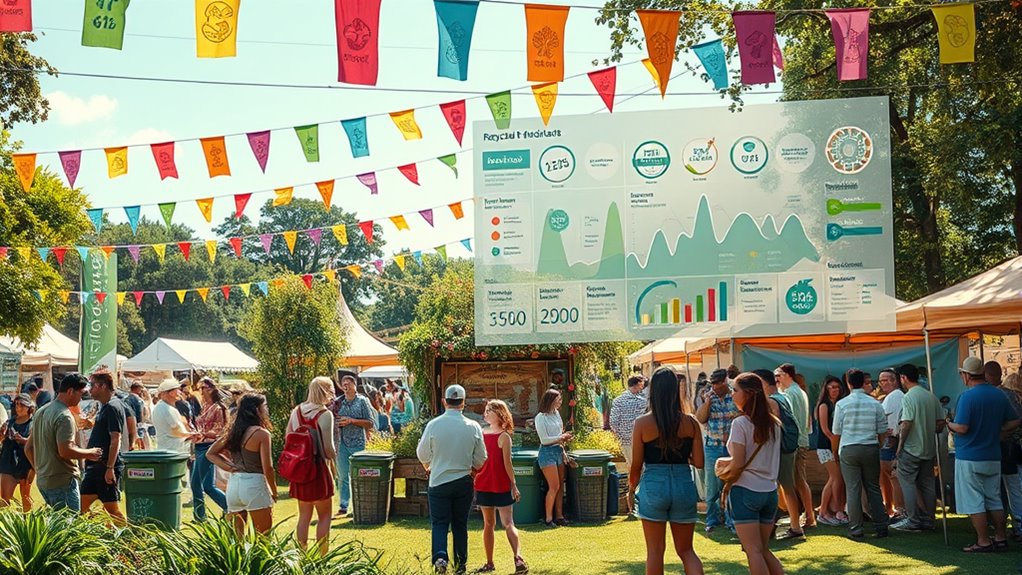

Festivals report their impact by openly sharing detailed sustainability information such as renewable energy use, waste management efforts, and carbon footprint reductions. They often publish reports or impact statements that highlight their initiatives and progress, demonstrating accountability and transparency. These reports include data on recycling, energy efficiency, and transportation efforts. Seeing this info helps you understand how festivals align with environmentally responsible practices, and if you’re curious about how they make a difference, you’ll find more insights ahead.
Key Takeaways
- Festivals publish sustainability reports detailing renewable energy use, waste diversion rates, and carbon footprint reductions.
- Impact reports include quantifiable data to demonstrate environmental progress and accountability.
- Many festivals share their sustainability efforts through online publications, press releases, or dedicated impact statements.
- Transparent reporting fosters trust among attendees, supporters, and the public regarding environmental commitments.
- Regular impact assessments help festivals evaluate progress and identify areas for improvement in sustainability initiatives.
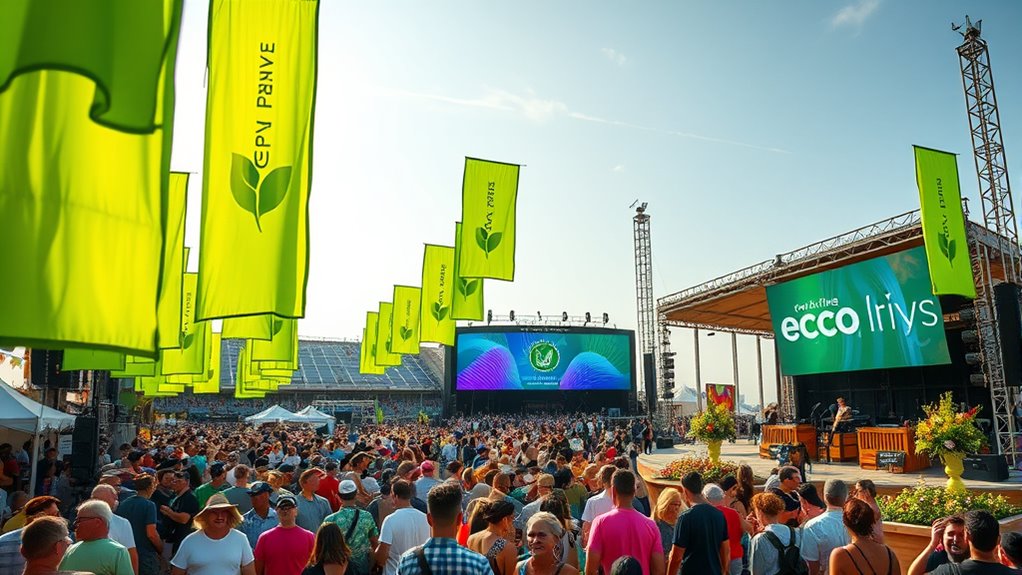
Many organizations are making bold promises to prioritize sustainability, recognizing that environmental responsibility is essential for long-term success. When it comes to festivals, this commitment often translates into tangible efforts to reduce their ecological footprint. You might notice that many festivals are actively incorporating renewable energy sources to power their stages and facilities. Solar panels, wind turbines, and other renewable energy technologies are becoming more common, helping festivals cut down on fossil fuel use and lower greenhouse gas emissions. This shift not only demonstrates a dedication to cleaner energy but also sets a standard for attendees and other event organizers to follow.
Waste management is another critical aspect of a festival’s sustainability strategy. You might see clearly marked recycling bins, compost stations, and initiatives aimed at reducing single-use plastics. Festivals that prioritize waste management often encourage attendees to bring reusable water bottles, utensils, and bags, which considerably diminishes waste generated during the event. Some festivals even partner with local organizations to ensure proper disposal and recycling of waste, turning what could be trash into valuable resources. These efforts not only help mitigate environmental impact but also promote awareness among attendees about the importance of responsible waste practices.
Transparency plays a crucial role in how festivals report their impact. Many now publish sustainability reports or impact statements that detail their efforts and progress. These reports often include data on renewable energy usage, waste diversion rates, and carbon footprint reductions. By sharing this information, festivals demonstrate accountability and commitment to continuous improvement. You, as an attendee or supporter, can see tangible evidence of their efforts and feel more connected to their sustainability goals.
Furthermore, festivals are increasingly integrating sustainability into their overall planning. This means designing events with eco-friendly materials, reducing energy consumption through efficient lighting and cooling systems, and encouraging sustainable transportation options like bike-sharing, shuttle buses, or carpooling. These strategies not only lessen environmental impact but also create a more engaging and responsible experience for everyone involved. Additionally, employing digital ticketing and communication helps reduce paper waste and streamlines event operations, further supporting sustainability efforts.
In the end, your role as an attendee matters. Supporting festivals that prioritize renewable energy and effective waste management encourages more organizations to follow suit. When you choose to participate in and promote these initiatives, you contribute to a broader cultural shift toward sustainability. Festivals that are transparent about their impact and actively work to lessen their footprint prove that environmental responsibility can go hand-in-hand with celebration and entertainment, paving the way for a greener, more sustainable future.

BLAVOR Solar Power Bank 10,000mAh, Portable Wireless Charger, 20W Fast Charging External Battery Pack with USB C for Cell Phones, Solar Panel Charging with Dual Flashlight for Camping
Brand-Oriented and Outdoor Charger Pro: With over 10 years of experience in solar power banks, BLAVOR has already…
As an affiliate, we earn on qualifying purchases.
As an affiliate, we earn on qualifying purchases.
Frequently Asked Questions
How Do Festivals Measure Long-Term Sustainability Impacts?
You can measure long-term sustainability impacts by tracking your festival’s carbon footprint over time and monitoring waste reduction efforts. Regularly assess energy consumption, transportation emissions, and waste diversion rates to understand progress. Collect data from vendors and attendees, and compare results year-to-year. This way, you guarantee your festival’s sustainability initiatives are effective and continually improve your practices to minimize environmental impact sustainably.
What Partnerships Enhance Festival Sustainability Efforts?
Did you know that festivals with strong community partnerships see a 30% increase in sustainable practices? You can enhance your festival’s efforts through community partnerships that foster local engagement and shared resources. Additionally, corporate collaborations bring in expertise and funding, boosting environmental initiatives. Together, these partnerships create a robust support system, making your festival more sustainable, impactful, and better connected with the community.
How Do Festivals Address Social Equity in Their Sustainability Reports?
You can see festivals address social equity in their reports by emphasizing community engagement and cultural inclusion. They often highlight initiatives that support diverse local communities, promote equitable access, and celebrate different cultures. By sharing their efforts to foster inclusive environments and engage various groups, festivals demonstrate commitment to social equity. This transparency helps build trust and shows their dedication to creating a more just and inclusive festival experience for everyone involved.
What Challenges Do Festivals Face in Transparent Impact Reporting?
You face enormous hurdles in transparent impact reporting, like trying to hold a mountain in your hands. Corporate accountability often feels like chasing a mirage, making honest disclosures difficult. Environmental audits are essential but can be complex and costly, risking incomplete or inaccurate data. These challenges threaten your festival’s credibility, making it harder to prove your commitment to sustainability. Overcoming them requires unwavering dedication and transparency.
How Do Festivals Engage Attendees in Sustainability Initiatives?
You can engage attendees in sustainability initiatives by encouraging participation in eco-friendly practices like recycling, composting, and using reusable items. Promote awareness through signage, interactive activities, and social media campaigns that highlight the importance of sustainability. When you involve attendees actively, they feel more connected and motivated to adopt eco-friendly behaviors, making your festival’s sustainability efforts more impactful and creating a shared sense of responsibility for environmental impact.

Brita Stainless Steel Premium Filtering Water Bottle, BPA-Free, Reusable, Insulated, Replaces 300 Plastic Water Bottles, Filter Lasts 2 Months or 40 Gallons, Includes 1 Filter, Glacier – 20 oz
FILTERED WATER DISPENSER: One 20 oz. BPA-free Brita Stainless Steel Water Bottle with one filter, a double-wall insulated…
As an affiliate, we earn on qualifying purchases.
As an affiliate, we earn on qualifying purchases.
Conclusion
As you explore how festivals report their impact, remember that each commitment is a brushstroke painting a greener future. Your role is essential—by supporting transparent reporting, you become part of the vibrant mosaic shaping sustainable change. Just like a river carving through stone, consistent effort flows toward a more resilient planet. So, stay engaged and let your voice ripple through the currents of responsibility, turning fleeting moments into lasting waves of positive impact.

2.2lb/1kg pink Holi color powder non toxic bulk organic washable natural gender reveal decorations colour war dog animal summer camps festivals gift run gulal
🌿 Washable & Safe Formula 🌿 Made from natural material; easily rinses off skin or clothes with water—ideal…
As an affiliate, we earn on qualifying purchases.
As an affiliate, we earn on qualifying purchases.
![100% Compostable Cutlery Set - 300 Pieces Wooden Compostable Utensils [120 Forks, 90 Knives, 90 Spoons] - Disposable Wooden Cutlery, Eco Friendly Forks And Spoons Disposable Cutlery Set Party Utensils](https://m.media-amazon.com/images/I/512nTQC4H0L._SL500_.jpg)
100% Compostable Cutlery Set – 300 Pieces Wooden Compostable Utensils [120 Forks, 90 Knives, 90 Spoons] – Disposable Wooden Cutlery, Eco Friendly Forks And Spoons Disposable Cutlery Set Party Utensils
As an affiliate, we earn on qualifying purchases.
As an affiliate, we earn on qualifying purchases.