TL;DR

Get movie nights delivered free with Prime
- Fast, free delivery on millions of items
- Prime Video, Amazon Music and more included
- Member-only deals all year
The Profile’s response to “You Can See Everything” argues that the documentary’s central effect is not simply to revisit Elizabeth Holmes’ fraud case, but to show how filmmaking can steer an audience’s impressions. The account is a critic’s interpretation, not independent confirmation that the film deliberately deceives viewers; the directors’ intentions and the documentary’s full methods are not established in the source material.
A review published by The Profile argues that “You Can See Everything,” a documentary about Elizabeth Holmes, does more than recount the Theranos scandal: it uses framing, editing and the order of revelations to make viewers reconsider their impressions of the people on screen. The account describes this as a kind of deception directed at the audience, but that is the reviewer’s interpretation of the film, not a verified finding about the directors’ intent or Elizabeth Holmes.
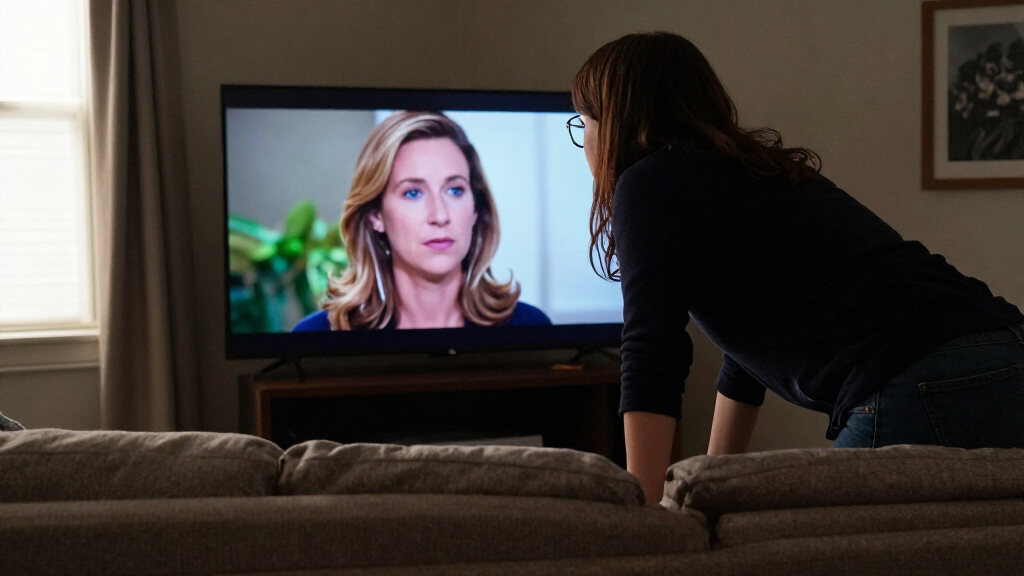
The writer says the film prompted a strong reaction in the theater, with audience members shouting at the screen. Rather than treating the experience mainly as a verdict on whether Holmes is a liar or deserves prison, the review focuses on how the documentary can shift viewers’ feelings as they watch. The writer calls the work a “masterpiece in storytelling” and says its impact comes from making audiences aware of how easily a narrative can change their view of a subject.
The review identifies directors Lance Oppenheim and Nathan Fielder and points to choices including camera angles, close-ups, editing and the sequence in which information appears. The writer describes the film moving between images that can make Holmes seem threatening, sympathetic or difficult to read. Those descriptions represent one viewer’s response; the source does not provide a scene-by-scene account or independent analysis of the film’s construction.
The report also raises questions about Fielder’s position in the story. According to the writer, he lived with Holmes and her husband for a month before Holmes went to prison. The review asks how his proximity to the couple affects his reliability as a narrator, but does not establish that he misrepresented events or that the film’s account is inaccurate.
How Editing Shapes the Holmes Story
The review’s argument matters because documentaries can feel like neutral records even when they rely on choices about what to show, when to reveal it and whose perspective to foreground. The writer’s central point is that viewers may form an emotional impression before consciously weighing the evidence, then interpret later details through that initial response. The film, in this reading, turns that process into part of the viewing experience.
That distinction is especially relevant to a story as widely retold as Theranos. Public perceptions of Holmes have been shaped by criminal proceedings, news coverage, images and fictionalized portrayals. A documentary that revisits the case can add information, but its storytelling choices can also influence how audiences understand the people involved. The review asks readers to distinguish the underlying record from the way a film frames it.
The source does not establish that the documentary’s methods amount to factual deception. Its use of that idea is an evaluative claim about the audience’s experience: viewers are led to notice how their reactions change. The distinction matters for readers deciding whether to treat the piece as a film review, a factual correction or evidence of misconduct by the filmmakers. It is principally a review and an argument about documentary storytelling.
professional camera angles for filmmaking
As an affiliate, we earn on qualifying purchases.
As an affiliate, we earn on qualifying purchases.
The Theranos Case Behind the Film
Theranos was a blood-testing startup founded by Holmes. The Profile writer notes that Holmes was acquitted on all four patient-fraud charges and convicted of defrauding investors who put more than $700 million into the company. The distinction is central to the review’s criticism of simplified portrayals: the writer argues that public discussion can flatten a complicated legal record into a simple judgment about whether Holmes is good or bad.
The source presents the case as background for the film’s effect, not as a new development in Holmes’ legal proceedings. It does not offer court documents or additional reporting on the verdicts. Its focus is how images and narratives can influence people’s understanding of a prominent figure whose story has already been covered through multiple forms of media.
The review also invokes a 2015 Canon photography experiment, in which six photographers reportedly photographed the same man after receiving different descriptions of him. The writer uses the example to illustrate how a creator’s expectations may affect a portrayal. That comparison is offered as an analogy for documentary filmmaking, not as proof about the directors’ intentions or the accuracy of this particular film.
““Forget Elizabeth Holmes. That was a masterpiece in storytelling.””
— The Profile writer
As an affiliate, we earn on qualifying purchases.
What the Review Cannot Establish
The source is a first-person response, not an independent investigation of the documentary’s production or factual accuracy. It does not provide a response from Oppenheim or Fielder, evidence that either director intended to mislead viewers, or details showing whether specific scenes omit or contradict relevant facts. The claim that the film is “deceiving” should therefore be understood as the writer’s characterization of its narrative effect.
It is also unclear from the supplied report when the review was published, how the film has been received by other critics or audiences, and whether the filmmakers have addressed the questions about Fielder’s month living with the couple. The source does not identify the theater audience or establish that their reactions represent viewers more broadly.
As an affiliate, we earn on qualifying purchases.
Further Responses and Film Details
The Profile writer encourages readers to watch the documentary and consider how their own reactions change as its story unfolds. The supplied material does not announce a forthcoming interview, official response or new legal development. Further reporting would need to examine the film itself, seek comment from its directors and compare disputed or consequential scenes with the underlying record.
Until that information is available, the confirmed development is the publication of a strongly argued review, not a finding that the documentary falsifies events. Readers can assess the review’s claims by separating its account of the viewing experience from verifiable details about the film’s production and the Theranos case.
As an affiliate, we earn on qualifying purchases.
Key Questions
What is “You Can See Everything” about?
It is a documentary about Elizabeth Holmes. The Profile review focuses on how the film’s storytelling choices shape viewers’ impressions, rather than providing a full synopsis.
Who directed the documentary?
The Profile report identifies Lance Oppenheim and Nathan Fielder as the directors.
Does the source prove that the documentary lies?
No. “Deceiving” is the reviewer’s interpretation of how the film guides audience reactions. The source does not establish that the filmmakers falsified facts or intended to mislead viewers.
What does the review say about Holmes’ convictions?
The writer says Holmes was acquitted on all four patient-fraud charges and convicted of defrauding investors. The review cites that distinction to argue that public portrayals can lose important legal nuance.
Source: hn
Fall Picks
fall essentials
As an affiliate, we earn on qualifying purchases.