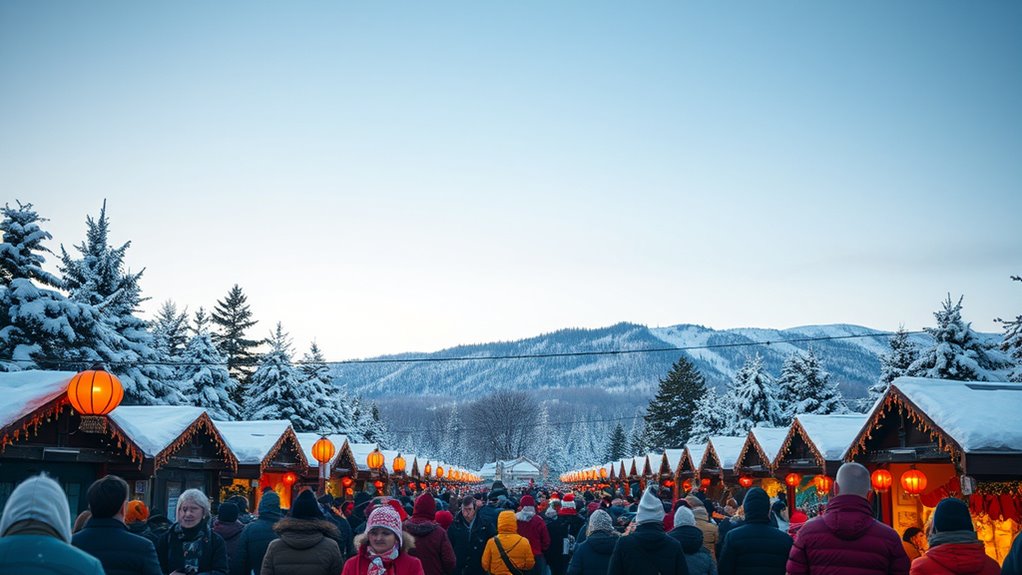

As you plan winter festivals, expect more unpredictable snow and rising temperatures due to climate change. Shorter winter seasons mean less reliable snow cover, and you may need to rely on artificial snow or shift dates. Extreme weather like rain, storms, or thaws could disrupt outdoor activities and logistics. To stay ahead, adapt your plans with flexible schedules and weather-resistant infrastructure. Keep exploring, and you’ll discover ways to make your events resilient in changing conditions.
Key Takeaways
- Rising temperatures are reducing snow reliability, leading to shorter winter seasons and increased reliance on artificial snow.
- Weather unpredictability causes disruptions like thaws, rain, and wind, impacting outdoor festival logistics and safety.
- Festivals are adopting flexible scheduling, indoor venues, and weather-resistant infrastructure to adapt to changing climate conditions.
- Climate trends indicate a need to shift event timing earlier or later in the season to align with consistent snow cover.
- Enhanced emergency preparedness and infrastructure reinforcement are essential to withstand extreme weather events increasingly common due to climate change.
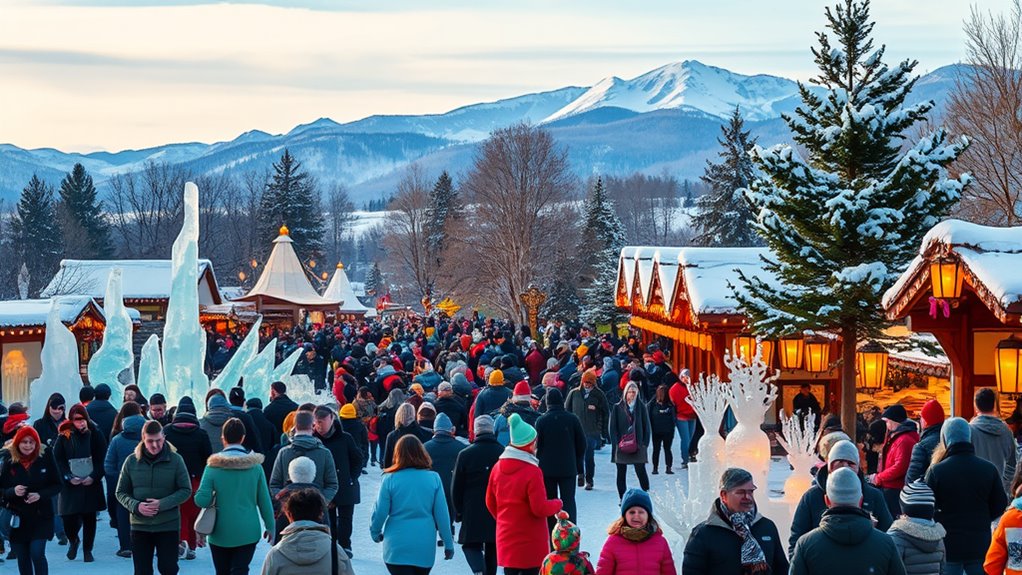
As winter festivals become more popular around the world, understanding how changing weather and climate patterns impact these events is essential. Climate change impacts are increasingly evident, affecting snowfall, temperatures, and the overall feasibility of outdoor celebrations. When planning your winter festival, you need to consider these shifts to ensure the event’s success. Rising temperatures may mean less reliable snow cover, forcing organizers to adapt their festival planning strategies. You might need to incorporate artificial snow, relocate activities indoors, or schedule events earlier or later in the season to align with historical snow patterns. These adjustments are vital to maintaining the festival’s charm and appeal in a changing climate.
You’ll also notice that unpredictable weather can create logistical challenges, from transportation disruptions to safety concerns. Sudden thaws, rain, or wind can turn what was supposed to be a winter wonderland into a muddy or slushy mess, discouraging visitors. To mitigate these risks, your festival planning strategies should include contingency plans, such as flexible schedules, weather-resistant infrastructure, and clear communication channels to inform attendees of weather-related changes. This proactive approach helps ensure that your event remains enjoyable and safe, regardless of weather fluctuations.
Climate change impacts extend beyond just snow and temperature. Longer periods of warm weather can shorten the winter season, reducing the window for outdoor activities. This means you need to be more strategic with your event timing, perhaps shifting dates or expanding indoor offerings to compensate for shorter or less predictable winter periods. Additionally, you should consider the environmental footprint of your festival. Incorporating sustainable practices, like minimizing waste and using renewable energy, can help mitigate broader climate impacts and promote resilience in the face of ongoing climate change.
Moreover, as weather becomes more extreme, your festival must adapt to potential disruptions caused by storms or heavy snowfall. Ensuring infrastructure can withstand severe weather is crucial. This might involve reinforcing tents, pathways, or stages and having a clear plan for emergency response. By adjusting your festival planning strategies with climate change impacts in mind, you not only safeguard your event but also demonstrate environmental responsibility, which resonates with increasingly eco-conscious attendees. Additionally, understanding the changing climate patterns can help organizers better anticipate future weather trends and plan more resilient events.
Frequently Asked Questions
How Will Climate Change Affect Winter Festival Snow Conditions?
Climate change will likely lead to less reliable snow conditions at winter festivals. You might experience a snowpack decline, making it harder to find good snow coverage. Increased temperature variability can cause unpredictable weather, with warmer days melting snow faster and cold snaps not lasting long enough. These changes could shorten the season, impact outdoor activities, and force festival organizers to adapt by using artificial snow or shifting dates.
Are There Specific Regions Experiencing More Unpredictable Winter Weather?
You’ll notice that some regions now face weather anomalies that seem almost unbelievable, making winter weather highly unpredictable. Areas like the Northeastern US and parts of Europe experience greater regional variability, with sudden snowstorms or unseasonal warmth disrupting plans. These shifts highlight that climate change worsens regional variability, causing more frequent and intense unpredictable winter weather. Prepare for surprises, as these anomalies could turn your winter festival experience upside down.
What Are the Long-Term Climate Projections for Winter Temperatures?
Long-term climate projections indicate that winter temperatures are likely to become more unpredictable, with some regions experiencing milder winters and others facing more extreme cold snaps. You can expect overall warming trends, but variability will increase, making winter temperatures less predictable year to year. This means you should prepare for both warmer spells and colder periods, as climate change continues to influence long-term climate patterns globally.
How Can Festival Organizers Prepare for Sudden Weather Shifts?
You should prioritize festival contingency planning by having clear protocols for sudden weather shifts. Use advanced weather forecasting technology to monitor conditions in real time. Communicate updates swiftly to attendees and staff, adjusting plans as needed. Prepare for potential cancellations or rescheduling, and set up sheltered areas or heating solutions. Staying flexible and informed guarantees safety and a positive experience, regardless of unexpected weather changes.
Will Rising Global Temperatures Reduce Winter Festival Viability?
You might think the writing’s on the wall, but rising global temperatures could challenge winter festival planning. As global warming accelerates, colder, snowy winters may become less predictable, making outdoor festivals tricky. To stay ahead, you should consider flexible plans, indoor options, or alternative dates. While winter festivals may face hurdles, proactive adjustments can keep traditions alive, ensuring your event remains vibrant despite climate shifts.
Conclusion
As winter’s embrace shifts with changing climate patterns, remember that each snowflake and gust of wind holds a story of our planet’s health. Your festival experience becomes a symbol of hope—reminding us that, like the seasons, we have the power to nurture and protect this beautiful, fleeting moment. Embrace the magic, cherish the memories, and be a guardian of winter’s wonder, ensuring future festivals carry the same enchanting spirit for generations to come.