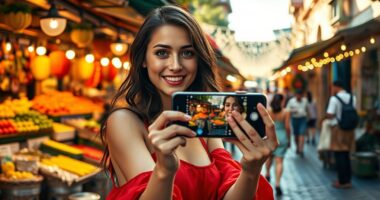
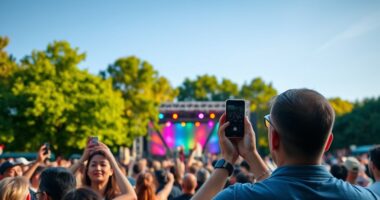
Before shooting 360 and VR at festivals, plan your camera setup carefully to guarantee seamless coverage without disrupting the flow. Focus on capturing immersive visuals and spatial sounds that evoke emotion and create a sense of presence. Be mindful of lighting and dynamic conditions, and use stitching and editing techniques to deliver smooth, engaging footage. Consider how storytelling can enhance the experience. Keep exploring, and you’ll discover how these elements come together for a memorable virtual festival journey.
Key Takeaways
- Use multiple cameras or specialized VR rigs for seamless 360-degree coverage without disrupting festival flow.
- Plan unobtrusive camera placement and shooting protocols to maintain smooth footage and prevent horizon tilt.
- Incorporate spatial audio aligned with visual elements to enhance realism and immersion.
- Ensure proper post-production stitching, sound design, and testing across VR headsets for viewer comfort.
- Focus on immersive storytelling techniques to evoke emotion and create a memorable, engaging festival experience.

Virtual reality has become an exciting addition to festivals, transforming how attendees experience music, art, and social interactions. As a filmmaker or content creator planning to shoot in VR, understanding how to craft compelling immersive storytelling is essential. Unlike traditional filming, VR invites viewers into a fully immersive environment, making audience engagement a critical factor in successful production. Your goal is to create a sense of presence that transports viewers directly into the scene, so they feel like they’re part of the event rather than just observing it from a distance. To do this, pay close attention to the narrative structure, guaranteeing it’s designed to maximize interaction and curiosity. Think about how viewers will move through the space, what they’ll focus on, and how their experience can evoke emotion and excitement.
Create immersive VR experiences that fully engage viewers and evoke emotion through compelling storytelling.
Before you start shooting, it’s vital to plan your angles and camera placement carefully. VR demands a 360-degree perspective, so you need to capture every detail without creating visual clutter or confusion. This means setting up multiple cameras or using specialized VR rigs to cover all directions seamlessly. Keep in mind that your camera setup should be unobtrusive; you don’t want to distract festival-goers or interfere with the natural flow of the event. Establish clear shooting protocols to maintain smooth footage and prevent the dreaded “horizon tilt” or shaky visuals that can break immersion. Lighting is another key aspect—festivals often have dynamic lighting conditions, and you must adapt to guarantee your footage remains clear and vibrant. Incorporating sound design elements like spatial audio further enhances realism, making the experience more engaging.
Post-production in VR requires special attention too. Stitching multiple footage streams into a cohesive 360-degree video is a meticulous process, and any misalignment can disrupt the viewer’s experience. Use editing tools that allow precise control over transitions and effects, and test your content on different VR headsets to assure compatibility and comfort. Additionally, consider sound design carefully—spatial audio enhances immersion by aligning sound sources with their visual counterparts, further engaging your audience. The more realistic and interactive your environment feels, the more viewers will want to explore and connect with your content.
Ultimately, shooting VR at festivals is about more than just capturing moments; it’s about crafting an experience that invites viewers to step inside the event. Focus on immersive storytelling techniques that captivate and involve your audience from start to finish. When done correctly, your VR content can dramatically elevate the festival experience, making it memorable and emotionally resonant for anyone who watches it. Incorporating sound healing science principles, such as specific frequencies, can further enhance the emotional impact of your immersive environment.

AKASO 360 Action Camera Creator Combo- 5.7K 360 Video with 1/2" 48MP Sensors, 72MP 360 Photo, 360-SuperSmooth, Touchscreen, Invisible Selfie Stick, 360° Horizon Lock, AI Tracking
- Video Resolution: 5.7K 360° video recording
- Video Stabilization: 360° Supersmooth stabilization
- Horizon Lock: 360° Horizon Lock for steady footage
As an affiliate, we earn on qualifying purchases.
As an affiliate, we earn on qualifying purchases.
Frequently Asked Questions
What Are the Best Cameras for Festival VR Shooting?
You should consider using high-quality 360 cameras like the Insta360 One X2 or Ricoh Theta Z1 for festival VR shooting. These VR gear options deliver excellent image quality, easy handling, and seamless stitching, making them ideal for capturing immersive festival moments. Look for cameras with stable stabilization and good low-light performance, so you can get clear, engaging footage even in dynamic, crowded environments.
How Do I Ensure Audience Safety During VR Filming?
To guarantee audience safety during VR filming, you should implement effective crowd management by clearly marking filming zones and keeping spectators at a safe distance. Additionally, regularly sanitize your equipment to prevent the spread of germs. Communicate safety guidelines clearly, have staff monitor the area, and be prepared to adjust your setup if needed. Prioritizing these steps helps protect both your crew and festival attendees.
What Are Legal Considerations for VR Content at Festivals?
When shooting VR content at festivals, you need to address privacy concerns by obtaining consent from individuals featured, especially in private or sensitive settings. Be aware of copyright issues, ensuring you have rights or licenses for any music, footage, or images you include. Always check festival-specific regulations and secure necessary permits. Staying compliant helps you avoid legal trouble and respects participants’ rights, making your VR project both ethical and legally sound.
How Can I Improve VR Content Quality in Noisy Environments?
You can improve VR content quality in noisy environments by focusing on audio stabilization and noise reduction techniques. Use high-quality microphones with windshields and noise-canceling features to capture clearer sound. Apply post-production noise reduction tools to eliminate background noise. Coincidentally, pairing these audio improvements with stable mounting and proper positioning enhances overall immersion, making your VR experience more engaging despite the chaos around you.
What Are the Costs Involved in VR Festival Production?
You should start with thorough budget planning to understand your costs. The main expenses include equipment rental for cameras, stabilizers, and VR gear, which can vary depending on quality. Additionally, allocate funds for editing software, crew, and permits. Remember, investing in high-quality equipment might increase costs initially but will improve your VR festival production’s overall quality and viewer experience, making your budget planning essential.
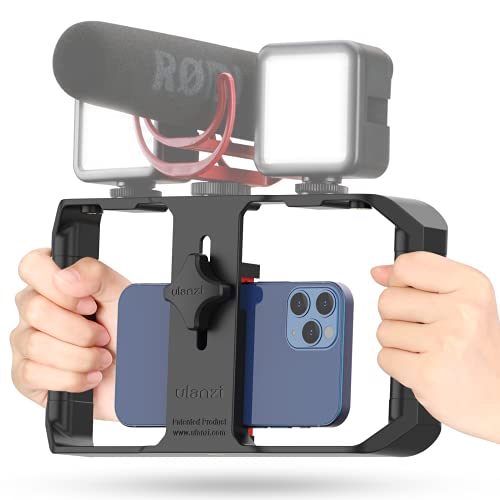
ULANZI U Rig Pro Smartphone Video Rig, Filmmaking Vlogging Case Phone Video
- Versatile Cold Shoe Mounts: 3 cold shoe mounts for accessories
- Multiple Attachment Options: Includes 3 shoe mounts and 2 threaded holes
- Compatible with Lights and Microphones: Mount LED lights and microphones easily
As an affiliate, we earn on qualifying purchases.
As an affiliate, we earn on qualifying purchases.
Conclusion
As you step into the universe of VR at festivals, remember that every moment captured offers a unique whisper of the experience. Embrace the opportunity to craft memories that linger gently, like a soft breeze. With a little preparation, your footage can become a cherished story, quietly waiting to be revisited. So go ahead, explore the virtual domain—what you create might just become a treasured little secret of your festival adventures.

Also GO Podcast Equipment Bundle, F998 Audio Mixer with BM800 Microphone
- Complete Podcast Equipment Bundle: Includes mixer, microphones, accessories
- Professional Sound Quality: Cardioid pickup, noise reduction, studio sound
- Upgraded F998 Sound Card: 16 effects, 7 modes, 4 voice changers, 9 knobs
As an affiliate, we earn on qualifying purchases.
As an affiliate, we earn on qualifying purchases.

Brother SAEXPRESS – Stitch Express (Auto Digitizing Software)
- Designs Included: Over 60 line art designs and 14 fill patterns
- Hoop Compatibility: Fits hoops up to 10” x 16”
- Software Type: Basic digitizing software for PC
As an affiliate, we earn on qualifying purchases.
As an affiliate, we earn on qualifying purchases.