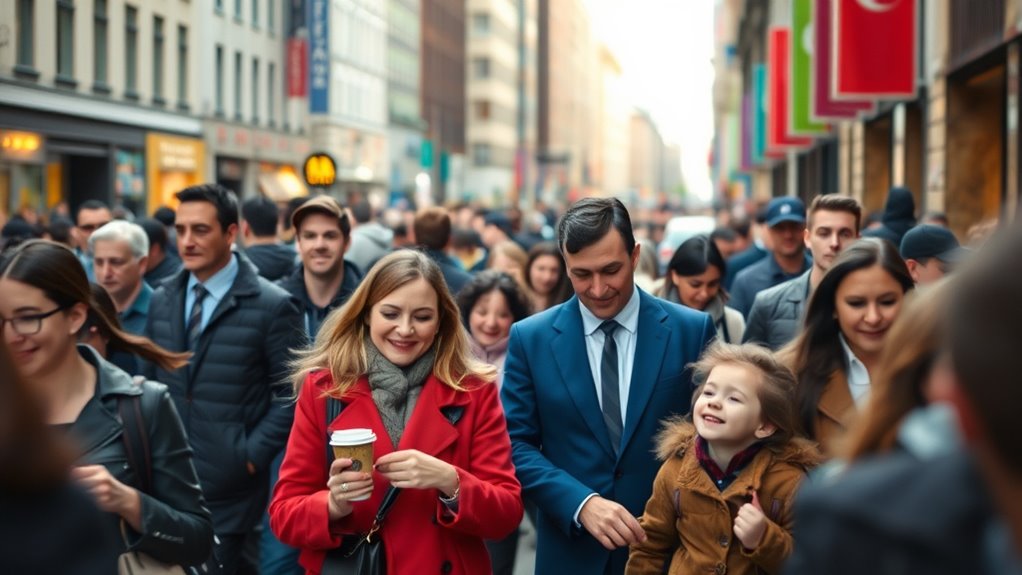

When taking crowd shots, you need to blur or obscure identifiable features like faces, license plates, or signage to protect privacy and avoid legal trouble. Not everyone wants their image shared, especially in sensitive settings. Be sure to review your photos carefully and anonymize any details that could reveal personal information. Maintaining these precautions helps you stay within legal boundaries and respect individuals’ rights—if you want to learn more about best practices, keep exploring how to handle privacy effectively.
Key Takeaways
- Blur or crop faces of individuals who haven’t given explicit consent before sharing crowd photos.
- Obscure identifiable details like license plates, signage, or personal belongings to protect privacy.
- Review images carefully to identify and hide any sensitive or private information inadvertently captured.
- Obtain explicit permission when planning to use crowd images for commercial or public purposes.
- Follow local privacy laws and regulations to ensure legal compliance and respect individual rights.

Taking crowd shots at public events can seem harmless, but it raises important privacy concerns you might not immediately consider. When you’re capturing large groups of people, it’s easy to focus on the event itself and overlook individual rights. However, understanding consent considerations is essential. Not everyone in the crowd may want to be photographed or shared publicly. Some individuals value their privacy highly, especially if they’re in sensitive situations or simply prefer to remain behind the scenes. Respecting these boundaries isn’t just polite—it’s a legal obligation in many jurisdictions. Before snapping away, think about whether you have explicit or implied consent from those you’re photographing. If you’re planning to use or distribute the images, especially for commercial purposes, obtaining clear permission becomes even more critical to avoid potential legal pitfalls.
Legal implications are another fundamental aspect you must keep in mind. Laws surrounding privacy rights vary depending on where you are. In some regions, capturing images of individuals without their knowledge can lead to lawsuits, especially if the photos are used in a way that invades their privacy or damages their reputation. For example, publishing crowd shots that clearly identify individuals without their consent might violate privacy laws or right-to-privacy statutes. Even in public spaces, there are limits—whether it’s for commercial use, online sharing, or media coverage—that can trigger legal consequences if breached. You should familiarize yourself with local regulations to understand what’s permissible. When in doubt, blurring faces or any identifiable features helps mitigate risks and demonstrates respect for people’s privacy.
Another aspect to contemplate is the potential for unintended privacy breaches. Crowd shots can inadvertently include sensitive information, such as license plates, personal belongings, or signage revealing private details. These elements, if not properly blurred or cropped, could lead to privacy violations or even security issues. It’s wise to review your images carefully before sharing or publishing. If you notice identifiable faces or details that could compromise someone’s privacy, make sure to obscure or remove them. This not only safeguards individuals but also shields you from legal repercussions.
privacy blur face tool
As an affiliate, we earn on qualifying purchases.
As an affiliate, we earn on qualifying purchases.
Frequently Asked Questions
Can I Legally Share Crowd Photos Without Blurring Faces?
You can share crowd photos without blurring faces, but be aware of privacy concerns and legal considerations. If the individuals are clearly identifiable, you should get their consent to avoid privacy issues. Laws vary by jurisdiction, so it’s safest to blur faces or obtain permission when sharing images featuring identifiable people. Respecting privacy helps prevent potential legal complications and maintains ethical standards in your photography.
How Do I Identify Individuals to Blur in a Crowd Shot?
Imagine scanning a bustling crowd, eyes catching familiar faces amid the sea of strangers. To identify individuals for blurring, rely on facial recognition tools or manual methods like zooming in and analyzing features. Focus on preserving anonymity by carefully selecting faces that stand out or seem recognizable. Use software to mark these faces, ensuring their identities stay private and privacy laws are respected, all while maintaining the authenticity of your shot.
Are There Specific Laws Regarding Privacy in Public Events?
You should know that privacy concerns and legal implications vary by location. Some regions have strict laws about photographing or sharing images of individuals without consent, even in public events. Always check local regulations to avoid legal issues. To protect privacy, blur faces or identifiable features when sharing crowd shots. Being cautious helps you respect people’s rights and prevents potential legal trouble related to privacy violations.
What Tools Are Best for Automatic Face Blurring?
You should try tools like Adobe Premiere Pro, Movavi, or YouTube’s auto-blur feature, which automatically detect and blur faces using facial recognition technology. These tools help you abide by privacy policies by protecting individuals’ identities in crowd shots. Always double-check that the software’s automatic face blurring is accurate, and stay up-to-date with privacy laws to ensure you’re respecting everyone’s privacy rights while sharing your videos.
How Long Should I Keep Crowd Photos With Identifiable Faces?
Think of your crowd photos as delicate secrets that deserve respect. You should keep images with identifiable faces only as long as necessary to comply with privacy laws and ethical considerations. Once the purpose is fulfilled, it’s best to blur or delete them to prevent unintended exposure. Staying mindful of privacy laws guarantees you honor people’s rights, fostering trust and responsible sharing in your photography.
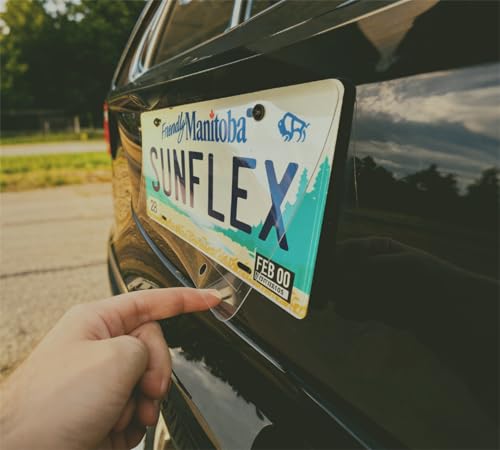
License Plate Privacy Cover & Frame, 3-in-1 Innovative Design – Anti-Glare, Waterproof & UV Resistant, Transparent Tag Guard for All-Weather Protection, Easy to Install (1 Piece)
1.Advanced Anti-Glare & Optical Protection The specially engineered ultra-thin protective layer effectively reduces harsh glare from sunlight and…
As an affiliate, we earn on qualifying purchases.
As an affiliate, we earn on qualifying purchases.
Conclusion
Remember, when capturing crowd shots, your responsibility extends beyond just getting a good photo. Blurring faces helps protect individuals’ privacy and avoid legal issues. For instance, imagine you’re photographing a public protest; blurring faces ensures you respect everyone’s privacy while still sharing the event. Always review your shots carefully and use editing tools to anonymize faces when needed. Doing so keeps your photography ethical and respectful, safeguarding both your subjects and your reputation.

ZOZDOKG for iPhone 17e Case & iPhone 16e Case with Privacy Screen Protector and Camera Protection, Compatible with MagSafe, Magnetic Shockproof Phone Cover for iPhone 17 e / 16 e Women/Girls – Pink
[Compatible Models] This for iPhone 17e case / iPhone 16e case pink with privacy screen protector and camera…
As an affiliate, we earn on qualifying purchases.
As an affiliate, we earn on qualifying purchases.

GIMP 2025 Photo Editor USB – Compatible with Windows – Full Image Editing Software – Open Source Alternative to Photoshop – Includes PDF Guide
Professional image editing software for Windows and macOS, preloaded on a convenient USB drive with no internet required…
As an affiliate, we earn on qualifying purchases.
As an affiliate, we earn on qualifying purchases.