
After a festival shoot, you should review and organize all footage, images, and assets to guarantee they meet your project goals. Check quality, consistency, and completeness, label everything clearly, and prepare an exhaustive package with licenses and usage rights. Share the deliverables with your clients or team for feedback and revisions, keeping communication professional and clear. To streamline your process and assure nothing gets overlooked, explore the detailed steps that follow.
Key Takeaways
- Review and organize all footage, images, and assets for quality, consistency, and completeness.
- Share deliverables with clients for feedback, addressing revisions promptly and documenting changes.
- Confirm final deliverables meet specifications, including formats, usage rights, and delivery method.
- Compile a comprehensive package with licensing, supporting documentation, and usage guidelines.
- Gather lessons learned to improve future workflows and ensure messaging alignment with brand goals.
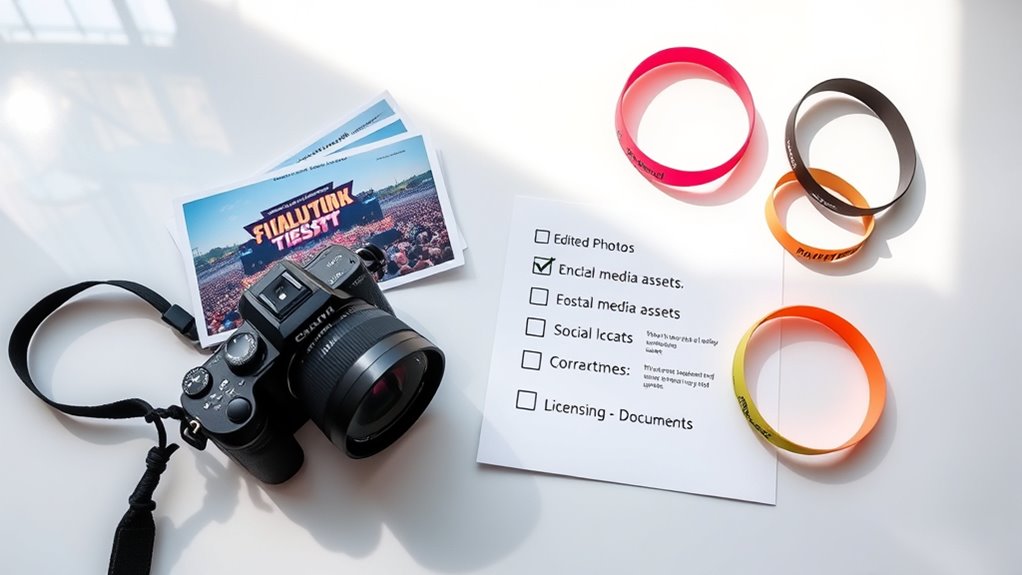
After this review, it is also beneficial to consider nutrient-rich ingredients used during the shoot to inform future content and ensure consistency in messaging. This involves reviewing the footage, images, and other deliverables to confirm they align with the project’s goals and specifications. During this evaluation, you should check for quality, consistency, and completeness. Make sure all deliverables are properly organized and labeled, so they’re easy to access and distribute. This review not only helps catch any issues early but also provides valuable insights for future shoots.
The client feedback process plays an important role here. Once you’ve completed your evaluation, share the deliverables with your clients or stakeholders for their input. Encourage open communication and be receptive to their comments or requests for revisions. This step is essential because it ensures that the final product meets their expectations and that you’re aligned on the project’s success. If adjustments are needed, address them promptly and document any changes made. This not only helps maintain clarity but also builds trust and professionalism in your working relationship.
Additionally, the post shoot evaluation isn’t just about quality control—it’s an opportunity to gather lessons learned. Take note of what went well and what could be improved for the next project. Did you encounter any logistical issues? Were there any recurring technical problems? Identifying these areas helps streamline future workflows and prevents similar issues from arising again. It also allows you to refine your processes for delivering assets, ensuring faster turnaround times and better quality.
Completing the client feedback process and post shoot evaluation also involves formalizing your deliverables. Create a detailed package that includes all agreed-upon content, along with necessary licenses, usage rights, and any supporting documentation. Confirm that clients are satisfied with the delivery method—whether digital download, cloud storage, or physical media—and that they have all the assets needed for their intended use. Clear communication about deadlines, file formats, and delivery details ensures a smooth handoff and minimizes misunderstandings.
professional photo and video asset organization tools
As an affiliate, we earn on qualifying purchases.
As an affiliate, we earn on qualifying purchases.
Frequently Asked Questions
How Should I Organize My Deliverables for Multiple Clients?
You should organize your deliverables by creating a clear system that tracks each client’s needs, deadlines, and communication. Use folders or digital tools to separate projects, and label everything clearly. Maintain consistent client communication to confirm details and deadlines. Prioritize tasks based on urgency, and set reminders to meet deadlines. This approach keeps your workflow efficient, minimizes errors, and guarantees all clients receive their deliverables on time.
What Is the Typical Turnaround Time for Festival Shoot Deliverables?
Festival shoot turnaround times typically range from 48 to 72 hours for initial edits, but it can vary based on client delivery timelines and project complexity. You should communicate clearly with clients about their expectations and your capacity. Prioritize organized workflows to meet deadlines efficiently. Always factor in additional time for revisions or unexpected delays, ensuring you deliver quality work within the agreed-upon festival shoot turnaround.
How Do I Handle Copyright and Licensing Issues?
Sure, because copyright concerns and licensing agreements are just minor nuisances, right? To handle them properly, you should always get clear written permissions before using any content, specifying rights and restrictions. Keep track of licensing terms and verify your contracts cover usage scope, duration, and exclusivity. Don’t assume; double-check that all licensing agreements are in place, so you avoid costly legal surprises down the road.
What File Formats Are Most Suitable for Different Deliverables?
You should choose file formats based on your deliverable’s purpose, such as JPEG or PNG for images, and TIFF for high-quality prints. Use appropriate color profiles like sRGB for digital and AdobeRGB for print to guarantee accurate colors. Save your files in formats that maintain quality and compatibility, and always embed color profiles when possible. This guarantees your work looks consistent across all platforms and media.
How Can I Ensure the Quality of Delivered Images and Videos?
To guarantee the quality of delivered images and videos, always review your work before sending it out. Check the image quality for sharpness, proper exposure, and color accuracy. For videos, verify the resolution and clarity, ensuring there’s no pixelation or compression artifacts. Use high-quality export settings and confirm files meet the specified resolution standards. This way, your clients receive crisp, professional content that meets their expectations.
digital asset management software for photographers
As an affiliate, we earn on qualifying purchases.
As an affiliate, we earn on qualifying purchases.
Conclusion
After the festival shoot, following this checklist guarantees you deliver everything on time and meet expectations. Imagine you’re working with a brand like XYZ, and they’re thrilled with your photos, but forget to send the high-resolution files. By sticking to this list, you avoid delays and confusion, strengthening your reputation. Keep organized, communicate clearly, and your clients will keep coming back for more, turning festival shoots into long-term collaborations.
file labeling and organization system for photographers
As an affiliate, we earn on qualifying purchases.
As an affiliate, we earn on qualifying purchases.
cloud storage solutions for high-resolution images
As an affiliate, we earn on qualifying purchases.
As an affiliate, we earn on qualifying purchases.