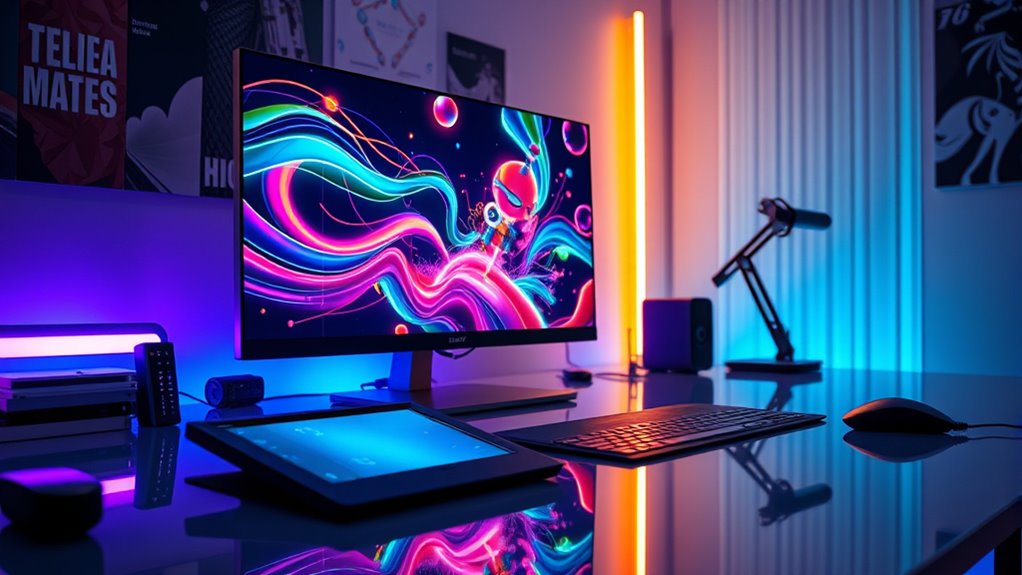

To design compelling motion graphics for aftermovies and recaps, focus on creating a cohesive visual story that highlights key moments with dynamic animations, vibrant colors, and synchronized sound. Use smooth shifts, motion blur, and layered effects to emphasize energy and emotion. Match animation pace to scene intensity and keep visuals harmonious. Incorporate animated overlays and lower thirds thoughtfully, ensuring every element serves the story. Keep exploring these techniques to craft immersive, memorable visuals that leave a lasting impact.
Key Takeaways
- Organize visual elements to create a cohesive narrative that guides viewers through the event story.
- Use dynamic motion, keyframing, and rhythm-matched animations to emphasize highlights and maintain engagement.
- Apply vibrant color schemes and visual harmony to evoke emotions and reinforce the recap’s mood.
- Incorporate motion graphics like transitions and overlays thoughtfully to enhance clarity and storytelling.
- Sync animations to music, speeches, or beats to maximize emotional impact and create a memorable viewing experience.

Creating compelling motion graphics involves more than just combining visuals and animation; it’s about telling a story through movement and design. When designing motion graphics for aftermovies and recaps, your goal is to craft a visual narrative that captures the energy and emotion of the event. To do this effectively, you need to master visual storytelling, which means organizing your elements in a way that guides viewers effortlessly through the story you want to tell. Every clip, transition, and text overlay should serve a purpose, enhancing the overall message rather than cluttering it. Think of your motion graphics as a visual journey, where each scene builds on the previous one, creating a cohesive experience that leaves a lasting impression.
Effective motion graphics tell a story through organized visuals, guiding viewers effortlessly and leaving a lasting impression.
Animation techniques are at the core of bringing this story to life. Using dynamic motion, you can emphasize key moments, such as highlight reels of performances or crowd reactions. Techniques like keyframing allow you to animate text and objects smoothly, guaranteeing transitions feel natural and engaging. Incorporate motion blur to add realism and dynamism, making fast-paced scenes more fluid and exciting. Layering multiple animation styles, such as kinetic typography and simple shape animations, helps maintain viewer interest and underscores important details. As you select your animation techniques, consider the rhythm of the event—fast cuts and quick transitions work well for energetic moments, while slower, more deliberate movements suit emotional or reflective segments.
Color plays an essential role in shaping your visual storytelling. Bright, vibrant palettes can heighten excitement, while muted tones evoke nostalgia or focus. Use color consistently to reinforce branding or mood, and consider how your choices impact the viewer’s emotional response. Incorporate motion graphics elements like animated transitions, overlays, and lower thirds thoughtfully—these should complement the story rather than distract from it. When you plan your animation techniques, aim for clarity and visual harmony, so your audience can follow the story without confusion.
Sound design and timing also intertwine with your visual choices, amplifying the impact of your motion graphics. Sync animations to beats, speeches, or music cues, creating a seamless audiovisual experience. The right timing ensures your message hits hardest at the right moments, making your recap memorable. In essence, designing motion graphics for aftermovies and recaps isn’t just about flashy visuals; it’s about crafting a compelling, emotionally resonant story through strategic visual storytelling and expert animation techniques. When you focus on these elements, your motion graphics will not only entertain but also deeply connect with your viewers, leaving a powerful impression of the event.

HUE Animation Studio: Complete Stop Motion Animation Kit (Camera, Software, Book) for Windows/macOS (Blue)
COMPLETE STOP MOTION ANIMATION KIT including the HUE HD USB camera with integrated microphone, easy-to-use stop motion software…
As an affiliate, we earn on qualifying purchases.
As an affiliate, we earn on qualifying purchases.
Frequently Asked Questions
How Do I Choose the Right Color Palette for Event Recaps?
To choose the right color palette for event recaps, consider color psychology to evoke the desired mood and energy. Use contrasting hues to make key elements stand out and improve readability. Think about the event’s theme and audience preferences, then select colors that complement each other while conveying the right emotion. Test different combinations to guarantee your graphics are visually appealing and effectively communicate the recap’s vibe.
What Software Is Best for Creating Dynamic Aftermovie Motion Graphics?
You should try Adobe After Effects for creating dynamic aftermovie motion graphics. It offers a wide range of video templates and allows you to customize dynamic shifts easily. You can also explore tools like Final Cut Pro or DaVinci Resolve, which support advanced motion graphics and transitions. These programs help you craft engaging visuals that capture the event’s energy, making your aftermovies stand out with professional, lively effects.
How Can I Synchronize Motion Graphics With Music Effectively?
To synchronize motion graphics with music effectively, focus on beat matching and visual tempo. Pay close attention to the beat grid in your editing software, aligning key graphic shifts with beats. Use keyframes to match visual changes to the rhythm, creating a cohesive flow. This approach guarantees your graphics enhance the music’s energy, making the aftermovie more engaging and dynamic. Practice helps you develop a keen sense for timing and synchronization.
What Are Some Tips for Maintaining Brand Consistency in Recaps?
Want to keep viewers engaged and your brand memorable? Focus on maintaining brand consistency by aligning your motion graphics with your brand voice and visual identity. Use consistent colors, fonts, and styles that reflect your brand’s personality. Regularly review your designs to guarantee they match your brand guidelines, and adapt your visuals to fit different recap themes without losing your core identity. This creates a seamless, professional experience that keeps your audience connected.
How Do I Optimize Motion Graphics for Different Screen Sizes?
To optimize motion graphics for different screen sizes, focus on responsive design by creating flexible layouts that adapt seamlessly. Keep an eye on aspect ratio variations, ensuring your graphics scale properly without distortion. Use vector graphics whenever possible for clarity, and test your animations across devices. This approach guarantees your visuals look professional and consistent, whether viewed on a small smartphone or a large monitor, providing a smooth experience for all viewers.

Sony EZEditor Digital-8 Home Video Editing Kit for Windows
Home editing system for Digital 8 comcorders
As an affiliate, we earn on qualifying purchases.
As an affiliate, we earn on qualifying purchases.
Conclusion
Now that you understand how to craft compelling motion graphics for aftermovies and recaps, remember—your visuals are the heartbeat of unforgettable memories. Think of your designs as the brushstrokes that bring moments to life, turning fleeting events into timeless stories. With creativity and precision, you can transform simple footage into enthralling experiences that resonate long after the event ends. So, go ahead—paint your masterpiece and let your motion graphics tell the story that words can’t!

Ambesonne Fall Shower Curtain, Leaf Group Motion in Mother Earth Transition from Summer to Winter Season Theme, Cloth Fabric Bathroom Decor Set with Hooks, 69" W x 75" L, Brown Orange
Measurements – 69” wide x 75” long. No liner needed. 12 hooks included. Made in Türkiye.
As an affiliate, we earn on qualifying purchases.
As an affiliate, we earn on qualifying purchases.

Lemniscate Music Sound Healing Tools – Practitioner Activator
As an affiliate, we earn on qualifying purchases.
As an affiliate, we earn on qualifying purchases.