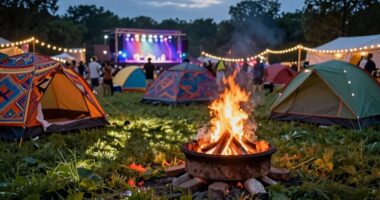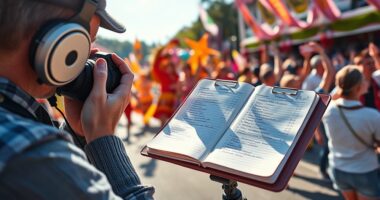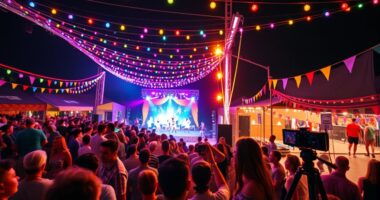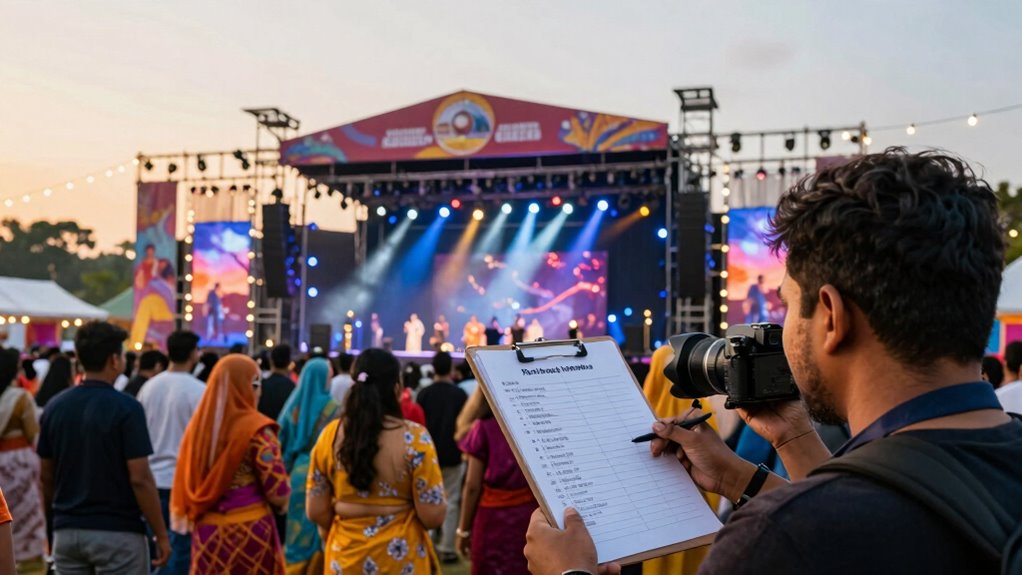

To plan a festival video shoot around set times, start by reviewing the lineup and performance schedule to identify key moments. Map out these peak segments and create a shot list focused on capturing them. Coordinate with organizers to access prime filming spots and guarantee your crew is positioned strategically. Build some buffer time for unexpected delays and stay flexible with adjustments. By staying organized and adaptable, you’ll maximize your coverage of important acts—more tips to perfect your shoot await.
Key Takeaways
- Review the festival schedule to identify peak performance times and key moments to prioritize filming.
- Create a detailed shot list aligned with scheduled acts to ensure coverage of main highlights.
- Coordinate with organizers to gain access and plan filming positions that avoid crowd interference.
- Allocate buffer time before and after scheduled acts for setup, delays, or unexpected changes.
- Prepare equipment and troubleshoot technical limitations to ensure smooth operation during critical moments.
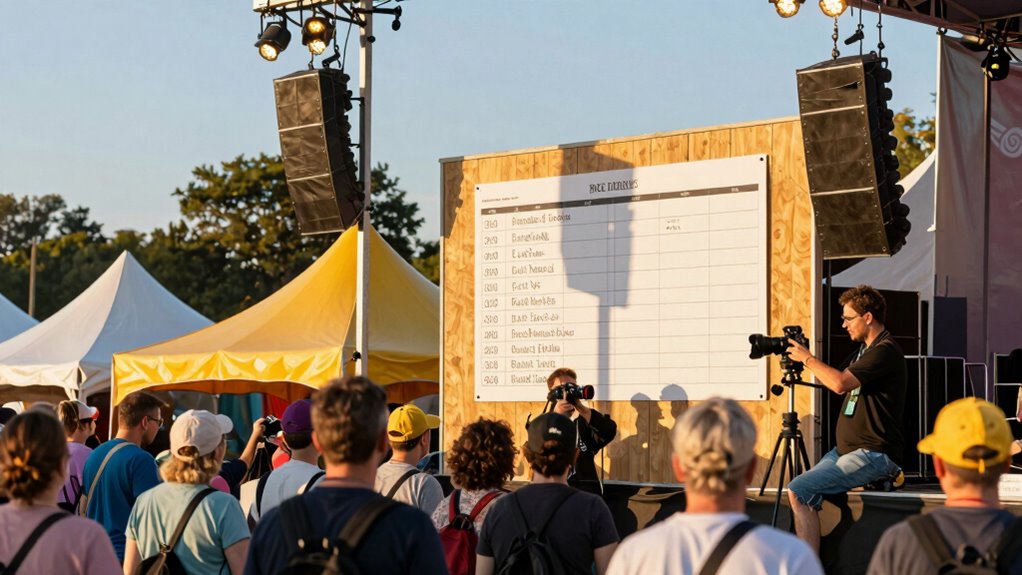
Planning a festival video shoot can seem overwhelming, but breaking it down into manageable steps makes it much easier. One of the first things you need to think about is how to align your shoot with the festival’s set times. Festivals operate on tight schedules, so understanding the lineup and timing of performances is essential. You’ll want to map out which acts or segments are most important to capture during their scheduled times, making sure your footage reflects the festival’s peak moments. Having a clear shot list tailored to the set times helps you stay focused and avoid missing key performances.
Crowd management plays a key role here. As festival-goers gather, you need to plan how to position your crew and equipment to get the best shots without disrupting the audience experience. Communicate with event organizers beforehand to secure access points or designated areas for filming. Think about placing crew members at strategic spots to manage crowd flow around your equipment, preventing congestion that could hinder both your shoot and festival attendees’ enjoyment. Having a plan for crowd control minimizes disturbances and guarantees safety for everyone involved. Additionally, understanding auditory processing challenges among attendees can help you better anticipate how sound may be affected in different areas of the venue, ensuring your audio recordings are clear and effective.
Equipment logistics are equally important to stay on schedule. You should prepare and transport all necessary gear well in advance, considering the festival’s rules on rigging and power sources. Reflect on what camera angles, stabilization gear, and audio equipment you need for each segment, and organize them systematically. To avoid delays, pack backup batteries, memory cards, and spare equipment. Coordinate with festival staff to understand restrictions on drone usage, lighting, or bulky gear, and plan your setup time accordingly. Efficiently managing your equipment logistics allows you to start and finish each shot during the designated set times, reducing the risk of missing important footage. Additionally, staying informed about event regulations and restrictions is crucial for a smooth shoot. Incorporating knowledge of projector technology can help you better understand the technical capabilities and limitations of your equipment, ensuring optimal performance during your shoot. Also, reviewing the power sources available at the venue can help prevent unexpected interruptions during filming.
Additionally, understanding the timing and scheduling of performances enables you to better anticipate and adapt to unexpected delays, ensuring you maximize your filming opportunities. Timing is everything in a festival shoot, so you must stay flexible. Even with meticulous planning, unforeseen delays can happen—acts might run late, or technical issues might arise. Build some buffer time into your schedule to adapt to these changes. Keep a close eye on the festival’s schedule updates and maintain constant communication with event organizers and performers. Being proactive helps you quickly adjust your plans, reposition equipment, or change shooting angles to make the most of every available moment.

Neewer F100 7inch Camera Field Monitor HD Video Assist IPS 1280×800 HDMI Input 1080p with Sunshade and Ball Head for DSLR Cameras, Handheld Stabilizer, Film Video Making Rig (Battery Not Included)
- Display Size: 7-inch wide view IPS panel
- Resolution: 1280 x 800 HD resolution
- Brightness: 450 nits brightness
As an affiliate, we earn on qualifying purchases.
As an affiliate, we earn on qualifying purchases.
Frequently Asked Questions
How Do I Handle Unexpected Artist Cancellations?
When an artist cancels unexpectedly, you should quickly activate your artist backup plans to keep the shoot on track. Contact your emergency contact procedures to notify the necessary team members and arrange alternative talent or locations. Having pre-established backup artists and clear communication channels guarantees you handle cancellations smoothly, minimizing disruptions. Stay flexible and prioritize quick decision-making to adapt seamlessly and keep your festival video shoot running efficiently.
What Equipment Is Essential for Quick Setup?
For a quick setup, you need essential equipment like portable lighting to guarantee proper lighting setup and versatile camera angles. Use lightweight tripods and ergonomic rigs for fast positioning, and pack quick-connect adapters for seamless assembly. Also, bring multiple batteries and SD cards to avoid delays. This way, you can efficiently adapt to changing conditions and capture high-quality footage without wasting time.
How Can I Ensure Audio Quality in Noisy Environments?
Think of your audio as a delicate butterfly, needing protection from a storm. You can safeguard it with soundproof barriers that block ambient noise and use wireless microphones to capture clear sound directly from performers. Position the microphones carefully, close to your subjects, and monitor audio levels constantly. These tools act as shields, ensuring your footage remains crisp and professional, even in the chaos of noisy environments.
What Permits or Permissions Are Needed for Filming?
You need to secure filming permits and location permissions before filming at a festival. Contact the event organizers or local authorities to understand the specific requirements. Obtain written approval to avoid legal issues, and make sure you clarify any restrictions or fees involved. This proactive approach helps you film smoothly without interruptions, respecting rules and safeguarding your project from potential legal complications.
How Do I Manage Crowd Control During Shoots?
Think of your crowd as a flowing river—you need barriers to guide its course. Use crowd barriers to create clear pathways, preventing chaos and keeping everyone safe. Coordinate with staff to monitor and manage the flow, like river guides steering the current. With effective staff coordination and strategic barriers, you guarantee a smooth, controlled environment, letting your shoot run seamlessly without disruptions or safety concerns.

COMITOK L7C Pro, Gimbal stabilizer for iPhone, Phone Stabilizer for Video Recording with Face/Object Tracking, 3-Axis Gimbal for Android & iPhone 15 Pro Max, Foldable Phone Gimbal Vlog Recording
- 3-Axis Stabilization: Smooth, cinematic footage with advanced stabilization
- AI Face/Object Tracking: Precise tracking with intelligent AI and app control
- Gesture Control: Hands-free filming with simple gesture commands
As an affiliate, we earn on qualifying purchases.
As an affiliate, we earn on qualifying purchases.
Conclusion
So, after all that planning around set times, you might find yourself wishing you’d just winged it. Ironically, the very structure you relied on could be what makes your footage feel rigid or predictable. But hey, isn’t it the chaos and spontaneous moments that truly capture the festival’s soul? Sometimes, the best shots happen when you break the schedule—so embrace the unexpected and let the festival’s energy guide your camera.
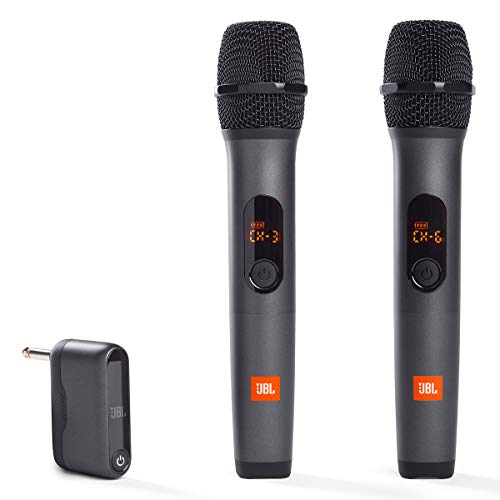
JBL Wireless Two Microphone System with Dual-Channel Receiver, Black
- High-Quality Vocal Sound: Crystal clear JBL Original Pro sound
- Dual-Channel Receiver: Connects two microphones for seamless mixing
- Rechargeable UHF Receiver: Up to 6 hours of wireless playback
As an affiliate, we earn on qualifying purchases.
As an affiliate, we earn on qualifying purchases.

K&F CONCEPT 75" Compact Aluminum Travel Camera Tripod
- Innovative Pentagonal Tube Design: Enhanced stability and portability
- Lightweight and Compact: Weighs 2.6 lbs, folds to 19.6 inches
- Universal Phone & Tablet Holder: Fits smartphones and tablets securely
As an affiliate, we earn on qualifying purchases.
As an affiliate, we earn on qualifying purchases.