
To prepare your data and connectivity, guarantee your devices support eSIMs and can handle remote activation through carrier tools or QR codes. Keep apps updated and consider offline synchronization features to maintain access when internet is limited. Regularly review your device’s compatibility and optimize settings for seamless switching between networks and plans. Proper preparation reduces delays and technical issues. If you want to learn how to effectively set this up, keep exploring strategies and tools designed for smooth connectivity.
Key Takeaways
- Ensure device compatibility with eSIM technology to enable seamless remote activation and switching plans.
- Regularly update device firmware and management apps for optimal performance and security.
- Use management platforms to streamline eSIM provisioning, activation, and remote control.
- Configure offline app synchronization settings to maintain data integrity during connectivity lapses.
- Train teams on eSIM activation and offline app procedures to prevent delays and ensure smooth operations.
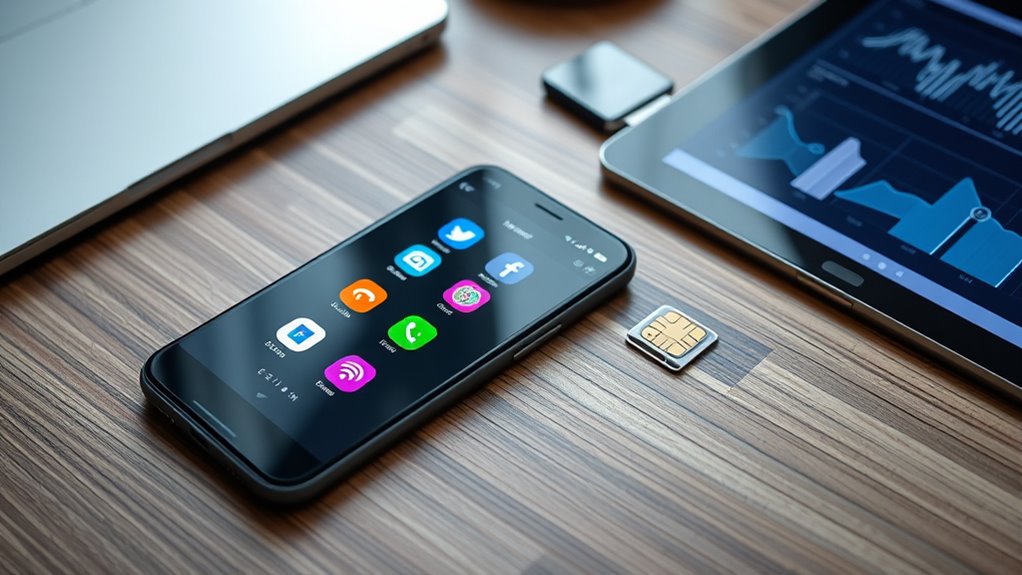
Are you ready to guarantee your data and connectivity systems are prepared for what’s next? Staying ahead in today’s fast-paced digital world means ensuring your devices and apps are optimized for seamless operation. One key area to focus on is eSIM activation. Unlike traditional SIM cards, eSIMs allow you to switch carriers or plans without swapping physical cards. This flexibility is essential for businesses and individuals who travel frequently or need quick network adjustments. To make the most of this technology, you must understand the eSIM activation process thoroughly. It involves downloading a digital profile embedded in your device, which can be done remotely via QR codes or carrier apps. Confirming your devices support eSIMs and that your team knows how to activate them quickly eliminates downtime and keeps your connectivity robust. This process also supports remote management, meaning you can activate, deactivate, or switch plans without physical intervention, saving time and reducing logistics headaches. Additionally, understanding how to optimize device compatibility can ensure smoother deployment and fewer technical issues during activation.
Ensure seamless connectivity with quick eSIM activation and remote management capabilities.
Alongside eSIM activation, offline app synchronization plays a fundamental role in maintaining reliable data access, especially in environments with inconsistent internet connectivity. Offline app synchronization allows you to keep critical data up-to-date across devices even when offline. Once a device reconnects to the internet, the app automatically syncs local changes with the cloud or central database, ensuring consistency and data integrity. This feature is essential for fieldwork, remote operations, or areas with limited network coverage, where real-time connectivity isn’t always possible. Proper implementation ensures your team can work uninterrupted, with the confidence that their data will sync seamlessly once reconnected.
To optimize both eSIM activation and offline app synchronization, you should establish clear protocols. Regularly update device firmware and app versions to support the latest synchronization features and security patches. Train your team on the activation steps to avoid delays during deployment or troubleshooting. Also, consider investing in management platforms that streamline eSIM provisioning and provide centralized control over device profiles. For offline apps, configure synchronization settings to balance between data freshness and resource consumption, avoiding conflicts or data loss. By doing so, you’re not only safeguarding your data but also enhancing operational continuity in any situation.
In essence, preparing your systems with effective eSIM activation processes and reliable offline app synchronization ensures your connectivity remains resilient and adaptable. These strategies empower you to operate efficiently, respond swiftly to changing circumstances, and keep your data secure—no matter where you are or what challenges arise.
Frequently Asked Questions
How Secure Are Esims Compared to Traditional SIM Cards?
You’ll find that eSIM encryption makes them more secure than traditional SIM cards. Since eSIMs are embedded and remotely programmable, they reduce physical theft risks and unauthorized access. They also benefit from advanced SIM card security features, like secure element technology, which protects sensitive data. Overall, eSIMs offer enhanced security, making it harder for hackers to intercept or clone your device compared to traditional SIM cards.
Can Offline Apps Function Without an Internet Connection at All Times?
While offline apps can sometimes operate without a constant internet connection, their full potential is often limited by offline app restrictions and connectivity dependence. You might find that certain features or updates require online access, making it seem like they’re functioning independently. To truly enjoy seamless use, you’ll want to balance offline capabilities with occasional connectivity, understanding that some limitations are simply part of the experience.
Are Esims Compatible With All Mobile Devices?
Not all mobile devices are compatible with eSIMs because of device compatibility and carrier restrictions. You need a device with an eSIM slot and support for eSIM technology, which isn’t universal. Check your device’s specifications and confirm with your carrier if they support eSIMs for your model. Some older phones and budget devices may not be compatible, so it is crucial to verify before trying to activate an eSIM.
How Do I Troubleshoot Connectivity Issues With Offline Apps?
Think of your offline app like a ship needing a clear path to sail. To troubleshoot connectivity issues, start with network diagnostics to identify any signal problems. Then, check app permissions to guarantee it can access necessary data and features. Restart your device if needed, and update the app. These simple steps can often turn the tide in resolving offline app issues, keeping your digital voyage smooth.
What Are the Cost Implications of Switching to Esims?
Switching to eSIMs can lead to significant cost savings by reducing hardware expenses and enabling easier plan management. You might also save on licensing fees with digital SIM management platforms. However, initial setup costs and carrier fees could impact your budget. Overall, eSIM adoption can lower ongoing expenses and streamline operations, making it a cost-effective choice if you consider both short-term investments and long-term savings.
Conclusion
By mastering eSIMs and offline apps, you’re building a bridge across the digital chasm, ensuring you stay connected no matter where life takes you. Think of these tools as your trusty compass, guiding you through the maze of modern connectivity with confidence. As you prepare, remember that staying adaptable is your secret weapon—turning potential dead-ends into open roads, so your digital journey remains smooth and unstoppable, no matter how unpredictable the terrain.