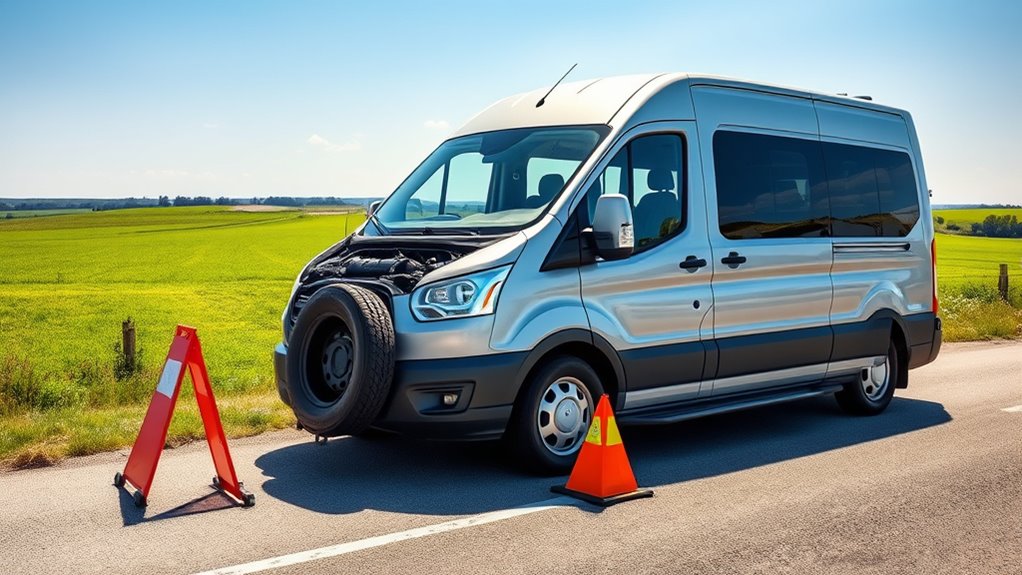

Before driving to a festival, it’s essential to check your vehicle’s tires for proper pressure, damage, and tread wear, including the spare. Verify all fluids—oil, coolant, brake, and washer—are topped up, and confirm that lights, signals, and brakes work correctly. Pack an emergency kit with essentials like jumper cables, a flashlight, and basic tools. Proper preparation minimizes roadside issues, so keep these tips in mind for a smooth trip ahead. Keep going for more helpful pointers.
Key Takeaways
- Check tire pressure, including the spare, and inspect tire condition for cracks or uneven wear before departure.
- Pack an emergency kit with essentials like a first aid kit, flashlight, jumper cables, and reflective warning triangles.
- Verify all vehicle fluids are at proper levels and ensure brakes, lights, and windshield wipers are functioning correctly.
- Inspect tires for damage or punctures, and secure tire valves to prevent air leaks during the trip.
- Conduct a comprehensive vehicle check to ensure safety, proper system operation, and overall readiness for the festival journey.
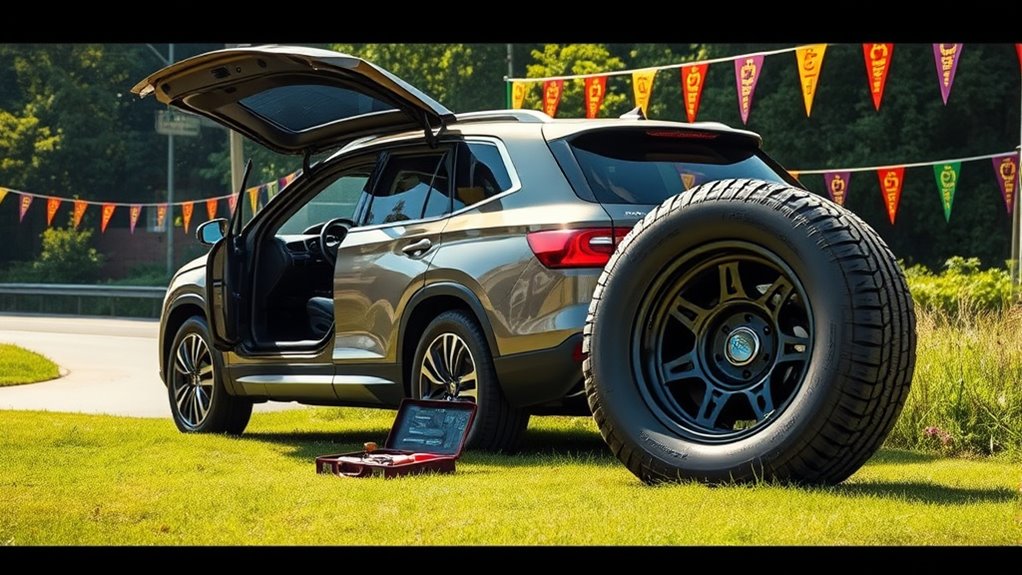
Regular vehicle checks are essential to guarantee your car remains reliable and safe on the road. When you’re heading to a festival, you want to avoid any surprises that could throw off your plans. Before you hit the highway, take the time to inspect your vehicle thoroughly. Start with tire pressure—this is critical for safety and fuel efficiency. Properly inflated tires not only improve handling but also reduce the risk of flats or blowouts. Use a reliable pressure gauge to check each tire, including the spare. If any are below the recommended PSI, inflate them to the correct level. This small step can save you from roadside hassles later on.
Regularly check tire pressure to ensure safety and avoid roadside issues during festival trips.
Another important prep is packing an emergency kit. Even if your trip is short, unforeseen situations can occur, and being prepared makes all the difference. Your emergency kit should include essentials like a first aid kit, flashlight, batteries, basic tools, and reflective warning triangles. Consider adding a multi-tool, jumper cables, and a portable phone charger. These items help you manage common roadside issues without panic. Remember, a flat tire or dead battery can happen anytime, especially on long drives or if your vehicle hasn’t been serviced recently. Having an emergency kit ensures you’re ready to handle minor problems or seek help if needed.
While checking tire pressure, also inspect your tires for signs of wear or damage. Look for cracks, punctures, or uneven tread, which could indicate the need for replacement. Maintaining good tire health is critical for safe driving, especially on busy routes or rough roads often encountered at festivals. Don’t forget to check your tire valves and ensure they’re secure. If you find any issues, address them before setting off or plan to get replacements to avoid roadside delays.
Beyond tires, review your vehicle’s fluid levels—oil, coolant, brake fluid, and windshield washer fluid. These are essential for ideal performance and safety. Make sure your brakes are responsive and that your lights, signals, and wipers are working perfectly. A well-maintained vehicle not only reduces breakdown risks but also keeps you and your fellow travelers safe in unpredictable conditions. Additionally, incorporating regular maintenance into your preparations can prevent many common issues. When you’re prepared with the right tools, checked tires, and a stocked emergency kit, you’ll travel with peace of mind. This way, you can focus on enjoying the festival experience rather than worrying about your car, knowing you’ve done everything to guarantee a smooth, safe journey.
Frequently Asked Questions
What Documents Should I Carry for Vehicle Insurance?
You should carry your insurance documentation, such as the insurance certificate and policy papers, to prove your coverage. Make sure your policy is up-to-date, especially if you’re approaching renewal, as some festivals might require proof of valid insurance. It’s also wise to keep a digital copy or photo of these documents on your phone. This way, you’re prepared in case of any checks or emergencies during your trip.
How Do I Prevent My Vehicle From Overheating During Long Drives?
To prevent your vehicle from overheating during long drives, you should regularly check your coolant levels and top them off if needed. Keep an eye on the radiator for signs of leaks or blockage, and make certain it’s properly maintained. Additionally, inspect hoses for cracks and clean the radiator fins to improve airflow. These steps help your engine stay cool and prevent overheating during extended trips.
What Are Common Signs of a Failing Alternator?
Your vehicle’s alternator is like the heartbeat of your car’s electrical system. Watch for warning signs like dimming headlights, flickering dashboard lights, or difficulty starting. Battery charging issues often indicate alternator trouble, causing your battery to drain quickly. If you notice strange electrical behaviors or warning lights on your dashboard, it’s time to get your alternator checked. Catching these signs early keeps your ride smooth and reliable.
How Often Should I Check Tire Pressure Before a Trip?
You should check your tire pressure at least once a week and before any long trip. Use a reliable pressure monitoring device to verify accuracy. It’s also a good idea to perform tire rotation regularly to promote even wear. Before your trip, double-check the tire pressure, especially if temperatures have changed, to prevent blowouts and improve fuel efficiency. Properly maintained tires keep you safe and save you money.
What Are the Best Ways to Secure My Vehicle at the Campsite?
Think of your campsite as a fortress for your vehicle. To secure it, use sturdy wheel locks or a steering wheel lock to deter thieves. Park in well-lit, busy areas for better parking safety, and always lock all doors and windows. Consider installing a security alarm or camera if possible. These steps create an impenetrable shield, ensuring your vehicle stays safe and sound, letting you enjoy the festival worry-free.
Conclusion
As you prepare for the festival drive, remember that thorough vehicle checks and spare parts are your safety net. While the thrill of the journey excites you, a small oversight could turn that joy into frustration. The quiet reassurance of a well-stocked spare and a checked engine contrasts sharply with the chaos of roadside breakdowns. Stay vigilant, stay prepared—because peace of mind on the road is the best festival companion you can have.