
To manage money effectively with cashless systems, use digital wallets that track your spending and set budgets to stay on track. Always have backup plans, like keeping some cash or physical cards, in case your digital wallet faces issues. Building an emergency fund ensures you’re prepared for unexpected disruptions. Combining these strategies helps you maintain financial stability and confidence. Keep exploring to discover more tips for secure, smart money management in a digital age.
Key Takeaways
- Maintain physical cash or alternative payment methods to ensure continued access during digital wallet outages.
- Regularly backup digital wallet data and enable security features like PINs and biometric authentication.
- Build an emergency fund covering 3-6 months of expenses for financial stability during system failures.
- Use digital tools to monitor and categorize spending, helping to identify overspending and adjust habits accordingly.
- Diversify payment options and keep some cash available to ensure seamless access to funds in any situation.
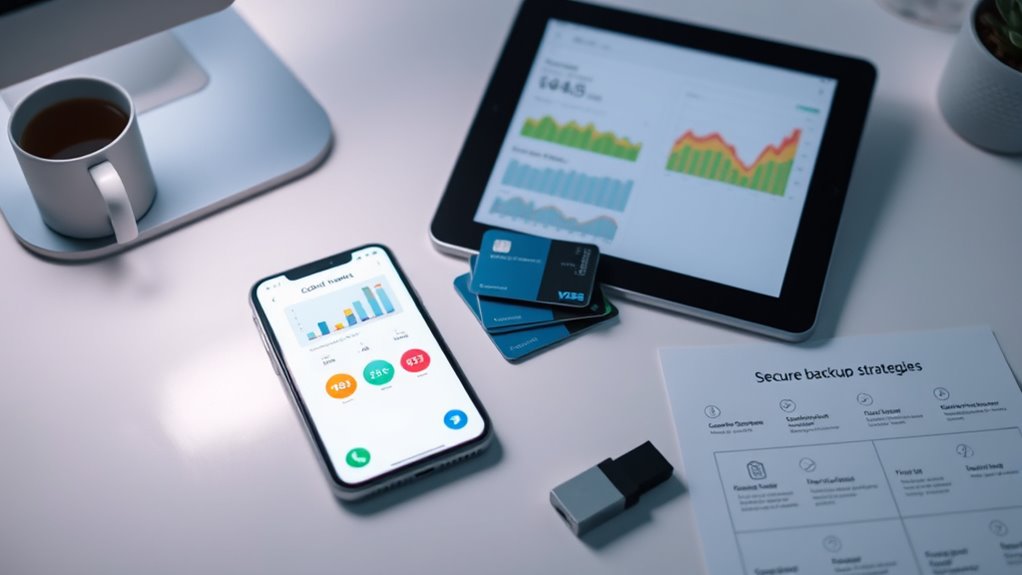
How effectively you manage your money can considerably impact your financial stability and future goals. In today’s digital age, cashless systems like digital wallets have become a key part of everyday transactions. Using a digital wallet allows you to pay quickly and conveniently without carrying cash or cards, making it easier to track your spending. However, relying solely on digital wallets means you need a backup plan in case of technical issues, such as app malfunctions or phone loss. To stay prepared, it’s vital to have physical cash or alternative payment methods available.
Building an emergency fund is another essential aspect of money management, especially when utilizing cashless systems. An emergency fund acts as a financial safety net, providing you with quick access to funds during unexpected situations like medical emergencies, job loss, or urgent repairs. When your digital wallet isn’t accessible, having savings set aside guarantees you’re not caught off guard. Aim to save enough to cover three to six months’ worth of living expenses, and keep these funds in a separate account that’s easy to access but not tempting to spend impulsively.
Managing your money effectively with cashless systems also involves understanding your spending habits. Digital wallets often come with features that categorize your expenses, giving you insights into where your money goes. Use these tools to identify areas where you can cut back and allocate savings toward your emergency fund or future investments. Regularly reviewing your transaction history helps you stay aware of your financial health and adjust your spending habits accordingly.
It’s also wise to diversify your payment methods. While digital wallets are convenient, keeping some cash or a physical card can be a lifesaver if technology fails or you encounter situations where digital payments aren’t accepted. Having a backup plan reduces stress and ensures you’re prepared for any scenario. Additionally, consider setting security measures like PINs, biometric authentication, and account alerts to protect your digital wallets from unauthorized access.
Ultimately, managing your money effectively in today’s cashless environment involves balancing technology with prudence. Building an emergency fund ensures you’re financially resilient, while understanding how to use digital wallets responsibly maximizes their benefits. Remember, no matter how advanced your payment methods become, having a backup plan and a solid savings cushion can make all the difference in maintaining financial stability and achieving your long-term goals. Incorporating reliable backup power solutions can further safeguard your financial assets in case of unexpected disruptions.
Frequently Asked Questions
How Secure Are Cashless Payment Systems Against Hacking?
Cashless payment systems are generally secure, but they aren’t foolproof against hacking. They rely on strong encryption protocols to protect your data, making it difficult for hackers to intercept information. Additionally, biometric security features, like fingerprint or facial recognition, add extra layers of protection. However, you should stay vigilant, keep your apps updated, and use secure networks to minimize risks and guarantee your transactions stay safe from cyber threats.
What Should I Do if My Digital Wallet Is Compromised?
If your digital wallet is compromised, act quickly by contacting your provider to freeze or disable it. Use strong user authentication methods, like two-factor authentication, to prevent further fraud. Report the incident to your bank or service provider and monitor your account for suspicious activity. Implement fraud prevention tips, such as changing passwords and reviewing transaction history, to protect your finances and minimize damage.
Are There Legal Protections for Cashless Transaction Errors?
While errors in cashless transactions can be frustrating, you do have legal protections. Consumer rights guarantee you’re protected against unauthorized charges and transaction disputes. Banks and digital wallets are required to investigate and resolve errors, often providing refunds or credits. Stay vigilant, keep records of all transactions, and report issues promptly. These protections help you recover funds quickly and ensure fair treatment in digital payments.
How Can I Access Funds if My Mobile Device Fails?
If your mobile device fails, you can access funds through backup options like physical cards linked to your account or visiting your bank in person. Many cashless systems offer emergency access codes or customer support lines to help you retrieve or transfer funds. Keep a printed copy of important details and consider setting up multiple access methods to guarantee you can always access your funds, even if your mobile device malfunctions.
What Backup Methods Are Recommended for Cashless Transactions?
Imagine a safety net woven beneath your digital transactions—you should carry alternative payment methods like a prepaid card or physical card, ensuring you can still buy essentials if your mobile fails. Keep emergency cash in a secure spot, hidden but accessible. These backups act like anchors, giving you confidence to navigate unforeseen tech glitches and keep your financial flow steady in any situation.
Conclusion
As you navigate the world of cashless systems, remember that backup plans are your safety net. Just like finding a forgotten wallet in your coat pocket on a cold day, having a backup guarantees you’re never left stranded. Stay prepared, keep your options open, and trust that your mindful money management will flow smoothly, even when the unexpected sneaks in like a sudden gust of wind. Stay vigilant, and your financial journey will always find its way.