When using drones, photography, or press activities, securing the proper permits and permissions is essential to stay legal and safe. You need to research local drone laws, obtain necessary licenses if flying commercially, and get permits from authorities or landowners for any filming in public or private spaces. Failing to do so can lead to fines or legal trouble. To understand exactly what’s required for your project, explore the details ahead.
Key Takeaways
- Obtain drone operation permits and adhere to flight regulations for safe, legal aerial photography and press coverage.
- Secure necessary photography or press permits from local authorities when capturing sensitive or private locations.
- Register commercial drones and acquire pilot licenses if required by local aviation laws.
- Verify no-fly zones and altitude restrictions before drone deployment to ensure compliance.
- Keep all permits, licenses, and documentation accessible during media or drone activities to demonstrate legal compliance.
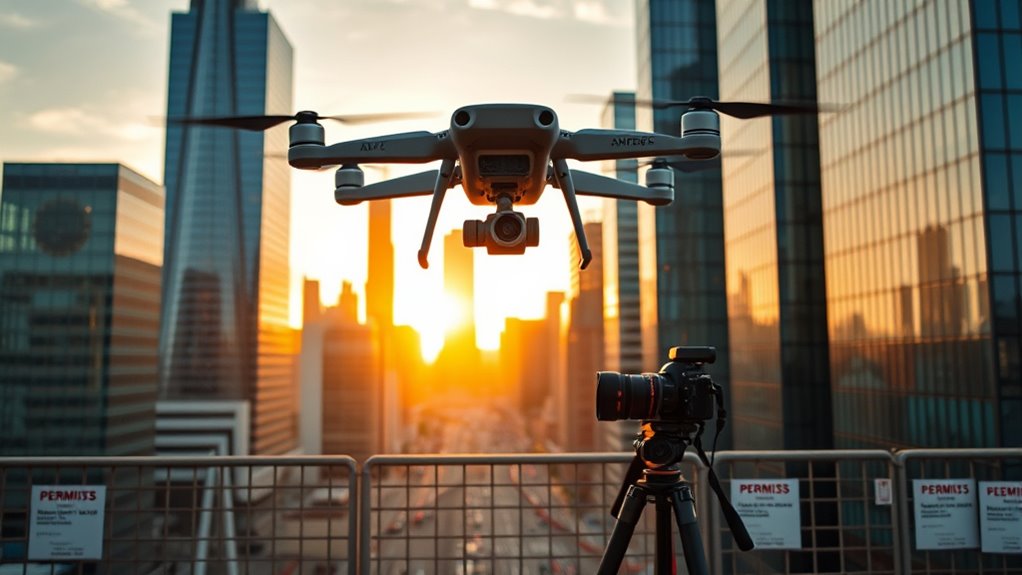
Obtaining the necessary permits and permissions is a essential step before starting any project, whether it’s building a new structure, hosting an event, or making significant modifications to property. When it comes to drone operations, understanding drone flight regulations is imperative. These rules govern where, when, and how you can fly, ensuring safety and privacy are maintained. Depending on your location, you might need to register your drone with aviation authorities, adhere to altitude restrictions, or avoid flying near airports and crowded areas. Ignoring these regulations can lead to hefty fines or even criminal charges. Before launching your drone, research local drone laws thoroughly. If you plan to capture aerial footage for commercial purposes, you’ll also need to consider photography licensing. Not all aerial photography is free to use, especially if it involves commercial intent or sensitive locations. Securing the appropriate licensing ensures you’re compliant and protected from potential legal issues. It’s essential to verify whether you need a permit to shoot in specific areas, such as public parks, private properties, or protected sites. Many jurisdictions require you to apply in advance and pay a fee, ensuring your project aligns with local regulations.
For drone pilots, obtaining a drone pilot certificate or license may be necessary, especially if your drone exceeds certain weight thresholds or if you’re involved in commercial activities. This certification process usually involves passing a knowledge test on drone safety, regulations, and airspace rules. It demonstrates your competency and commitment to responsible flying. Similarly, for photography, securing the right licensing can involve applying for permits from local government agencies or landowners. If you’re shooting in a public space or private property, getting explicit permission can prevent disputes. For commercial shoots, some areas require a formal permit that states your intended use, equipment, and duration of the project. Not adhering to these licensing requirements can result in fines, confiscation of equipment, or legal action.
Always plan ahead by consulting official sources—such as aviation authorities and local government websites—to ensure you meet all legal requirements. Keep documentation of your permits and licenses handy during your project; authorities may request proof of compliance. Remember, securing the right permits and permissions isn’t just about avoiding penalties; it’s also about respecting the rules and safeguarding your reputation. Whether you’re flying a drone or capturing images, understanding and following drone flight regulations and photography licensing processes will help you operate responsibly and professionally.

FAA Drone Labels (2 Sets of 3) + FAA UAS Registration ID Card for Hobbyist Pilots – Optional Battery Labels
You get 2 sets of 3 Labels, 1 FAA ID Card – All customized with your FAA information
As an affiliate, we earn on qualifying purchases.
As an affiliate, we earn on qualifying purchases.
Frequently Asked Questions
Are There International Drone Permit Requirements?
Yes, there are international drone permit requirements. You need to follow international regulations that govern drone operations across borders, respecting drone sovereignty of each country. These regulations often vary, so you must obtain specific permits for each country you plan to operate in. Ignoring these rules can lead to legal issues, fines, or confiscation. Always check the local drone laws beforehand to guarantee compliance and smooth operations.
How Can I Expedite Permit Approvals?
Did you know that 70% of permit applications are approved within two weeks? To expedite permit approvals, guarantee your drone registration is complete and accurate, and submit all required documents upfront. Keep track of permit renewal deadlines and respond promptly to any additional requests. By staying organized and proactive, you can speed up the process and avoid delays, making your drone operations smoother and more efficient.
What Are Penalties for Unauthorized Drone Use?
If you use a drone without proper registration, you risk penalties like hefty fines or even criminal charges. Authorities enforce penalties strictly through penalty enforcement measures, which can include confiscation of your drone or legal action. Always verify your drone is registered and compliant with regulations to avoid these consequences. Ignoring registration rules puts you at risk of significant legal trouble, so stay informed and adhere to local drone laws.
Can Permits Be Transferred or Sold?
Think of a permit as a special key to a secret garden. You can’t simply transfer or resell this key, as permits are typically non-transferable and tied to the original applicant. Some jurisdictions allow permit transfer or resale, but you must check local regulations first. If permitted, you’ll need to follow proper procedures, ensuring the new holder meets all requirements to access that exclusive space.
How Do Permit Rules Differ for Commercial vs. Recreational Use?
You should know that commercial drone permits often have stricter rules, including drone permit exemptions and specific flight restrictions, compared to recreational use. For recreational flying, you typically follow simpler guidelines with fewer restrictions, but public access restrictions still apply. Always check local regulations to guarantee you’re compliant, as commercial operations may require additional permissions, while recreational users enjoy more leniency but must still respect airspace rules.

Personalised Drone Pilot License ID – FAA Registered, Customisable, Double-Sided with Photo, Name, Issue & Expiry Date – Pilot Certification Identity
Drone Pilot Photo License: Made In America by The Card Project US
As an affiliate, we earn on qualifying purchases.
As an affiliate, we earn on qualifying purchases.
Conclusion
Now that you understand the rules around drone, photo, and press permits, the real challenge begins. Will you navigate the complex web of approvals smoothly, or find yourself caught off guard when unexpected restrictions surface? The stakes are higher than you think—each permit has its own story, its own secrets. Stay alert, stay prepared. Because in this world, one overlooked permission could change everything, leaving you questioning what’s truly allowed.

Conservation: RIBA Plan of Work 2013 Guide
As an affiliate, we earn on qualifying purchases.
As an affiliate, we earn on qualifying purchases.

Newbeedrone Portable Drone Tool Kit Set: Come With Soldering Iron Storage Bag Prop Tool Screwdriver AIO Hex Driver Tweezers Cutter Solder Practice Board For FPV Drone FPV Starters RC Car Airplane
Muti-functional RC Tool Set: This highly integrated tool kit includes almost everything you need in the field, especially…
As an affiliate, we earn on qualifying purchases.
As an affiliate, we earn on qualifying purchases.