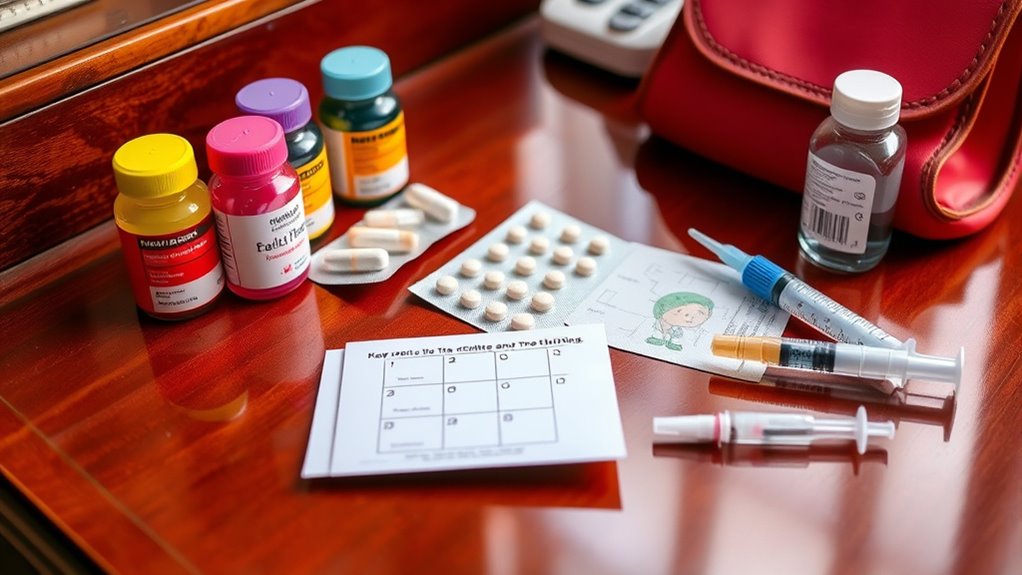

Before your trip, check that you’re up-to-date on all recommended vaccines and carry your immunization records. Bring any ongoing medications along with prescriptions, and pack over-the-counter remedies for common health issues. Verify that your travel documents, including your passport and insurance info, are current and accessible. Organize a health kit with essential meds and records, and review health risks at your destination. To make certain you’re fully prepared, continue exploring key steps for a smooth, safe journey.
Key Takeaways
- Review destination-specific vaccine recommendations and schedule necessary appointments early for multi-dose vaccines.
- Pack current prescriptions, OTC remedies, and vaccination records, ensuring easy access during travel.
- Verify passport validity for six months beyond travel dates and gather all required travel documents.
- Confirm travel insurance coverage includes medical care abroad and keep contact information accessible.
- Prepare a health kit with essential medications, documentation, and stay informed about health risks at the destination.
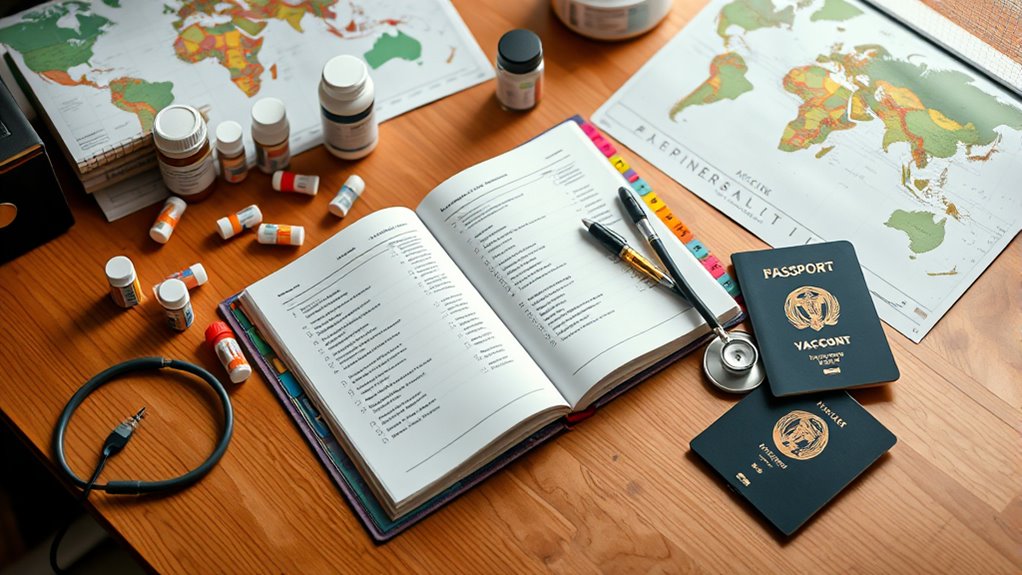
Before you set out on your journey, it’s essential to review an all-inclusive pre-trip health checklist to make certain you’re prepared for any health-related issues. One of the most important steps is guaranteeing you have the necessary vaccines and medications for your destination. Check the CDC or WHO guidelines well in advance, as some vaccines require multiple doses or time to become effective. This way, you can schedule appointments with your healthcare provider early enough to get the shots you need. Don’t forget to bring any prescriptions you’re currently taking, and consider packing some over-the-counter remedies for common ailments like headaches, stomach issues, or allergies. Having these on hand can save you from unnecessary discomfort or a trip to the pharmacy abroad.
Equally essential is your travel documentation, which should be up to date and easily accessible. Make sure your passport is valid for at least six months beyond your travel dates, as many countries require this for entry. Besides your passport, gather all other necessary travel documents, such as visas, travel insurance policies, flight itineraries, and hotel reservations. Travel insurance isn’t just a safety net for medical emergencies; it often covers trip cancellations, lost luggage, and other unexpected issues. Carry digital copies of these documents, stored securely in your email or a cloud-based service, in case the originals get lost or stolen. Physical copies should be kept in a separate, safe place as well.
When preparing your travel health kit, include copies of your vaccination records, especially if certain destinations require proof of immunization. This documentation can be essential at border crossings or health clinics abroad. Confirm that your travel insurance covers medical care in your destination country and understand the claim procedures beforehand. Also, check whether your health insurance offers any international coverage, and if not, ensure your travel insurance fills that gap. The right documentation and insurance coverage will give you peace of mind, knowing that you’re protected against health surprises along the way.
Frequently Asked Questions
Do I Need a Doctor’s Appointment for Every Vaccine?
You don’t always need a doctor’s appointment for every vaccine. For some vaccines, like those at a travel clinic, you might be able to get them during a single visit. However, certain vaccines require a series or specific timing, so scheduling a dedicated vaccine appointment guarantees you get all the necessary shots. It’s best to call your travel clinic beforehand to confirm their process and plan accordingly.
Are There Any Side Effects From Travel Vaccines?
Most travel vaccines have a 95% efficacy rate, making them highly effective for protection. You might experience common side effects like soreness at the injection site, mild fever, or fatigue, which usually resolve quickly. Serious side effects are rare. If you’re concerned, talk to your healthcare provider beforehand. Overall, the benefits of vaccination far outweigh the risks, helping you stay safe during your trip.
How Far in Advance Should I Get Vaccinated?
You should get vaccinated at least 4 to 6 weeks before your trip to allow your body to build immunity. Visit a travel health clinic early for vaccine scheduling, as some vaccines require multiple doses or time to become effective. Planning ahead guarantees you’re fully protected and reduces the risk of last-minute scheduling conflicts. Don’t delay—early vaccination helps keep you safe and healthy during your travels.
Can I Take My Regular Medications Abroad?
Yes, you can take your regular medications abroad, but you should store them properly and carry enough supply for your trip. Keep medications in their original containers to avoid issues with security or customs. Check your travel insurance coverage to verify it includes medication costs and emergencies. Also, carry a copy of your prescriptions and consult your doctor about any specific storage needs or potential travel restrictions.
Are There Specific Vaccines for Certain Destinations?
Think of destination-specific vaccines as your travel armor, tailored to protect you from local threats. Depending on where you’re headed, you may need vaccines for diseases like yellow fever, typhoid, or rabies. Always check travel health advisories for your destination, as they guide you on necessary vaccines. Staying proactive guarantees you’re prepared and safe, so research well before your trip and get vaccinated accordingly.
Conclusion
Before you set foot on your adventure, make sure your health is your trusted compass, guiding you safely through new horizons. With vaccines and meds in place, you’re armed like a seasoned sailor ready to navigate uncharted waters. Don’t let illness be the storm that wrecks your journey—prepare your ship now. When your health is secure, every moment becomes a vivid brushstroke on the masterpiece of your travels. Safe travels, and let your spirit soar freely!