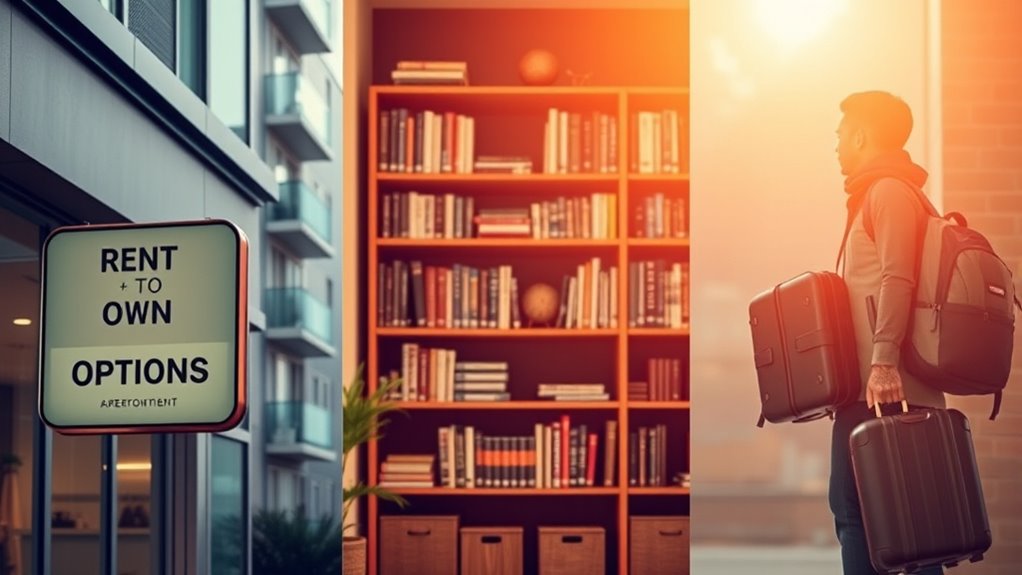

When choosing between renting, borrowing, or bringing your own items, consider costs, convenience, and availability. Renting offers hassle-free setup and maintenance support but can be more expensive upfront. Borrowing from friends or family saves money but depends on availability and restrictions. Bringing your own gear can be economical long-term but may involve transportation issues. We’ll explore more tips to help you make the best choice for your situation.
Key Takeaways
- Consider overall costs, including hidden fees for renting, upfront expenses for bringing items, and cost savings when borrowing from others.
- Evaluate convenience factors like pickup, maintenance support, and planning efforts for borrowing or bringing your own gear.
- Check availability and restrictions; borrowed items depend on others, while bringing your own guarantees access but may be limited by transport.
- Match the choice to your timeframe—borrowing suits short-term needs, renting for temporary events, and bringing for long-term ownership.
- Balance cost savings with convenience and practicality to select the most suitable option for your specific situation.
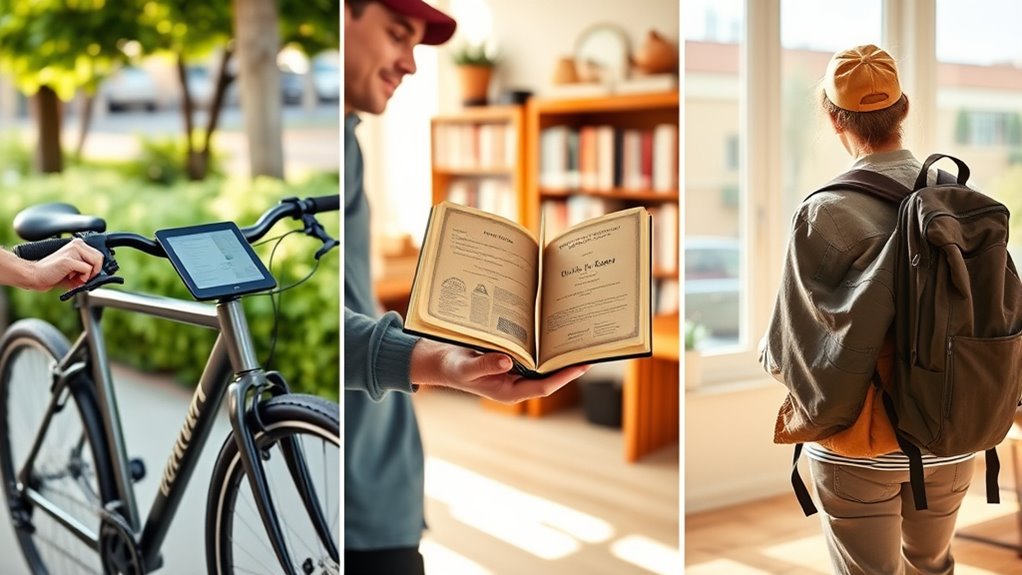
Deciding whether to rent, borrow, or bring your own items can be a straightforward process when you consider your specific needs and circumstances. The key is to weigh the cost comparison alongside convenience factors. If you’re attending a short-term event or traveling, renting might seem appealing because it often includes maintenance and easy pickup. However, you should compare rental costs with the expenses of borrowing or bringing your own gear. Renting can sometimes be more expensive upfront, but it offers the convenience of having equipment that’s in top condition and ready to use. On the other hand, borrowing from friends or family can be a cost-effective option, especially if you only need the item temporarily. Still, it can come with limitations—like availability or restrictions on use—that could impact your convenience. Bringing your own items might save money in the long run if you already own what you need, but it could be less convenient if you have to transport or set up bulky or specialized equipment.
When you’re evaluating these options, consider the total cost comparison. Renting might include hidden fees, delivery charges, or deposits that add up, making it less economical than borrowing or bringing your own. Conversely, borrowing from someone you trust can eliminate these extra costs, but it might come with the inconvenience of coordinating pick-up and return times. Bringing your own items often involves upfront costs, but it can be the most cost-effective if you already own the necessary equipment and don’t have to worry about availability or damage fees. Additionally, think about how each choice impacts your schedule and effort. Renting usually offers the most convenience, as rental companies often provide flexible pick-up and drop-off options, along with maintenance support. Borrowing may require more planning and coordination but can be perfectly suited for short-term needs. Bringing your own gear demands packing and transporting but can be faster if you’re familiar with your equipment.
Ultimately, your decision hinges on balancing cost comparison and convenience factors. If saving money is your priority and borrowing is feasible, that might be the best route. If you value hassle-free setup and support, renting could serve you better. And if you already possess the items you need and want to avoid additional expenses or effort, bringing your own gear is likely your best choice. By carefully evaluating your specific situation—considering both price and ease—you’ll make a clear, confident decision that aligns with your circumstances.
Frequently Asked Questions
How Do Costs Compare Among Renting, Borrowing, and Bringing?
You’ll find that cost comparison varies: renting often involves ongoing fees, borrowing may be free but depends on availability, and bringing your own items usually reduces expenses. During expense analysis, consider hidden costs like maintenance or potential damage. Renting provides convenience but can be pricey, borrowing saves money but isn’t always reliable, and bringing minimizes costs but requires upfront investment. Weigh these factors to choose the most economical option for your situation.
What Are the Environmental Impacts of Each Option?
Your choice dramatically impacts the environment. Renting often has a lower environmental footprint since companies optimize resource use and recycle items efficiently, promoting resource sustainability. Borrowing reduces waste by extending item use, but frequent borrowing can increase transportation emissions. Bringing your own items minimizes packaging waste but might involve higher production impacts. Overall, renting tends to be most eco-friendly, helping preserve resource sustainability for future generations.
How Do Liability and Insurance Differ Across Choices?
Liability coverage and insurance policies differ depending on your choice. When you rent, the landlord often requires liability coverage, and you may need to add extra insurance. Borrowing usually involves the owner’s insurance, but you might want your own coverage for added protection. Bringing your own items generally means you’re responsible for insuring them, so you should consider personal insurance policies to cover potential damages or loss.
Which Option Offers the Most Flexibility for Short-Term Use?
Bringing offers the most flexibility for short-term use because you face fewer usage restrictions and can adapt quickly to your needs. Renting often involves flexibility trade-offs, like scheduled durations and potential penalties. Borrowing provides some flexibility but may include limitations imposed by the owner. Overall, bringing your own items minimizes restrictions and allows you to use what you need, when you need it, making it ideal for short-term, spontaneous use.
Are There Legal Restrictions on Borrowing or Bringing Items?
Think of legal restrictions as invisible fences around your options—borrowing or bringing items often have rules tied to ownership rights. You might face legal limitations if you don’t have permission or if the item’s ownership rights aren’t clear. Always check local laws and agreements before borrowing or bringing something, so you stay on the right side of the fence and avoid unintended trouble. Respecting these boundaries keeps your actions safe and legal.
Conclusion
Think of your decision as choosing a ship for a voyage. Renting is like chartering a vessel for a specific trip, borrowing is borrowing a boat for a short sail, and bringing is setting out on your own. Each choice has its adventure and challenge. By matching your needs with the right vessel, you guarantee a smooth journey. So, weigh your options carefully and set sail confidently—your perfect route awaits on this decision ocean.