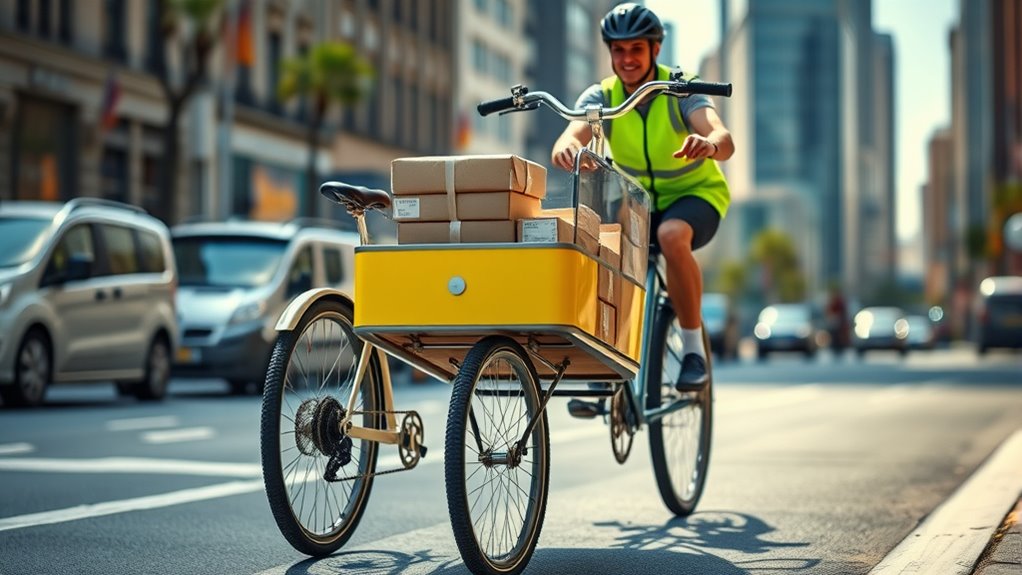

To bring your bike, first choose the best transportation mode for your trip, like car, plane, train, or ferry. Pack your bike properly using a sturdy case, especially if flying, and remove the front wheel if needed. Check each option’s rules and book in advance if possible. Proper packing and preparation help prevent damage and ensure a smooth journey. Keep in mind, knowing specific regulations can make your ride even easier—discover how to master each step.
Key Takeaways
- Check transportation regulations and restrictions for bikes on your chosen mode of travel before planning.
- Disassemble and securely pack your bike in a sturdy case or box for air travel to prevent damage.
- Use roof racks, trunk-mounted racks, or inside the vehicle to transport bikes by car, ensuring proper fitting and protection.
- Verify train and ferry policies regarding bike carriage, including reservations and folding bike requirements.
- Carry essential tools and spare parts for bike repairs, and inspect your bike before departure for smooth logistics.

Bringing your bike along can turn an ordinary trip into an exciting adventure. Whether you’re heading to a new city, exploring a scenic trail, or just want the flexibility of cycling during your getaway, having your own bike offers unmatched convenience and freedom. But to make the most of it, you’ll need to plan how to transport and pack it properly. The first step is understanding your options for bringing your bike, whether by car, plane, train, or even ferry. Each mode has its rules, so check specific regulations beforehand to avoid surprises at the last minute.
If you’re traveling by car, the process is usually straightforward. Most vehicles can accommodate a bike either on a roof rack, in a trunk-mounted rack, or inside the vehicle itself. Roof racks are popular because they keep bikes out of the way and don’t take up interior space, but they require a bit of effort to load and unload. Trunk-mounted racks are quick to set up and remove, making them ideal for shorter trips or if you’re tight on space. If you prefer to keep your bike protected from weather and road debris, you can also consider removing the front wheel and securing the bike inside your trunk or cargo area. Just make sure your vehicle has enough space and that your bike is well-packed to prevent damage.
When flying, bringing a bike demands more careful packing. Many airlines require bikes to be disassembled, with pedals, handlebars, and wheels removed, then packed in a sturdy box or a specialized bike case. You’ll want to invest in a quality bike bag or box designed for travel, which can prevent damage during transit. Label your package clearly and check airline weight limits and fees beforehand. Some airlines offer special services for bikes, so contacting your airline early can save you time and money. If you’re traveling by train or ferry, policies vary widely. Some allow bikes onboard with reservations, while others might only permit folding bikes or require special arrangements.
No matter how you choose to transport your bike, always remember to prepare it properly. Clean your bike beforehand, inspect for loose parts, and lubricate the chain to ensure it’s ready for use once you arrive. Carry essential tools and spare parts—like an extra tube, pump, and multi-tool—so you can handle minor repairs on the go. Additionally, understanding bike transport regulations can help ensure a smooth journey. By planning ahead and understanding your transportation options, you can confidently bring your bike along and maximize your trip’s enjoyment. With your bike ready to roll, you’re set to explore new places, stay active, and make the most of every journey.
Top picks for "bike wheel logistic"
Open Amazon search results for this keyword.
As an affiliate, we earn on qualifying purchases.
Frequently Asked Questions
What Are the Best Ways to Secure My Bike During Transit?
To secure your bike during transit, you should use a sturdy lock, like a U-lock or heavy-duty chain lock, to attach it firmly to a fixed object or the vehicle’s bike rack. Remove or lock up any loose accessories, such as lights or bags, to prevent theft or damage. Additionally, consider using a bike cover to protect it from weather and road debris, ensuring it stays safe throughout the journey.
Are There Size Restrictions for Bike Shipments?
Did you know that most bike shipping services typically accept bikes up to 72 inches in length? Yes, there are size restrictions, and they vary by carrier. You should always verify the specific dimensions allowed before booking your shipment. Usually, bikes are disassembled or packaged to fit within these limits. If your bike exceeds the size restrictions, consider specialized freight options or custom shipping solutions to ensure safe transit.
How Do I Prepare My Bike for Long-Distance Travel?
To prepare your bike for long-distance travel, clean it thoroughly and lubricate the chain. Remove any loose accessories or valuables, deflate the tires slightly to prevent damage, and secure the handlebars and pedals to prevent movement. Use a sturdy bike box or case, and pad any fragile parts. Double-check that everything is secure, so your bike stays safe and protected throughout the journey.
What Insurance Options Are Available for Bike Transportation?
You can choose from specialized bike insurance policies or add coverage to your existing homeowner’s or renter’s insurance. Many providers offer transit insurance that covers damages during transportation. Make sure to read the policy details carefully to understand what’s covered, including theft, damage, and loss. It’s also smart to document your bike’s condition before shipping and keep all receipts, so you can easily file a claim if needed.
Can I Track My Bike During the Delivery Process?
Yes, you can track your bike during the delivery process. Most services offer real-time tracking through a provided app or website, so you stay updated on your bike’s location every step of the way. Once your bike is shipped, you’ll receive a tracking number, allowing you to monitor its progress and estimated delivery time. This way, you stay informed and reassured throughout the entire transportation process.
Conclusion
Bringing your bike isn’t just about convenience; it’s like adding a trusted partner to your journey. Imagine riding through a busy city street, your bike weaving smoothly through traffic—unhindered and in control. Studies show that cycling can cut commute times by up to 25%. So, next time you hit the road, think of your bike as your trusty steed, ready to carry you effortlessly past obstacles and into new adventures.