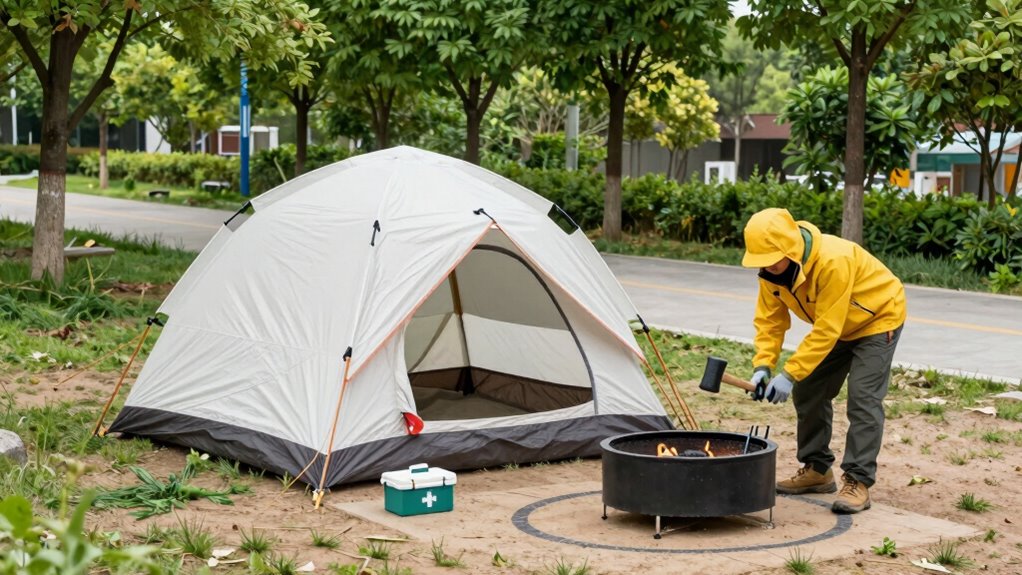

To avoid common camp setup injuries, always check your area for hazards like rocks, sharp objects, or uneven ground before pitching your tent. Use proper tools and techniques to prevent strains, falls, or cuts, and securely stake your tent to prevent accidents during wind. Move carefully, especially in low light, and make sure all equipment is secured to avoid tripping or sudden falls. Stay aware of your surroundings—keep injuries at bay and enjoy a safe outdoor experience by following these tips.

Get movie nights delivered free with Prime
- Fast, free delivery on millions of items
- Prime Video, Amazon Music and more included
- Member-only deals all year
Key Takeaways
- Use proper tools and techniques when setting up tents and gear to prevent strains and cuts.
- Clear the ground of sharp objects, rocks, and debris before pitching the tent or assembling equipment.
- Secure stakes and equipment firmly to avoid collapses or accidents caused by wind or unstable surfaces.
- Be mindful of your footing, especially in low light or uneven terrain, to prevent slips and falls.
- Maintain awareness of your surroundings and handle gear carefully to avoid injuries during setup.
Setting up camp might seem straightforward, but rushing or neglecting safety can lead to injuries that spoil your outdoor experience. One of the most important safety considerations is campfire safety. Always choose a clear, level spot away from overhanging branches, roots, or dry leaves. Before lighting your fire, clear a 10-foot diameter area of all flammable materials and build your fire ring using rocks or a designated fire pit if available. Never leave your campfire unattended, and keep a bucket of water, dirt, or a fire extinguisher nearby to quickly put out any flare-ups. When you’re done, make sure the fire is completely extinguished by stirring the ashes and dousing them with water until everything is cold to the touch. Neglecting proper campfire safety can lead to wildfires or burns, which are easily preventable with cautious habits. Proper fire safety awareness plays a crucial role in preventing accidents and ensuring a safe camping experience. Additionally, understanding fire dynamics helps in managing and controlling campfires more effectively to prevent unintended spread. Being familiar with fire behavior can further help in predicting how a fire might spread under different conditions, enhancing your safety measures. Incorporating knowledge about natural fuel sources can also assist in choosing the safest and most effective materials for maintaining your campfire. Moreover, understanding fire weather conditions can aid in assessing the risk level before starting or maintaining a campfire, especially during dry or windy days.
Wildlife encounters are another common hazard that can cause injuries if you’re not prepared. Many animals are curious or protective of their territory, so avoid approaching or feeding wildlife. Keep food stored securely in bear-proof containers or hung high in trees out of reach, and never leave food scraps or trash lying around your campsite. Doing so attracts animals and increases the risk of aggressive encounters. Be aware of the local wildlife and their behaviors; some animals might act defensively, especially if they feel threatened or are protecting young. If you encounter wildlife, stay calm, back away slowly, and avoid sudden movements. Never try to corner or feed animals, as this can provoke attacks. Maintaining a safe distance is key to avoiding injuries and ensuring your safety as well as the animals’.
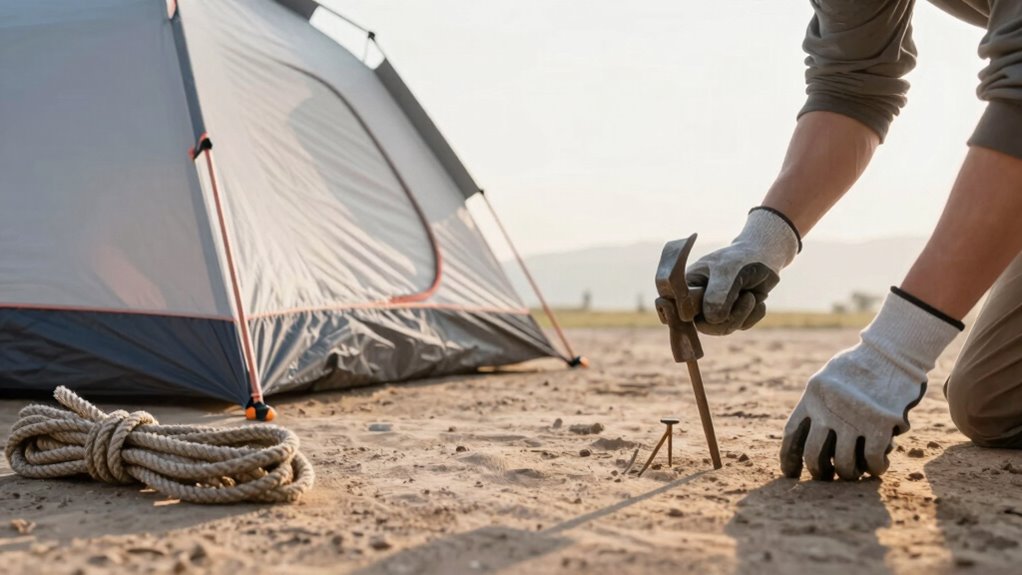
In addition to campfire safety and wildlife encounters, pay attention to your surroundings when setting up your tent and gear. Use proper tools and techniques to avoid strains, falls, or cuts. Clear the ground of sharp objects and rocks before pitching your tent, and secure stakes firmly to prevent collapsing or accidents during windy conditions. Be mindful of your footing when moving around, especially in low light or uneven terrain, to avoid slips or trips. Taking these precautions helps prevent common camp setup injuries that can ruin your trip or even cause serious harm. Staying alert and prepared ensures you enjoy your outdoor adventure without unnecessary setbacks, making the experience both safe and memorable.
As an affiliate, we earn on qualifying purchases.
Frequently Asked Questions
What Should I Wear to Prevent Injuries During Setup?
You should wear proper footwear, like sturdy hiking boots or shoes with good grip, to prevent slips and ankle injuries. Opt for ergonomic clothing that allows comfortable movement and provides protection, such as long sleeves and pants to avoid scrapes and insect bites. Avoid loose or ill-fitting clothing, and consider gloves for handling heavy or rough equipment. Staying prepared with the right attire helps you stay safe and avoid injuries during setup.
How Can I Recognize Early Signs of Strain or Injury?
Sure, because ignoring muscle fatigue and joint discomfort is a fantastic way to turn your camping trip into an emergency room visit. To recognize early signs, pay attention if you start feeling persistent soreness, tingling, or stiffness after lifting or digging. These are your body’s way of whispering, “Hey, something’s off.” Don’t dismiss them—rest, stretch, and reassess your technique before things escalate into serious injury.
Are There Specific Tools That Reduce Injury Risk?
Yes, using specialized tools and ergonomic equipment can considerably reduce your injury risk. Opt for lightweight, well-designed shovels, hammers, and stakes that minimize strain on your muscles. Ergonomic tools with comfortable grips help you maintain proper posture and reduce fatigue. These tools make camp setup easier and safer, allowing you to work efficiently without overexerting yourself. Always choose tools suited to your tasks to prevent unnecessary injuries.
How Long Should I Rest Between Setup Tasks?
Rest intervals should be brief but sufficient, typically about 5 to 10 minutes, to prevent muscle fatigue. You want to pause periodically, allowing muscles to recover and avoid overexertion, which can lead to injury. Listen to your body—if you feel tired or strained, extend your rest. Proper pauses promote pain-free, powerful progress, making your camp setup safer and more efficient while reducing the risk of strain and injury.
What Safety Gear Is Recommended for Camp Setup?
You should wear safety gear like gloves, sturdy boots, and eye protection during camp setup to prevent camping hazards. A helmet can protect your head from falling objects, and a first aid kit is essential for emergencies. Always prioritize emergency preparedness by being aware of your surroundings and potential hazards. Proper gear keeps you safe from injuries, allowing you to enjoy your camping experience without unnecessary risks.
As an affiliate, we earn on qualifying purchases.
Conclusion
By taking these simple precautions, you’ll turn your camp setup into a smooth sailing adventure rather than a stumble in the dark. Think of it as laying a sturdy foundation for your outdoor escape—every careful step you take keeps injuries at bay and your trip worry-free. Remember, a little caution now can save you from a trip to the medic tent later. So, gear up smartly, and let your camping experience be a safe and memorable journey.
As an affiliate, we earn on qualifying purchases.
As an affiliate, we earn on qualifying purchases.
Columbus Day / Indigenous Peoples' Day Picks
long weekend sales
As an affiliate, we earn on qualifying purchases.