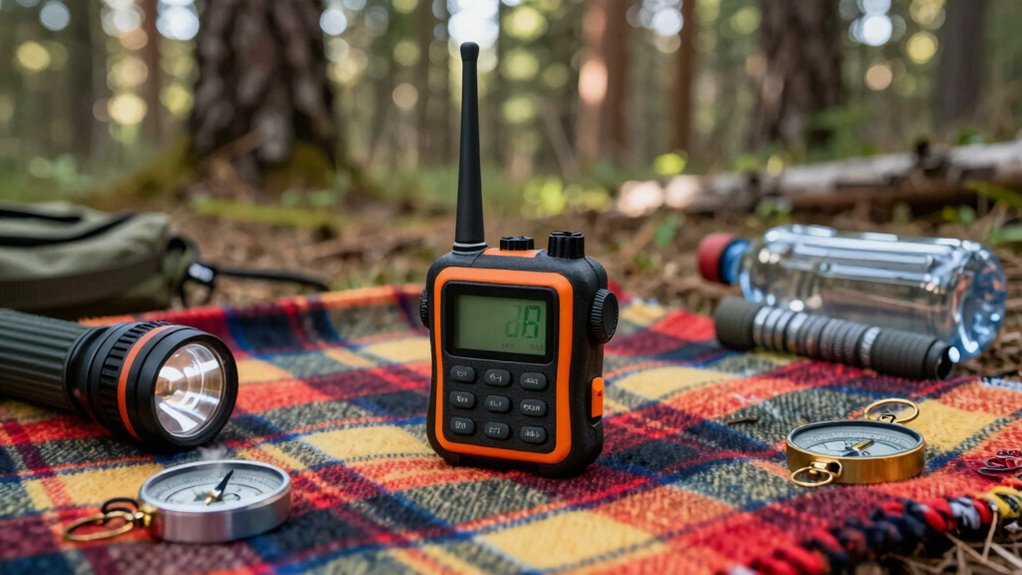

For festival camping, I’d choose a radio that can receive NOAA alerts, stay useful away from an outlet, and pack easily. The Midland ER310 is my best overall pick for its weather-radio focus and several backup power options; the FosPower adds solar and hand-crank charging, while the Midland WR120B suits campers who mainly want a dedicated alert radio at a powered campsite. The tradeoff is between portable charging and extra functions on one hand, and simpler alert-focused operation on the other. Read on for how all 10 options compare and which one fits your festival setup.

Get movie nights delivered free with Prime
- Fast, free delivery on millions of items
- Prime Video, Amazon Music and more included
- Member-only deals all year
Key Takeaways
- Midland ER310 leads for campers who want weather alerts and multiple ways to keep a portable radio powered.
- Midland WR120B is the alert-focused choice, but its dedicated design is less suited to a campsite without dependable power.
- FosPower combines solar and hand-crank charging, giving festival campers more charging options when outlets are scarce.
- Several radios pair weather reception with lights, phone charging, or an SOS siren; those extras add utility but do not replace a tested phone power plan.
- The lineup includes both portable emergency radios and a Bluetooth model, so buyers should prioritize alert access and backup power before entertainment features.
| Emergency Weather Radio with Solar Panel and 12,000mAh Battery |  | Best Overall | Battery capacity: 12,000mAh | Solar panel: 8500mm² monocrystalline | Charging methods: USB-C, solar, hand crank, built-in battery, 3 AAA batteries | VIEW ON AMAZON | See Our Full Breakdown |
| Midland WR120B NOAA Emergency Weather Alert Radio |  | Best for Base Camp Weather Alerts | Alert types: Over 60 | County programming: Up to 25 counties via S.A.M.E. | Alert indicators: Color-coded | VIEW ON AMAZON | See Our Full Breakdown |
| Midland ER310 Emergency Crank Weather AM/FM Radio |  | Best Rugged Pick for Reliability | Radio bands: AM/FM with NOAA weather scan and alert | Power sources: Solar, hand crank, 6 AA batteries (included) | Built-in features: Flashlight, SOS emergency light, ultrasonic dog whistle | VIEW ON AMAZON | See Our Full Breakdown |
| FosPower NOAA Emergency Weather Radio with Solar and Hand Crank, Orange |  | Best Value | Model: FOSPWB-2376 | Power bank: 7400mWh (2000mAh) | Power sources: Hand crank, solar panel, AAA batteries | VIEW ON AMAZON | See Our Full Breakdown |
| WVL 7400mWh Emergency Weather Radio, Portable Solar Hand Crank AM/FM/NOAA Radio |  | Best Compact Pick | Battery capacity: 7400mWh | Power bank: 2000mAh | Radio bands: AM/FM/NOAA Weather | VIEW ON AMAZON | See Our Full Breakdown |
| Raynic Emergency Weather Radio with Solar and Hand Crank Charging |  | Best Auto-Alert Pick | Battery capacity: 5000 mAh / 18500 mWh | Radio bands: AM, FM, SW, NOAA | Charging options: Rechargeable battery, AC, USB, hand crank, solar, 3 AAA (not included) | VIEW ON AMAZON | See Our Full Breakdown |
| PRUNUS J161 Portable NOAA Weather Radio AM/FM |  | Best Ultralight Backup | Weather band: 7 NOAA bands, 162.40–162.55 MHz | FM range: 87–108 MHz | AM range: 520–1710 kHz | VIEW ON AMAZON | See Our Full Breakdown |
| Solar Emergency Radio with Hand Crank, 12,000 mAh Battery, and NOAA/AM/FM Reception |  | Best Power Bank Radio | Battery capacity: 12,000 mAh lithium | Radio bands: NOAA, FM, AM | Power sources: Solar, hand crank, USB-C 5V/2A, 3 AAA | VIEW ON AMAZON | See Our Full Breakdown |
| Leaton Hand Crank Emergency Weather Radio with 10,000mAh Battery |  | Best Weather Resistance | Battery capacity: 10,000 mAh | Radio bands: AM 520–1710 kHz, FM 87–108 MHz, NOAA 162.400–162.550 MHz | Charging methods: USB-C, solar, hand crank | VIEW ON AMAZON | See Our Full Breakdown |
| Midland ER310PRO Portable Emergency Bluetooth Weather AM/FM Radio |  | Best Premium All-Rounder | Power bank capacity: 10,000 mAh | Battery life: Up to 200 hours (radio use) | Power sources: Lithium-ion battery, solar panel, hand crank | VIEW ON AMAZON | See Our Full Breakdown |
| emergency weather radio for festival camping | Radio bands | Dimensions | Weight | Battery capacity |
|---|---|---|---|---|
| Emergency Weather Radio with S | AM/FM/7 NOAA bands | — | — | 12,000mAh |
| Midland WR120B NOAA Emergency | — | — | — | — |
| Midland ER310 Emergency Crank | AM/FM with NOAA weather scan and alert | 9.61 × 2.95 × 6.85 in | 16 oz | — |
| FosPower NOAA Emergency Weathe | — | — | — | — |
| WVL 7400mWh Emergency Weather | AM/FM/NOAA Weather | 130 × 50 × 60 mm | 231g | 7400mWh |
| Raynic Emergency Weather Radio | AM, FM, SW, NOAA | 6.8 × 3.7 × 2.9 in | 1.2 lb | 5000 mAh / 18500 mWh |
| PRUNUS J161 Portable NOAA Weat | — | 4.7 × 2.8 × 1.2 in | 0.24 lb (without batteries) | — |
| Solar Emergency Radio with Han | NOAA, FM, AM | 6.8 × 4.7 × 2.9 in | 1.6 lb | 12,000 mAh lithium |
| Leaton Hand Crank Emergency We | AM 520–1710 kHz, FM 87–108 MHz, NOAA 162.400–162.550 MHz | — | 1.1 lb (500 g) | 10,000 mAh |
| Midland ER310PRO Portable Emer | — | 8.1 × 2.8 × 3.4 in | — | — |
More Details on Our Top Picks
Emergency Weather Radio with Solar Panel and 12,000mAh Battery
This pick makes the most sense for festival campers who want one device to carry the whole weekend. The 12,000mAh battery dwarfs what the FosPower or WVL radios offer, meaning it can run the radio and lights through several days of music-festival chaos and still top up a dying phone once or twice. The oversized monocrystalline solar panel actually collects useful charge sprawled across a camp chair, and the IPX6 waterproof rating sets it apart — neither the Midland ER310 nor the FosPower can shrug off a sudden storm. Compared with similar high-capacity options like the Raynic, this model earns the top spot by pairing weather alerts with genuine waterproofing. The tradeoff: one power mode still requires AAA batteries, and the maker publishes no runtime figures, so buyers are trusting the capacity claim on faith.
Pros:- Massive 12,000mAh battery outlasts every compact rival here
- IPX6 waterproofing handles rain and spilled drinks at camp
- Five power options including a large 8500mm² solar panel
- Full toolset: NOAA alerts, 5W flashlight, reading lamp, SOS alarm
Cons:- One power mode depends on AAA batteries you must supply
- No manufacturer charging-time or runtime details provided
Best for: Festival campers staying multiple days who need weather alerts, lighting, and serious phone-charging backup in one weatherproof unit
Not ideal for: Weight-conscious backpackers or anyone who wants published runtime and charge-time figures before buying
- Battery capacity:12,000mAh
- Solar panel:8500mm² monocrystalline
- Charging methods:USB-C, solar, hand crank, built-in battery, 3 AAA batteries
- Radio bands:AM/FM/7 NOAA bands
- Flashlight:5W adjustable beam
- Water resistance:IPX6
- Enclosure:ABS, army green
Our verdict“If you want the single most capable camp-side emergency radio for a long festival weekend, this is the one to buy.”
Midland WR120B NOAA Emergency Weather Alert Radio
This model is better suited to car campers and base-camp setups than to anything carried in a pack. What separates it from every hand-crank option in this lineup — the FosPower, the WVL, the big 12,000mAh unit — is S.A.M.E. county programming: it can silently monitor up to 25 counties and wake itself with an alert override for over 60 hazard types, so a 2 a.m. lightning warning never gets missed because the radio was off. The color-coded alert indicators communicate severity at a glance without reading a manual. The tradeoff is real, though: it lacks solar, crank, flashlight, and phone charging entirely, and getting county-specific alerts means punching in S.A.M.E. codes during setup. For a powered festival campsite, that limitation barely matters — for off-grid treks it’s disqualifying.
Pros:- Over 60 hazard and emergency alert types
- S.A.M.E. programming targets up to 25 counties to cut false alarms
- Alert override powers the radio on automatically when danger approaches
- Color-coded indicators show alert type and severity instantly
Cons:- Setup requires manually entering S.A.M.E. county codes
- No solar, crank, flashlight, or USB charging features
Best for: Car-camping festivalgoers who want hands-free, county-targeted hazard alerts at a powered base camp
Not ideal for: Off-grid campers or anyone expecting one device to also provide light and phone charging
- Alert types:Over 60
- County programming:Up to 25 counties via S.A.M.E.
- Alert indicators:Color-coded
- Display:LCD with continuous backlighting option
- Alert override:Automatically switches on for impending danger
- Scanning:NOAA Weather Scan
Our verdict“Buy this as a dedicated alert sentinel for a powered campsite, not as your all-in-one survival gadget.”
Midland ER310 Emergency Crank Weather AM/FM Radio
This option stands out for build quality and thoughtful emergency features rather than raw battery size. Midland is the name brands like FosPower and WVL are chasing, and the ER310 shows why: the ultrasonic dog whistle and bright SOS emergency light reflect actual search-and-rescue thinking, and shipping with six AA batteries included means it works straight out of the box when a USB-C port (as on the 12,000mAh model) isn’t reachable. Compared with the ER310PRO in this same roundup, this version skips Bluetooth in favor of a leaner, cheaper package. The honest drawback: it is not water resistant at all, a real liability for festival weather where the IPX6-rated 12,000mAh radio keeps ticking through a downpour. At 16 ounces it also sits heavier in a daypack than the 231g WVL.
Pros:- Multiple power sources including solar and included AA batteries
- Ultrasonic dog whistle and SOS light aid rescue scenarios
- NOAA weather scan with alert function
- Reassuring build quality from a dedicated weather-radio brand
Cons:- Not water resistant in any capacity
- Depends on six AA batteries for primary power
Best for: Campers who prioritize a proven, rugged emergency tool with rescue-oriented features over gadget count
Not ideal for: Wet-weather festivalgoers — the total lack of water resistance demands sheltered storage
- Radio bands:AM/FM with NOAA weather scan and alert
- Power sources:Solar, hand crank, 6 AA batteries (included)
- Built-in features:Flashlight, SOS emergency light, ultrasonic dog whistle
- Connectivity:USB
- Dimensions:9.61 × 2.95 × 6.85 in
- Weight:16 oz
- Water resistance:None
Our verdict“A dependable, rescue-minded companion for dry camps — just pack it somewhere the rain can’t reach.”
FosPower NOAA Emergency Weather Radio with Solar and Hand Crank, Orange
For buyers who want the hand-crank-and-solar formula without paying for a big battery, this model hits the value sweet spot. It covers the festival essentials — NOAA alerts, AM/FM, a reading light, a flashlight, and an SOS alarm — while the limited lifetime warranty is something none of the other picks here can match, including the better-specified WVL with its 18-month window. Where it falls behind the 12,000mAh top pick is power: a 2000mAh bank delivers maybe one partial phone charge before you’re back to cranking, and cranking or solar alone won’t keep pace with a phone-hungry campsite. Compared with the WVL, you give up the motion-sensor lamp and gain a longer warranty. The high-visibility orange shell is a small but genuine plus when rummaging through a dark tent at 3 a.m.
Pros:- Hand crank, solar, and AAA power options for redundancy
- Limited lifetime warranty beats every rival’s coverage
- Includes reading light, flashlight, and SOS alarm in one unit
- Bright orange shell is easy to locate in a dark tent
Cons:- 2000mAh power bank only partially charges modern phones
- Crank and solar charging depend on your effort and the weather
Best for: Budget-minded campers who want core emergency features and a lifetime warranty rather than maximum battery capacity
Not ideal for: Anyone relying on the radio to keep a phone alive across a multi-day festival — 2000mAh runs dry fast
- Model:FOSPWB-2376
- Power bank:7400mWh (2000mAh)
- Power sources:Hand crank, solar panel, AAA batteries
- Radio reception:NOAA, AM, FM
- Lighting:4-LED reading light and 1W flashlight
- Warranty:Limited lifetime warranty
- Color:Orange
Our verdict“The smart budget pick if you accept that phone charging here is a backup, not a feature.”
WVL 7400mWh Emergency Weather Radio, Portable Solar Hand Crank AM/FM/NOAA Radio
Weighing 231 grams and roughly the size of a soda can, this is the pick that disappears into a fanny pack — something no other radio in this lineup can claim. Compared with the Midland ER310 at 16 ounces, it’s less than half the carry burden, which matters when you’re walking miles between stages. The motion-sensor reading lamp is a genuinely clever festival feature: wave a hand and the tent light comes on without fumbling. Like the FosPower, its 2000mAh power bank is a lifeline for earbuds rather than a full phone rescue, and the analog tuning dial means no presets — finding your NOAA channel mid-storm takes patience the digital 12,000mAh model spares you. An 18-month return policy plus lifetime technical support adds confidence for a lesser-known brand.
Pros:- Ultra-light 231g build is the most portable in the roundup
- Motion-sensor reading lamp is genuinely useful inside a tent
- Three redundant power sources including hand crank
- 18-month returns and lifetime technical support
Cons:- Analog tuning only — no digital presets or frequency display
- 2000mAh capacity is minimal for larger devices
Best for: Minimalist festivalgoers who want alerts and light with barely any pack weight
Not ideal for: Anyone who wants digital station presets or expects more than a partial phone charge from the bank
- Battery capacity:7400mWh
- Power bank:2000mAh
- Radio bands:AM/FM/NOAA Weather
- Power sources:Hand crank, solar panel, built-in Li-ion rechargeable
- Flashlight:1.5W LED, 3 modes
- Dimensions:130 × 50 × 60 mm
- Weight:231g
- Warranty:18-month returns, lifetime technical support
Our verdict“The one to grab when weight and pocket space matter more than battery muscle.”
Raynic Emergency Weather Radio with Solar and Hand Crank Charging
Most budget emergency radios make you hunt for the weather band yourself — the PRUNUS J161, for instance, requires manual tuning every time. The Raynic fixes that with automatic NOAA alert scanning, which means a storm warning can interrupt your campsite soundtrack without you lifting a finger. That matters at a festival, where you’re more likely to be watching a stage than checking the sky. It also covers more ground than most rivals: shortwave reception alongside AM, FM, and NOAA, plus a genuinely useful LCD display for precise digital tuning rather than guesswork. The tradeoff is that its IPX3 rating is the weakest weather sealing in this lineup — the Leaton handles far more abuse — so this radio belongs in your tent or awning, not out in a downpour. Factor in AAA batteries you’ll need to supply yourself and hand-cranking that takes real effort, and its value depends on treating it as a semi-sheltered base-camp tool.
Pros:- Automatic NOAA emergency alert scanning
- Six power options including solar, hand crank, and AAA backup
- Shortwave reception plus digital LCD tuning
- Built-in flashlight, reading lamp, and SOS alarm
Cons:- IPX3 rating provides only light splash protection
- AAA backup batteries are not included
Best for: Festival campers who want hands-free storm alerts and full-band tuning from a tent-side hub
Not ideal for: Anyone expecting a radio that survives heavy rain or mud exposure unattended at the campsite
- Battery capacity:5000 mAh / 18500 mWh
- Radio bands:AM, FM, SW, NOAA
- Charging options:Rechargeable battery, AC, USB, hand crank, solar, 3 AAA (not included)
- Water resistance:IPX3
- Weight:1.2 lb
- Dimensions:6.8 × 3.7 × 2.9 in
- Display:LCD
Our verdict“Buy this if automatic weather alerts and versatile tuning matter more to you than rugged weatherproofing.”
PRUNUS J161 Portable NOAA Weather Radio AM/FM
At 0.24 lb and pocket-sized, the J161 is the radio you actually carry, not the one you leave in the car because it’s too heavy. Every other option in this roundup weighs four to seven times as much — the Raynic tips the scale at 1.2 lb — which is exactly why the J161 earns its spot. Slip it in a hydration pack and you’ll have weather and FM audio at the main stage without noticing the weight. The honest tradeoff: it’s a radio and nothing else. No flashlight, no phone charging, no crank or solar, and critically, no automatic NOAA alerts — you have to tune in and listen yourself. Compared with the Leaton or the 12,000 mAh solar radio, it’s a receiver, not a survival kit. But for a day trip away from base camp where AA batteries are easy to pack spares of, simplicity is the feature.
Pros:- Extremely compact and light with a carry lanyard
- Receives all 7 NOAA weather bands plus AM and FM
- Runs on cheap, easy-to-pack AA batteries
- Simple controls and headphone jack for personal listening
Cons:- No automatic NOAA alert notifications
- No rechargeable battery, crank, or solar option — AAs only
Best for: Festival-goers who want a featherweight second radio for stage-side weather checks
Not ideal for: Anyone wanting a single do-it-all device — there’s no phone charging, light, or auto-alerting here
- Weather band:7 NOAA bands, 162.40–162.55 MHz
- FM range:87–108 MHz
- AM range:520–1710 kHz
- Power source:2 AA batteries
- Dimensions:4.7 × 2.8 × 1.2 in
- Weight:0.24 lb (without batteries)
- Automatic alerts:Not supported
Our verdict“This is the right pick if you already own a primary emergency radio and want a barely-there backup to carry with you.”
Solar Emergency Radio with Hand Crank, 12,000 mAh Battery, and NOAA/AM/FM Reception
At a multi-day festival, the radio function can end up secondary to keeping your phone alive — and that’s where this model flips the usual priority. Its stated 12,000 mAh battery is the largest capacity in this lineup, more than double the Raynic’s 5000 mAh, so it can realistically top up phones across a weekend before needing sunlight or a crank session. The 260-foot flashlight range is also the strongest beam claim here, outpacing the Leaton’s dual-mode light for finding your way back to camp after headliners. The compromises are real, though. Unlike the Midland ER310PRO, there’s no published battery runtime, no automatic alert support details, and the analog display means tuning by ear rather than reading a frequency off an LCD. It’s also the heaviest option in this batch at 1.6 lb. Treat it as a power station first, radio second, and the math works.
Pros:- Largest battery capacity in the roundup at 12,000 mAh
- Four power sources: solar, hand crank, USB-C, and AAA
- Powerful flashlight rated to 260 feet plus reading lamp
- Phone-charging output with SOS alarm included
Cons:- No battery runtime or recharge-time specifications provided
- Analog tuning is less precise than LCD-equipped rivals
- Heaviest radio in this batch at 1.6 lb
Best for: Festival campers whose phone battery anxiety outweighs everything else on their packing list
Not ideal for: Buyers who want documented runtime figures and digital tuning precision
- Battery capacity:12,000 mAh lithium
- Radio bands:NOAA, FM, AM
- Power sources:Solar, hand crank, USB-C 5V/2A, 3 AAA
- Charging output:5 W
- Flashlight range:Up to 260 ft
- Dimensions:6.8 × 4.7 × 2.9 in
- Weight:1.6 lb
Our verdict“Choose this if you need one device to keep both the weather reports and your phone running all weekend.”
Leaton Hand Crank Emergency Weather Radio with 10,000mAh Battery
Festival weather doesn’t wait politely, and the Leaton is the only radio in this batch built with an IPX6 rating — meaning it shrugs off heavy rain that would trouble the Raynic’s IPX3 shell. For campsites with no shelter beyond a rainfly, that’s the difference between a working radio and a dead one. The 10,000 mAh battery sits between the Raynic and the 12,000 mAh solar model, giving solid phone-charging headroom, and the added compass is a small but genuinely useful touch for navigating a sprawling festival ground at 2 a.m. The catch mirrors the PRUNUS J161: NOAA requires manual tuning, so it won’t wake you with an alert the way auto-scan radios do. And like every crank radio here, generating meaningful charge by hand takes sustained, sweaty effort. If rain exposure is your biggest worry rather than automatic alerts, this is the pick.
Pros:- IPX6 water resistance — best weather sealing in this lineup
- 10,000 mAh battery with USB phone charging
- Built-in compass in addition to flashlight and reading lamp
- Three charging methods: USB-C, solar, and hand crank
Cons:- No automatic NOAA alert support — manual tuning only
- Hand-crank charging requires sustained physical effort
- Not rated for immersion or prolonged heavy-rain submersion
Best for: Campers exposed to real weather who need a radio that survives downpours at an unsheltered pitch
Not ideal for: Anyone who wants to be automatically woken by emergency alerts rather than manually checking
- Battery capacity:10,000 mAh
- Radio bands:AM 520–1710 kHz, FM 87–108 MHz, NOAA 162.400–162.550 MHz
- Charging methods:USB-C, solar, hand crank
- Water resistance:IPX6
- USB output:5V/1A
- Weight:1.1 lb (500 g)
- Warranty:1 year
Our verdict“Buy the Leaton if rain protection ranks above auto-alerting on your priority list.”
Midland ER310PRO Portable Emergency Bluetooth Weather AM/FM Radio
The ER310PRO is what happens when an emergency radio grows up: up to 200 hours of runtime on a single charge dwarfs anything else here, and it’s the only model with Bluetooth audio, turning it from a survival tool into camp entertainment once the weather check is done. Midland’s pedigree in weather alerting shows — automatic scanning across all 7 NOAA channels matches the Raynic’s alerting while adding far better build polish. The 130-lumen flashlight with an SOS Morse-code beacon and an ultrasonic rescue siren goes beyond the standard siren on the Leaton or 12,000 mAh solar radio. Tradeoffs: it’s the longest unit in the batch at 8.1 inches, there’s no AA-battery fallback like the Raynic offers, and you pay a premium for the brand and battery life. If your festival trips are frequent and long, that runtime pays for itself in peace of mind.
Pros:- Up to 200 hours of battery life in radio mode
- Bluetooth audio for music beyond emergency use
- Automatic NOAA scanning and alerts across all 7 channels
- 130-lumen flashlight with SOS beacon and rescue siren
Cons:- Longest footprint in the roundup at 8.1 inches
- No disposable-battery backup option
- Premium pricing relative to simpler crank radios
Best for: Frequent festival and outdoor campers willing to pay more for elite runtime, alerts, and everyday usability
Not ideal for: Casual one-off campers or minimalists who find the size and feature set excessive
- Power bank capacity:10,000 mAh
- Battery life:Up to 200 hours (radio use)
- Power sources:Lithium-ion battery, solar panel, hand crank
- Connectivity:Bluetooth
- Weather channels:7 NOAA channels, automatic scanning
- Flashlight:130 lumens with SOS Morse-code beacon
- Dimensions:8.1 × 2.8 × 3.4 in
Our verdict“If this is the one radio you’ll own for years of trips, the ER310PRO’s runtime and alerting justify the spend.”

How We Picked
I ranked these radios around the problems festival campers actually face: receiving local weather alerts, operating without mains power, carrying a useful light, and keeping the device simple to use in a crowded campsite. I gave more weight to portable charging options and emergency functions than to entertainment extras, since festival locations can have limited outlets and rapidly changing weather.
The Midland ER310 ranks first for its portable emergency-radio focus and range of backup power methods. The FosPower follows for its solar and hand-crank charging; the WR120B ranks lower for this use because its dedicated alert-radio format fits powered setups better. The remaining picks offer varied combinations of battery capacity, lighting, charging, and portability. Model names and feature descriptions alone do not establish alert coverage, battery runtime, or water resistance, so I would verify those details for the exact model and festival location before buying.
| emergency weather radio for festival camping | Radio bands | Power sources |
|---|---|---|
| Emergency Weather Radio with S | AM/FM/7 NOAA bands | — |
| Midland WR120B NOAA Emergency | — | — |
| Midland ER310 Emergency Crank | AM/FM with NOAA weather scan and alert | Solar, hand crank, 6 AA batteries (included) |
| FosPower NOAA Emergency Weathe | — | Hand crank, solar panel, AAA batteries |
| WVL 7400mWh Emergency Weather | AM/FM/NOAA Weather | Hand crank, solar panel, built-in Li-ion rechargeable |
| Raynic Emergency Weather Radio | AM, FM, SW, NOAA | — |
| PRUNUS J161 Portable NOAA Weat | — | — |
| Solar Emergency Radio with Han | NOAA, FM, AM | Solar, hand crank, USB-C 5V/2A, 3 AAA |
| Leaton Hand Crank Emergency We | AM 520–1710 kHz, FM 87–108 MHz, NOAA 162.400–162.550 MHz | — |
| Midland ER310PRO Portable Emer | — | Lithium-ion battery, solar panel, hand crank |
Factors to Consider When Choosing Emergency Weather Radio For Festival Camping
Festival use changes what matters: you may be away from power, sleeping in a noisy field, or relying on a phone that is already busy with tickets and maps. I’d make the decision around alert access, realistic backup power, and how the radio fits into the rest of your camp kit.
Check Alert Coverage Before You Leave
A NOAA label does not guarantee that every campsite will receive a clear signal. Check which transmitters serve the festival grounds and whether hills, buildings, or distance could interfere with reception. If the radio supports alert standby, learn how to set it before the trip so you are not figuring out menus during a storm. For a remote site, a reception check at home cannot fully predict performance in the field. Keep the event’s own weather and emergency instructions available too, since a radio is one information source rather than the whole plan.
Treat Charging Methods as Backups With Limits
Solar charging depends on sunlight and panel size, while hand cranks take effort and may provide only a short burst of power. A built-in battery is useful, but its capacity does not by itself tell you how long the radio, light, or phone charger will run. Charge the radio fully before departure and check whether it can accept replaceable batteries or USB power if that matters to your kit. Avoid counting on a radio’s phone-charging feature as your main phone supply; it may be slow and reduce radio runtime. A separate charged power bank gives you a clearer reserve.
Choose Light for the Job You Need Done
A flashlight helps with walking after dark, while a reading lamp can make a tent easier to use without a headlamp. A strobe or SOS siren can be useful in an emergency, but extra controls can also make a device harder to operate quickly. Think about whether you already carry a headlamp and whether the radio’s light is a backup or your primary camp light. Test the buttons and brightness settings before packing, especially if the device has several modes. More lighting features are worthwhile only when they solve a need in your setup.
Balance Portability Against Features
A radio that stays in the car because it is bulky will not help much at a walk-in campsite. Compare the packed size and weight with the features you will actually use, such as a hand crank, larger battery, or integrated lamp. Smaller radios can make sense for minimalist campers, while a larger unit may earn its space if it serves as a shared camp light and alert receiver. Do not assume a compact body means weaker reception or that a larger battery means longer real-world runtime; check the manufacturer’s specifications. Pack it where you can reach it quickly rather than at the bottom of a gear bag.
Plan for Weather and Campsite Conditions
Rain resistance, rugged construction, and covered charging ports matter more at an exposed festival than at a bedroom nightstand. Check the exact model’s water-resistance rating rather than assuming that an emergency label means it can handle a downpour. A protective pouch can limit dust and splashes, though it should not block the antenna or solar panel during use. Decide where the radio will sit overnight and how you will keep it dry while still hearing alerts. If the listing does not specify environmental protection, treat the radio as something to shelter.
Set Up Alerts and a Backup Information Plan
Some radios are designed to remain on alert standby, while portable models may require you to select a band or mode. Read the controls before the event and confirm what an alert sounds like at a safe time. In a busy festival, a quiet alarm may be hard to hear, so choose a place near your sleeping area and keep volume settings practical. Save the festival’s official emergency channels and meeting instructions offline in case mobile data drops. A radio works best as one part of a plan that includes people in your group and the event’s own guidance.
Frequently Asked Questions
Should I choose a portable crank radio or a plug-in alert radio for festival camping?
Choose based on whether you can reliably power the radio at camp. A portable crank or solar model is a better fit when you expect to be away from outlets and want a device that can move around the site. A plug-in alert radio such as the Midland WR120B fits a powered base camp where alert monitoring is the main job. Portable charging methods have limits, so pre-charge the unit and bring a separate phone power bank if you depend on your phone. Check reception and alert setup before travel.
Can an emergency radio keep my phone charged throughout a festival?
It may provide an emergency top-up, but I would not count on a radio as a full phone-charging system. Charging a phone can drain the radio’s battery, and solar or hand-crank input may not replenish energy quickly enough for both devices. Phone navigation, messaging, and ticket access can use more power than expected over a long event. Bring a dedicated power bank and conserve phone power with offline maps and a dimmer screen. Treat the radio’s USB output as a fallback for urgent use.
Will NOAA alerts work at any festival campsite?
No; reception depends on the local transmitter, terrain, and where you place the radio. A site in a valley or behind dense structures may receive a weaker signal than an open area. Check transmitter coverage for the festival location and try the radio at camp before relying on it. If your model has alert standby, confirm the setup and volume in advance. Follow festival staff and official event messages as well, since radio coverage can vary.
Is a solar panel enough to keep a festival weather radio powered?
That depends on sunlight, panel size, battery capacity, and how often you use the radio and its lights. A small integrated panel can help maintain charge in favorable conditions, but clouds, shade, and tent storage reduce its usefulness. Hand-crank charging is another backup, though it usually requires effort and should not be treated as effortless daily power. Start with a full charge and conserve battery by using only the features you need. For a longer event, bring a separate power source if the radio supports one.
Do I need a Bluetooth weather radio for festival camping?
Bluetooth can add entertainment value, but it does not improve weather alert reception or backup charging. If your priority is emergency readiness, compare alert operation, portable power, and light functions first. A Bluetooth model such as the Midland ER310PRO may suit someone who wants audio features in the same device, provided its core emergency functions meet the need. A separate speaker can keep entertainment independent from the radio’s emergency battery. Choose Bluetooth only if you expect to use it and can manage the added power draw.
Conclusion
For most festival campers, I recommend the Midland ER310 as best overall because its portable emergency-radio design and backup power options fit a campsite without dependable outlets. The FosPower is my best value-style pick for charging flexibility, with solar and hand-crank options in one unit. For a premium feature set, consider the Midland ER310PRO if Bluetooth audio matters alongside emergency functions. The Midland WR120B is best for beginners who want a dedicated alert radio at a powered camp and prefer a focused setup. Choose the WVL or a 12,000mAh model for specific needs such as integrated lighting or a larger stated battery capacity, after checking runtime, weight, and weather protection for the exact product. My final choice would depend on the campsite’s power access and the alert coverage at the festival site.
Evergreen bestsellers Picks

Ninja Crispi Glass Air Fryer (Stone) – 4‑in‑1

Ninja Luxe Café Mini Plus Espresso and Drip Coffee Machine with AutoFroth, Stainless Steel (ES351)

De'Longhi Magnifica Duo Fully Automatic Espresso Machine with Milk Frother, Silver
As an affiliate, we earn on qualifying purchases.