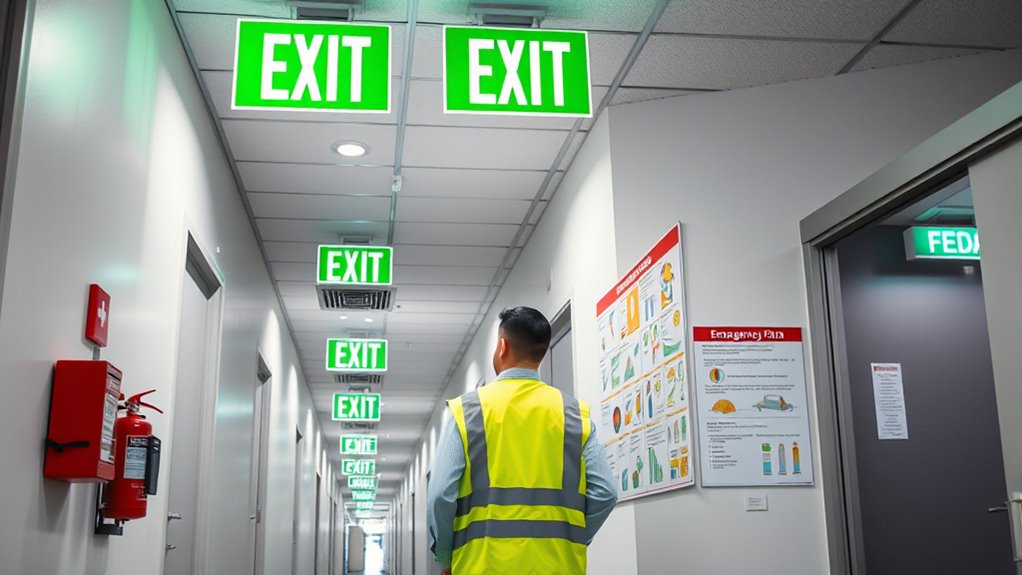

When something goes wrong, stay calm and assess whether you need to evacuate or seek help. Immediately contact emergency services with clear details and your location. Keep an accessible emergency kit ready and have multiple escape routes planned. Communicate your plan clearly to others and designate a safe meeting point. Being prepared helps you act swiftly and confidently in crises. Keep your devices charged and stay informed—if you want to learn more about how to develop effective emergency plans, keep going.
Key Takeaways
- Quickly assess the situation to determine if evacuation or assistance is needed.
- Contact emergency services immediately with clear details and location.
- Follow established escape routes and use your emergency kit if safe.
- Communicate the plan clearly to others and designate a safe meeting point.
- Stay calm, avoid panic, and act swiftly to protect yourself and others.

Have you ever wondered what you would do if an emergency suddenly occurred? It’s a question that might not cross your mind until you’re faced with a crisis, but having a solid emergency plan can make all the difference. When chaos erupts, staying calm and knowing exactly what steps to take helps you respond effectively rather than panicking. The first point of action is always to assess the situation quickly. Determine whether it’s safe to stay put or if you need to evacuate immediately. For example, if there’s a fire, get out fast, but if it’s a medical emergency, your priority might be to call for help while providing first aid if you’re trained.
Once you’ve assessed the scene, your next move is to alert the right people. If you’re at home, call emergency services right away, providing clear details about the incident and your location. If you’re in a workplace or public space, find out the proper notification procedures—whether that’s alerting a supervisor, activating an alarm, or calling emergency numbers. It’s vital to have these contacts saved in your phone and to know the exact address or location details beforehand, so there’s no hesitation when seconds count.
Alert the proper authorities and have emergency contacts saved for quick, effective response during crises.
Having a go-to emergency kit ready can save you precious time. Keep it stocked with essentials like water, non-perishable snacks, a flashlight, a first aid kit, necessary medications, and a portable phone charger. Store it in an accessible spot, and check it regularly to replace expired items. Additionally, plan your escape routes in advance. Know multiple ways to exit your building or area, and practice these routes periodically with family or coworkers. This preparation guarantees that when an emergency strikes, you’re not fumbling to find the way out.
Communication is key during any crisis. Make sure everyone involved understands the plan and knows their role. If you’re with others, designate a meeting point away from danger where everyone can regroup. Keep your phone charged and conserve power if needed, so you can remain reachable and coordinate with emergency responders or loved ones. Staying informed through local alerts or weather updates can guide your actions, so keep a battery-powered radio or a reliable app handy. Also, familiarize yourself with your local retail hours to ensure you can reach essential stores or services when needed.
Ultimately, having a well-crafted emergency plan empowers you to act swiftly and confidently. It reduces fear and uncertainty when things go wrong, helping you protect yourself and those around you. Preparing now means you’re not left scrambling when it matters most.
Frequently Asked Questions
How Often Should Emergency Plans Be Reviewed and Updated?
You should review and update your emergency plans at least once a year to guarantee they remain effective and relevant. Additionally, any significant changes in your organization, structure, or personnel warrant an immediate review. Regular drills and real-life experiences also help identify gaps, so incorporate lessons learned promptly. Staying proactive helps you respond swiftly and confidently when emergencies happen, minimizing risks and safeguarding everyone involved.
Who Should Be Responsible for Executing Emergency Plans?
You should be the one responsible for executing emergency plans, guiding your team like a steady lighthouse in a storm. When an emergency strikes, your clear instructions light the way, helping everyone stay safe and follow procedures smoothly. You need to stay alert, act quickly, and coordinate efforts, ensuring each person knows their role. Your leadership transforms chaos into order, making sure the plan works when it’s needed most.
How Can I Ensure All Family Members Understand the Plan?
You can guarantee all family members understand the plan by holding a family meeting to review it together. Use simple language and clear instructions, and practice drills regularly so everyone feels confident. Encourage questions and discuss scenarios to reinforce understanding. Create visual aids like maps or checklists, and keep a written copy accessible. Consistent communication and practice help make the plan second nature for everyone in your family.
What Emergency Supplies Are Essential to Include?
You definitely don’t want to forget essentials like water, non-perishable food, a flashlight, batteries, a first aid kit, and hygiene supplies. Add a multi-tool, blankets, and copies of important documents for good measure. Think of it as prepping for a mini apocalypse—because you never know when you’ll need to fend off zombies or just deal with a power outage. Stay prepared, stay alive, and maybe keep some snacks handy!
How Do I Communicate With Authorities During an Emergency?
You should call emergency services immediately using the local emergency number. Keep your phone charged and accessible, and if possible, send a text or use emergency apps to communicate if voice calls aren’t working. Stay calm and clearly relay your location, the situation, and any injuries. If you’re unable to speak, use text messages or emergency alert features to alert authorities discreetly. Always follow their instructions carefully.
Conclusion
Having a solid emergency plan gives you confidence when chaos strikes. It’s the calm in your storm, the safety net beneath your falling steps. Without it, you face uncertainty alone, vulnerable and unprepared. But with a plan in place, you’re ready to act swiftly and stay safe. Remember, just like a lighthouse guides ships in darkness, your preparedness guides you through the worst, turning fear into control and chaos into calm.