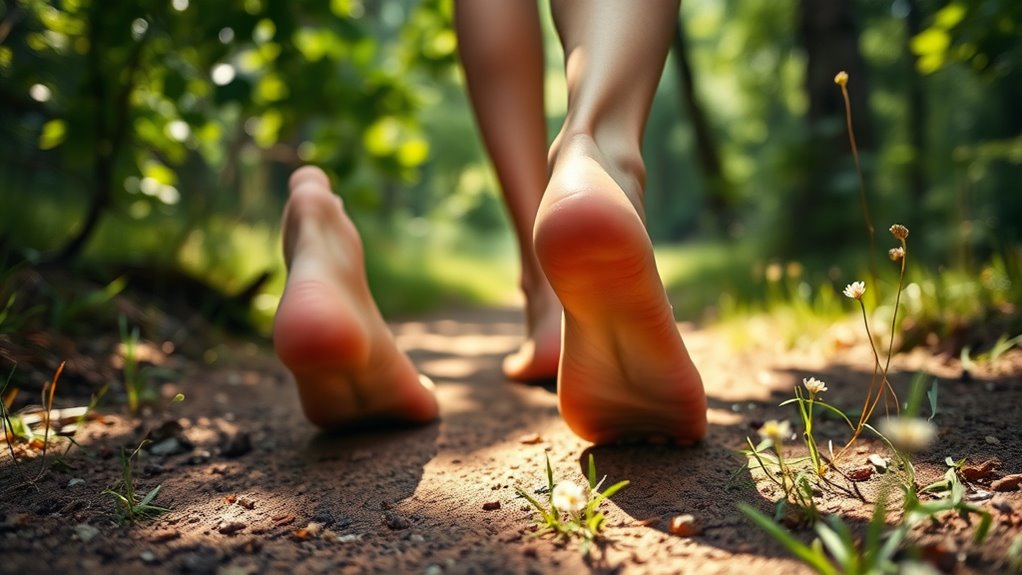

To walk miles without pain, choose well-fitting shoes that don’t rub or cause hot spots, and break them in gradually. Wear moisture-wicking socks to keep your feet dry and double-layer options for extra protection. Apply lubricants like petroleum jelly on areas prone to friction and use blister pads for added defense. Regularly check your feet and adjust footwear as needed. Staying attentive to these tips can help you stay blister-free and comfortable on your long walks.

Get movie nights delivered free with Prime
- Fast, free delivery on millions of items
- Prime Video, Amazon Music and more included
- Member-only deals all year
Key Takeaways
- Wear well-fitting, broken-in shoes that prevent friction and hot spots during long walks.
- Use moisture-wicking socks and change them if feet get wet to reduce skin softening and blister risk.
- Apply lubricants like petroleum jelly on vulnerable areas to minimize skin-to-shoe friction.
- Carry extra socks and keep feet dry; manage moisture with powders or antiperspirants for better comfort.
- Monitor your feet for early signs of irritation or hot spots and use protective pads or adjustments promptly.

Blisters can quickly turn a great day into a painful experience, but with the right precautions, you can keep your feet blister-free. Whether you’re planning a long hike, a day at theme parks, or just walking around town, preventing blisters starts with understanding how they form. Friction and moisture are the main culprits, so your goal is to minimize both. Start by choosing the right footwear. Opt for well-fitting shoes that aren’t too tight or too loose. Shoes that rub against your skin create friction, and loose shoes can cause your foot to slide, increasing the risk of blisters. Break in new shoes gradually before setting out on long walks, giving your feet time to adapt and mold to the shape of your footwear.
Choosing well-fitting shoes and breaking them in prevents blisters on long walks.
Next, pay attention to your socks. Wear moisture-wicking socks made of synthetic fibers or merino wool, not cotton, which retains sweat and keeps your skin damp. Damp skin is more prone to blistering because it softens and increases friction. Double-layer socks can add an extra barrier, reducing friction even further. If you’re heading out for a long walk or hike, consider applying a lubricant like petroleum jelly or specialized blister prevention balms on areas prone to chafing, such as heels and toes. This creates a slippery surface that reduces skin-to-skin and skin-to-shoe friction.
Keep your feet dry throughout your activity. Change into dry socks if your feet get wet, and consider carrying an extra pair. Moisture management is essential because wet skin and shoes significantly increase blister risk. Use foot powders or antiperspirants designed for feet to reduce sweating, which keeps your skin dry and more resistant to blisters. Regularly check your feet during long outings, and if you notice areas starting to chafe or become sore, take action immediately. Applying moleskin or blister pads to vulnerable spots can provide a protective barrier before a blister even forms. Additionally, choosing properly fitted shoes can significantly reduce the likelihood of blisters, as they help prevent unnecessary friction and hot spots.
Finally, pay attention to footwear fit and comfort. Don’t ignore hot spots—small areas of irritation—because they are often precursors to blisters. Address them by adjusting laces, adding padding, or switching shoes if necessary. Properly maintained, comfortable footwear combined with moisture control, skin lubrication, and early intervention can help you walk miles without pain. With these precautions, you’ll stay blister-free and enjoy your adventures fully, without the distraction or discomfort that blisters bring.
blister prevention walking shoes
As an affiliate, we earn on qualifying purchases.
As an affiliate, we earn on qualifying purchases.
Frequently Asked Questions
What Are the Best Shoes to Prevent Blisters During Long Walks?
You should choose shoes with a snug but not tight fit, made from breathable materials, and with minimal seams to reduce friction. Look for options with cushioned insoles and good arch support, which help prevent rubbing. Break them in gradually before long walks, and wear moisture-wicking socks to keep your feet dry. Properly fitted shoes combined with these tips will considerably lower your risk of blisters during extended walks.
How Can I Treat Blisters if They Already Appeared?
If you notice a blister forming, gently wash the area with soap and water, then pat it dry. Apply an antiseptic and cover it with a sterile, breathable bandage to prevent infection and friction. Keep the blister intact if it’s unbroken—don’t pop it, as that risks infection. Rest your feet, elevate them when possible, and avoid tight shoes to give your skin time to heal.
Are There Specific Socks That Reduce Blister Risk?
Yes, you should choose socks made from moisture-wicking materials like merino wool or synthetic fibers designed to keep your feet dry. Look for seamless or flat-seam designs to reduce friction, and opt for well-fitting socks that aren’t too tight or loose. Double-layer socks can also provide extra protection. These features help minimize blisters by reducing friction and moisture buildup during long walks.
Can Foot Powders or Sprays Help Prevent Blisters?
Think of foot powders and sprays as your armor against blisters. They work by absorbing moisture and reducing friction, creating a smoother surface for your feet to glide in your shoes. When you apply them before walking, you’ll notice less sweat and chafing, which are key culprits in blister formation. So yes, using these products can be a simple yet effective way to keep your feet comfortable on long walks.
How Often Should I Change My Footwear During Long Hikes?
You should change your footwear every 4 to 6 hours during long hikes. This helps prevent hot spots and reduces moisture buildup, which can cause blisters. Carry an extra pair of lightweight shoes or sandals, and switch to them when your feet get sweaty or uncomfortable. Pay attention to how your feet feel, and don’t hesitate to take off your shoes periodically to check for signs of rubbing or irritation.
As an affiliate, we earn on qualifying purchases.
Conclusion
Now, imagine your feet as sturdy, pain-free soles, gliding smoothly over every mile. With the right shoes, proper care, and mindful habits, you’ll glide effortlessly through your adventures, feeling the breeze and the earth beneath your feet. No more blisters to slow you down—just pure freedom in every step. Walk confidently, knowing each stride brings you closer to pain-free journeys and open roads ahead. Your blister-free feet await your next great adventure.
As an affiliate, we earn on qualifying purchases.
As an affiliate, we earn on qualifying purchases.
Halloween Picks
halloween
As an affiliate, we earn on qualifying purchases.