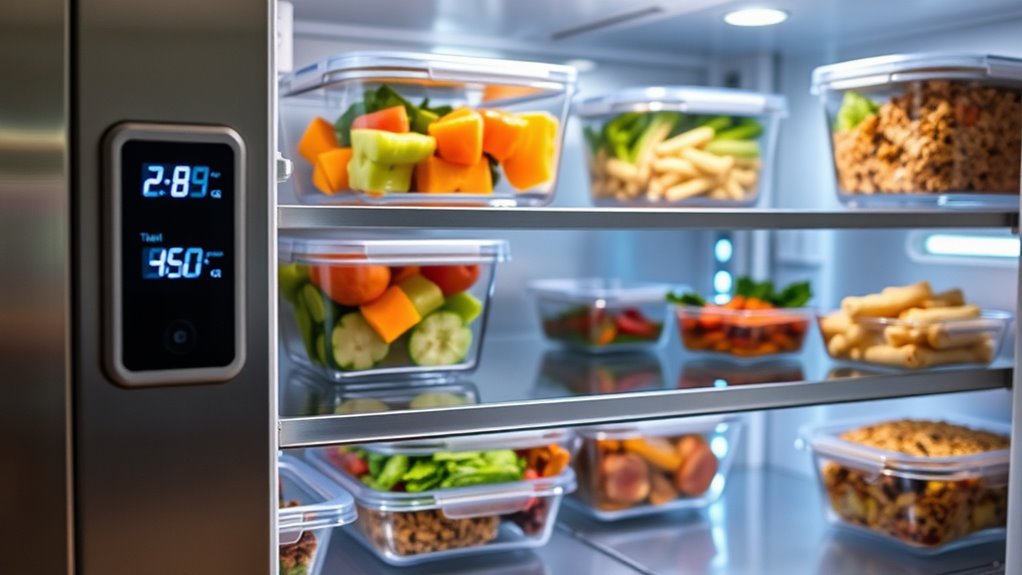

To prevent foodborne illness, it’s essential to keep food at safe temperatures. Store perishable items below 40°F and reheat leftovers to 165°F to kill bacteria. Always use a thermometer to monitor temperatures and avoid cross contamination by separating raw and cooked foods. Proper refrigeration, quick freezing, and careful handling stop bacteria from growing and spreading. If you want to learn more about effective controls, there’s plenty to explore on this topic.

Get movie nights delivered free with Prime
- Fast, free delivery on millions of items
- Prime Video, Amazon Music and more included
- Member-only deals all year
Key Takeaways
- Maintain refrigerator temperatures at or below 40°F (4°C) to inhibit bacterial growth.
- Reheat leftovers to an internal temperature of 165°F (74°C) to kill bacteria effectively.
- Refrigerate perishable foods within two hours to prevent bacterial multiplication.
- Properly wrap and freeze foods to extend shelf life and prevent cross contamination.
- Use a thermometer regularly to monitor and ensure accurate temperature controls during storage and reheating.
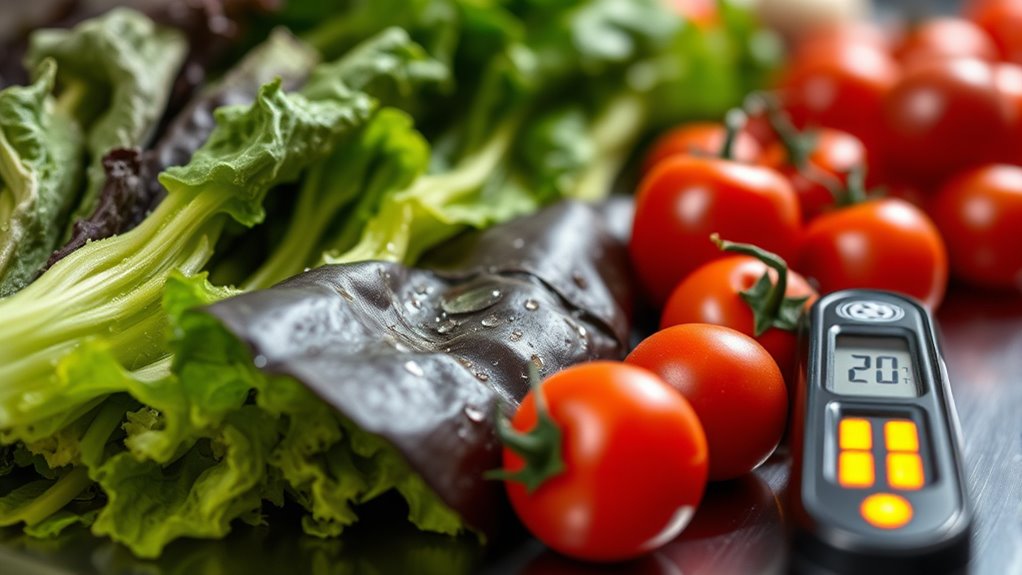
Have you ever wondered how foodborne illnesses happen? Often, it’s not just about what you’re eating but how it’s handled and stored before it reaches your plate. Proper food safety practices are essential, especially when it comes to cross contamination prevention and proper refrigeration techniques. These simple steps can substantially reduce the risk of harmful bacteria spreading and multiplying, making your meals safer for everyone.
Cross contamination prevention is vital in stopping the transfer of bacteria from raw foods to cooked or ready-to-eat items. You should always keep raw meats, poultry, and seafood separate from fruits, vegetables, and cooked foods. Use different cutting boards and knives for raw and cooked items, and wash your hands thoroughly after handling raw products. Avoid placing cooked foods on surfaces that previously held raw meats, as bacteria can easily transfer. Proper storage is key—store raw meats on the lowest shelves of your refrigerator to prevent drips onto other foods. Keeping these practices in mind helps break the chain of bacteria transfer, reducing the chance of foodborne illness outbreaks.
Keep raw meats separate and use different cutting boards to prevent bacteria transfer and foodborne illnesses.
When it comes to proper refrigeration techniques, maintaining the right temperature is essential. Your refrigerator should be set at or below 40°F (4°C) to slow bacterial growth. Use a thermometer to monitor the temperature regularly, and never overcrowd the fridge, as this can hinder cold air circulation. Remember, perishable foods don’t last forever; check expiration dates and consume or discard items accordingly. For leftovers, refrigerate within two hours of cooking, and consume them within three to four days. Freezing can also extend the shelf life of many foods, but it doesn’t kill bacteria—just keeps them dormant until thawed and reheated properly.
Additionally, wrap foods tightly before refrigerating or freezing to prevent cross contamination and moisture loss. When you’re taking foods out of the fridge, do so carefully, avoiding contact with other items and ensuring your hands are clean to prevent bacteria from transferring. Always reheat leftovers to an internal temperature of 165°F (74°C), ensuring any bacteria present are destroyed before consuming. These proper refrigeration techniques, combined with vigilance about cross contamination prevention, are your best defenses against foodborne illnesses.
digital food thermometer for cooking
As an affiliate, we earn on qualifying purchases.
As an affiliate, we earn on qualifying purchases.
Frequently Asked Questions
How Often Should Temperature Control Equipment Be Calibrated?
You should calibrate your temperature control equipment at least monthly to guarantee accuracy. Regular calibration helps maintain equipment accuracy, preventing unsafe food temperatures. Additionally, you should calibrate anytime you notice inconsistent readings or after equipment repairs. Consistent calibration keeps your food safety practices reliable, reducing the risk of foodborne illness. Remember, maintaining proper calibration frequency is key to effective time-temperature controls and overall food safety.
What Are the Common Signs of Temperature Abuse in Food?
Think of temperature abuse in food like a warning flag waving. You’ll notice visual cues like slimy textures or color changes, and odors that are off or sour. These signs indicate bacteria are thriving, risking food safety. Always trust your senses—if something looks or smells suspicious, it’s best to discard it. Regularly check your food’s appearance and smell to catch temperature abuse early and prevent illness.
How Do Different Foods Require Specific Temperature Controls?
You need to follow specific food safety temperature guidelines for different foods to prevent contamination. For example, keep hot foods at 135°F or higher and cold foods at 41°F or lower. Meat, seafood, and dairy require precise temperature controls, while fruits and vegetables have more flexible ranges. By understanding these guidelines, you guarantee proper storage and handling, reducing the risk of foodborne illness and maintaining food quality.
What Are the Consequences of Improper Time-Temperature Management?
If you don’t manage time-temperature properly, you risk cross contamination and food spoilage. Bacteria can grow rapidly, leading to foodborne illnesses, and spoilage indicators become easier to spot, signaling unsafe food. You might also increase the chances of cross contamination, spreading harmful pathogens. Proper controls prevent these issues, protecting your customers’ health and maintaining food quality. Neglecting these measures can result in costly recalls, legal trouble, and damage to your reputation.
How Can Staff Be Effectively Trained on Temperature Control Protocols?
You can effectively train staff on temperature control protocols by fostering employee engagement and emphasizing continuous education. Involve staff in hands-on training sessions, encourage questions, and highlight the importance of proper temperature management for food safety. Regular refresher courses and updates help reinforce knowledge, ensuring staff stay informed about best practices. By creating a culture of ongoing learning, you empower your team to consistently follow protocols and reduce food safety risks.
refrigerator thermometer with probe
As an affiliate, we earn on qualifying purchases.
As an affiliate, we earn on qualifying purchases.
Conclusion
By following proper time-temperature controls, you prevent harmful bacteria from thriving. Remember, leaving cooked food out for just two hours can double your risk of illness. Imagine how many plates of food you’ve served that could become a breeding ground for pathogens in that short time. Staying vigilant isn’t just about safety—it’s about protecting everyone you care about. Keep those temperatures in check, and you’ll keep foodborne illnesses at bay.
food storage containers with lids
As an affiliate, we earn on qualifying purchases.
As an affiliate, we earn on qualifying purchases.
cutting boards for raw and cooked foods
As an affiliate, we earn on qualifying purchases.
As an affiliate, we earn on qualifying purchases.
Halloween Picks
halloween
As an affiliate, we earn on qualifying purchases.