
To handle minor camp problems before they grow, regularly check your gear and outdoor setup for wear or damage, fixing issues like leaks or loose fittings immediately. Keep repair kits handy to address small problems on the spot, such as replacing flickering lantern bulbs or patching water containers. Stay vigilant with safety checks and maintenance routines, especially before using fire or outdoor equipment. If you want to learn effective strategies to prevent small issues from escalating, keep exploring these tips.
Key Takeaways
- Conduct routine safety and equipment checks to identify and address small issues early.
- Carry basic repair kits to fix minor problems on-site promptly.
- Address small leaks, loose fittings, or flickering lights before they escalate.
- Maintain gear and equipment properly to prevent wear and unexpected failures.
- Stay vigilant and proactive, monitoring outdoor conditions and equipment performance regularly.
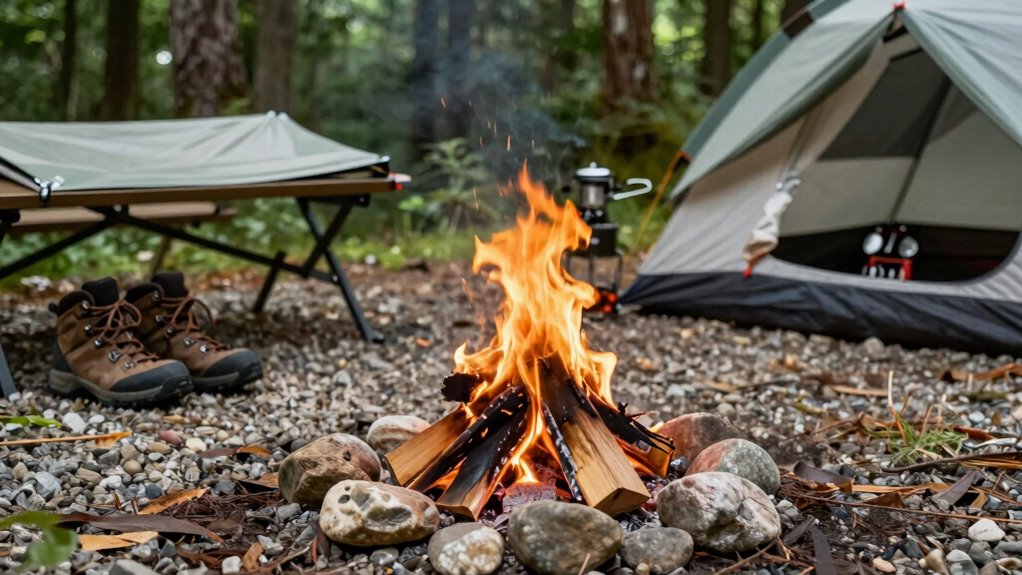
Have you ever faced small issues at camp that seemed to throw everything off course? It’s common to encounter minor problems that, if left unaddressed, can snowball into bigger headaches. The key to handling these issues is quick action combined with a proactive mindset. When it comes to campfire safety, for example, a tiny ember escaping the fire pit can quickly turn into a dangerous blaze if you’re not attentive. Always keep a bucket of water or a fire extinguisher nearby, and make certain you fully extinguish the fire before leaving it unattended. Checking that the fire is out and cold to the touch is a simple but essential step in preventing potential forest fires or accidents. Additionally, understanding the astrological influences on your confidence can help you stay calm and composed when addressing unexpected issues. Similarly, equipment maintenance plays a fundamental role in avoiding small issues from turning into major disruptions. Regularly inspect your gear—tents, stoves, lanterns, and utensils—for wear and tear. If you notice a small tear in your tent or a loose connection on your stove, fix it immediately. Carrying basic repair kits can save you from being stranded or uncomfortable later. It’s better to tighten a loose screw now than to deal with a broken stove in the middle of meal prep. Staying attentive to your equipment also means cleaning and storing it properly, which prolongs its lifespan and guarantees it works efficiently when needed. Incorporating preventative measures like protective covers or storage containers can also help keep your gear in top condition and ready for use. Developing a habit of routine safety checks**** can help you identify potential problems early and save time in the long run. Paying attention to small details, like the condition of your batteries or fuel, can prevent equipment failure at critical moments.
Another important aspect is understanding sauna safety tips, like heatstroke signs and safe usage guidelines, especially if you’re incorporating sauna sessions into your outdoor routine. When minor issues arise, don’t ignore them or hope they’ll resolve on their own. Addressing problems early keeps them from escalating. For example, if you notice a small leak in your water container, mend it with waterproof tape or replace it before it worsens, preventing water shortages. If your lantern flickers, check the bulb or fuel level instead of waiting for it to die completely. These small maintenance tasks can prevent frustrating delays and guarantee your camp runs smoothly.
In addition to quick fixes, maintaining a routine helps you spot potential issues early. Make it a habit to do quick safety checks each morning and evening—look over your campfire setup, inspect your gear, and double-check safety measures. This routine not only keeps minor problems at bay but also keeps you more aware of your surroundings. Proper ventilation and infrared sauna practices, for instance, can help prevent heat-related issues and ensure safe enjoyment if you choose to include sauna sessions during your outdoor trip. Being mindful of gear durability and how it withstands outdoor conditions can also contribute to safer and more reliable camping experiences.
Handling minor camp problems efficiently takes a little vigilance and readiness. By practicing good campfire safety, staying on top of equipment maintenance, and performing regular checks, you prevent small issues from growing into bigger setbacks. Your proactive approach keeps your outdoor experience safe, enjoyable, and trouble-free.
As an affiliate, we earn on qualifying purchases.
Frequently Asked Questions
How Do I Prioritize Camp Issues Effectively?
To prioritize camp issues effectively, start by evaluating camp safety concerns first, as they impact everyone’s well-being. Document each problem thoroughly, noting details and potential risks. Then, categorize issues by urgency and impact, addressing safety-related problems immediately. Regularly review problem documentation to track progress and prevent minor issues from escalating. This approach guarantees you focus on critical safety concerns while managing other problems efficiently.
What Tools Are Best for Quick Problem Assessments?
You should use quick assessment tools like checklists and safety audits to address camp safety and equipment checks promptly. Conduct visual inspections for any obvious hazards, and utilize simple scoring systems to evaluate risks swiftly. Keep a safety log to record issues and monitor recurring problems. These tools help you identify potential safety concerns early, enabling immediate action before minor issues escalate, ensuring a safe and well-managed camp environment.
How Can I Prevent Minor Problems From Escalating?
Think of minor problems as sparks that can ignite a wildfire if ignored. To prevent this, prioritize camp safety by addressing issues promptly and keeping open communication. Regularly inspect equipment and surroundings, and encourage campers to voice concerns early. By actively monitoring and responding quickly, you create a safety net that stops problems before they escalate, ensuring a safe, enjoyable environment for everyone.
Who Should Handle Urgent Camp Issues First?
You should prioritize handling urgent camp issues by following your emergency protocols and involving trained staff immediately. When an issue arises, quick action from staff who have undergone proper training guarantees safety and effective resolution. Always have clear procedures in place, so staff know exactly what to do. This proactive approach minimizes risks and prevents minor problems from escalating into larger emergencies, keeping everyone safe and confident.
How to Communicate Problems to Campers and Staff?
Think of your words as a campfire story, illuminating the path ahead. You should communicate problems clearly and calmly, using direct language that paints a vivid picture. During staff training, emphasize transparency and active listening. Address issues swiftly with a reassuring tone, ensuring everyone understands the situation. Keep campers informed with age-appropriate explanations, fostering trust. This approach helps prevent small problems from becoming bigger, like sparks turning into uncontrolled flames.
As an affiliate, we earn on qualifying purchases.
Conclusion
Think of camp problems like tiny sparks—if you ignore them, they can quickly turn into a raging fire. By catching these issues early and addressing them calmly, you prevent small sparks from igniting bigger flames. Stay attentive and proactive, and you’ll keep your campfire burning bright and safe. Remember, just as a skilled firefighter controls sparks before they spread, you can manage minor problems before they grow into major setbacks. Keep the flames of harmony alive!
As an affiliate, we earn on qualifying purchases.
As an affiliate, we earn on qualifying purchases.