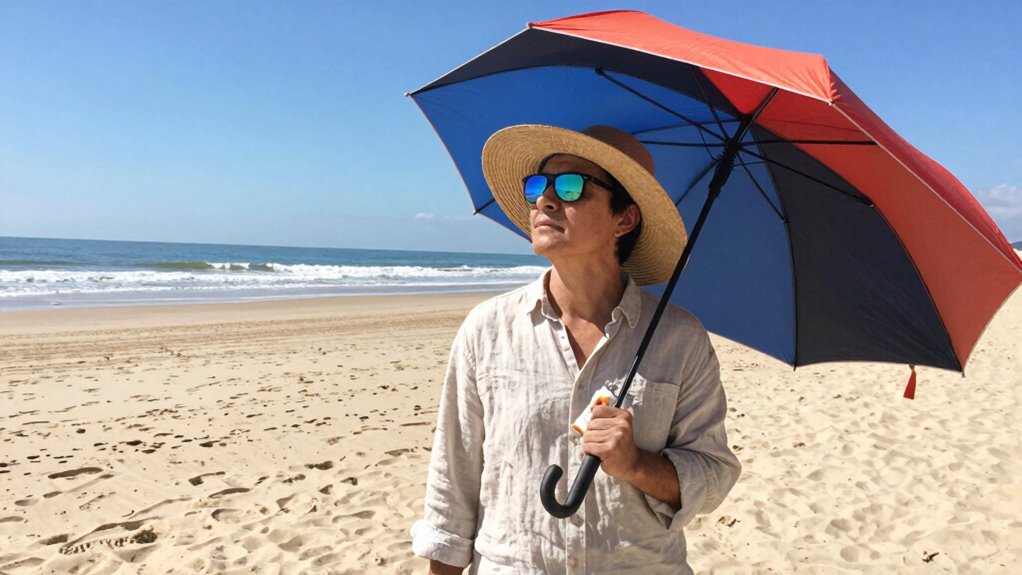

To protect yourself during long hours in the sun, wear broad-spectrum SPF 30+ sunscreen and reapply every two hours, especially if you sweat or swim. Cover your skin with protective clothing like long sleeves and wide-brim hats, and stay in shaded areas during peak hours. Stay hydrated with water or electrolyte drinks, and use sunglasses and umbrellas for extra protection. If you want to learn more tips for safe sun exposure, keep going to stay protected.
Listen free for 30 days with Audible
Thousands of audiobooks and originals — cancel anytime.
As an affiliate, we earn on qualifying purchases.
Key Takeaways
- Apply broad-spectrum SPF 30+ sunscreen generously and reapply every two hours, especially if sweating or swimming.
- Wear protective clothing, including long-sleeved shirts, wide-brimmed hats, and UV-protective sunglasses.
- Seek shade during peak hours (10 a.m. – 4 p.m.) and use umbrellas or canopies for additional shelter.
- Stay well-hydrated with water, electrolyte drinks, or fruit-infused water to prevent dehydration.
- Use after-sun lotion or aloe vera, and monitor for signs of heat exhaustion or skin irritation.
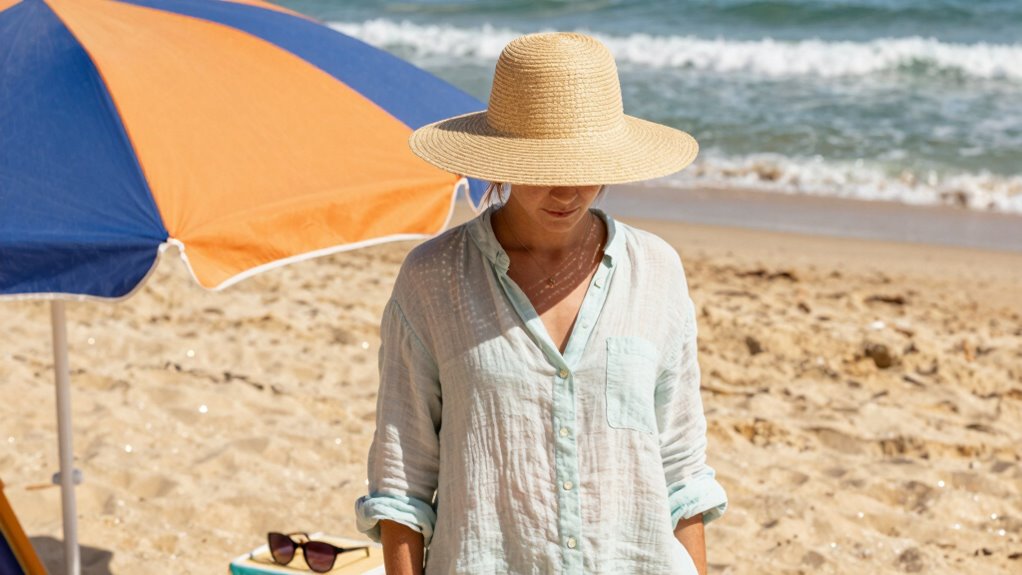
Are you planning to spend extended hours outdoors in the sun? If so, it’s essential to prioritize sun safety to protect your skin and overall health. Prolonged exposure to sunlight can lead to sunburn, premature aging, and even skin cancer if you’re not careful. The key is to adopt a combination of protective measures that keep you safe while allowing you to enjoy the outdoors. One of the most effective strategies is to apply a broad-spectrum sunscreen with at least SPF 30. Make sure to cover all exposed areas generously and reapply every two hours, or more often if you’re sweating or swimming. Wearing protective clothing, like long-sleeved shirts, wide-brimmed hats, and UV-protective sunglasses, also helps shield your skin and eyes from harmful rays.
Staying in the shade whenever possible is another smart move. Seek shelter under trees, umbrellas, or canopies during the peak hours of sunlight, typically between 10 a.m. and 4 p.m. This reduces your direct exposure and lessens the risk of sun-related damage. Remember, even on cloudy days, up to 80% of UV rays can penetrate through the clouds, so sun safety isn’t only about bright sunshine. Hydration plays a crucial role in protecting your body during long hours in the sun. You should drink plenty of water throughout the day to maintain your skin’s hydration levels and prevent dehydration, which can make your skin more vulnerable to damage and cause fatigue. Avoid sugary or caffeinated drinks, as they can contribute to dehydration, and opt for water, electrolyte drinks, or natural fruit-infused waters instead.
In addition to external protection, nourishing your skin from the inside out helps maintain its resilience. Eating foods rich in antioxidants, like berries, nuts, and leafy greens, can combat free radicals generated by UV exposure. Keep your skin moisturized with a good after-sun lotion or aloe vera gel to soothe and replenish moisture lost during exposure. Proper skin hydration is essential because dry, dehydrated skin is more prone to irritation and damage. Finally, listen to your body. If you start feeling dizzy, nauseous, or overly exhausted, take a break, find shade, and hydrate. Your skin and overall health depend on your proactive approach to sun safety, so plan ahead, stay protected, and enjoy your time outdoors responsibly.
broad spectrum SPF 30+ sunscreen
As an affiliate, we earn on qualifying purchases.
As an affiliate, we earn on qualifying purchases.
Frequently Asked Questions
Can Certain Medications Increase Sun Sensitivity?
Yes, certain medications can increase your sun sensitivity. Medication side effects like photosensitivity reactions make your skin more vulnerable to sun damage. Drugs such as antibiotics, antihistamines, and some acne treatments can intensify your risk of sunburn and skin irritation. To stay safe, check your medication labels and consult your doctor or pharmacist. Always wear protective clothing, use broad-spectrum sunscreen, and limit direct sun exposure during peak hours.
How Does Hydration Affect Sun Protection?
Hydration is essential—without it, your skin becomes as fragile as glass under the sun’s harsh rays. Staying well-hydrated helps your body regulate temperature and maintain skin health, which is critical during long hours outside. The importance of hydration can’t be overstated; drink water regularly and use hydration tips like carrying a water bottle or eating water-rich foods. Proper hydration strengthens your sun protection efforts and keeps you feeling energized.
Are There Specific Fabrics Better for Sun Safety?
Yes, certain fabrics are better for sun safety. Look for UV resistant fabrics, which block more of the sun’s harmful rays. Breathable materials are also important, as they keep you cool and comfortable during long hours outside. Opt for lightweight, tightly woven fabrics like nylon or polyester, which provide better protection. Combining these fabrics with wide-brim hats and sun protective clothing helps maximize your sun safety.
What Are Early Signs of Sunstroke?
Early signs of sunstroke include feeling dizzy, headache, and skin redness from heat exhaustion. You might also notice nausea, weakness, or a rapid heartbeat. If your skin becomes hot and red, and you feel faint or overly tired, it’s a clear warning. These symptoms indicate your body is struggling to cool down. Recognize these signs early, hydrate, and seek shade immediately to prevent serious heat-related illnesses.
Can Sunglasses Prevent All UV Damage?
Coincidentally, sunglasses can’t prevent all UV damage, but they do a great job. You might think they’re enough, but only UV blocking lenses provide real protection. Durable sunglasses with high-quality UV filters shield your eyes from harmful rays, reducing risks like cataracts. Remember, even on cloudy days or in reflected sunlight, good sunglasses are essential. So, choose sunglasses with proven durability and UV protection to keep your eyes safe.
As an affiliate, we earn on qualifying purchases.
Conclusion
Remember, protecting yourself in the sun is like shielding a delicate flower—your skin needs care to thrive. Wear sunscreen, seek shade, and cover up whenever you can. Hydrate often and avoid peak sun hours. By taking these simple steps, you’ll stay safe and enjoy the sunshine without the burn. Keep these tips in mind, and the sun will be a friend, not an enemy, on your outdoor adventures.
UV protection sunglasses for outdoor
As an affiliate, we earn on qualifying purchases.
As an affiliate, we earn on qualifying purchases.
outdoor umbrella for sun protection
As an affiliate, we earn on qualifying purchases.
As an affiliate, we earn on qualifying purchases.
Fall Picks
fall essentials
As an affiliate, we earn on qualifying purchases.