You’ll notice that each festival around the world reflects its community’s unique culture through vibrant music, colorful attire, and traditional rituals. Traditional clothing often carries deep meaning, showcasing regional identity and social values. These celebrations foster a sense of pride and continuity, passing down stories and customs through generations. From lively dance and food to special outfits, each festival offers a different vibe rooted in history. Keep exploring to discover how these traditions continue to evolve worldwide.
Key Takeaways
- Festivals worldwide showcase unique cultural traditions through specialized attire, music, and food that reflect local heritage and values.
- Traditional clothing varies by region, conveying social status, history, and cultural stories during festive celebrations.
- The festival atmosphere adapts with local customs, influencing dress styles, decorations, and communal rituals.
- Cultural attire enhances the festival vibe, fostering community pride and reinforcing cultural identity across diverse settings.
- Different regions emphasize distinct elements like colors, patterns, and accessories, creating a vibrant, authentic festival experience globally.
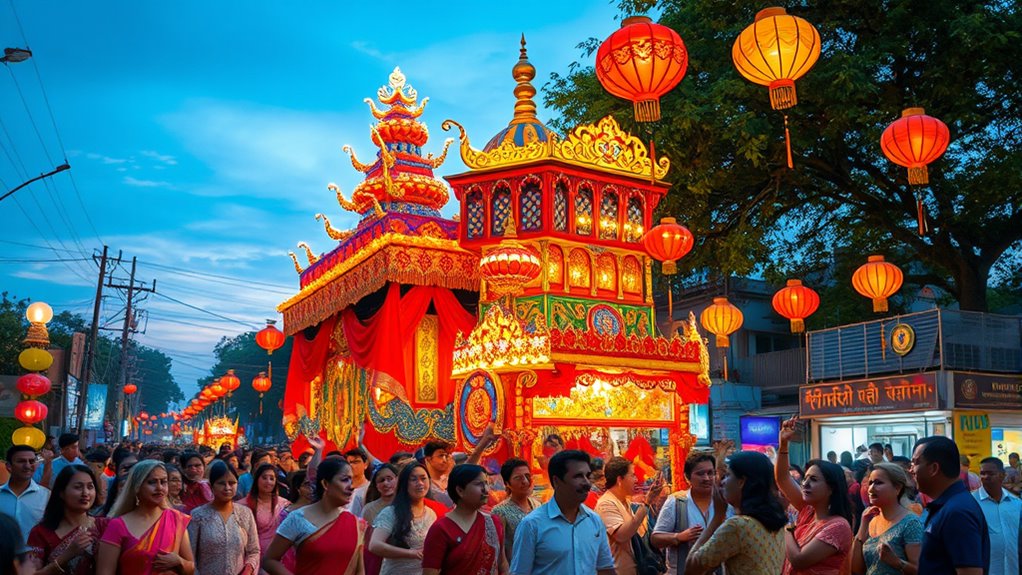
Festivals around the world offer a vibrant glimpse into diverse cultures, passions, and traditions. When you attend these celebrations, you become immersed in the unique ways communities express their history, beliefs, and values. One of the most striking aspects is how cultural significance shapes every element of the event, from the music and dance to the food and decorations. These festivals often serve as a reflection of a community’s identity, reinforcing bonds and passing traditions from generation to generation. You’ll notice that traditional attire plays a pivotal role in conveying this cultural significance. People don elaborate costumes, embroidered garments, or specific colors that symbolize their heritage, status, or the festival’s theme. Wearing traditional attire isn’t just about appearance; it’s a way to honor ancestors, celebrate roots, and preserve cultural stories. For you, participating in this aspect of the festival offers a deeper connection to the community’s history and a chance to appreciate the craftsmanship behind each outfit.
As you explore different festivals, you’ll see how traditional attire varies greatly from place to place. In some cultures, intricate beadwork and bright colors dominate, representing joy and vitality. In others, more subdued, symbolic clothing is worn to honor solemn occasions or spiritual beliefs. These garments often carry meanings embedded in their patterns, fabrics, and accessories, revealing layers of cultural significance that go beyond mere decoration. Interestingly, the color schemes used in traditional dress can also indicate social status or regional identity within a community. When you observe or wear traditional attire, you’re participating in a visual language that communicates collective values and stories. It’s a form of expression that transcends words, making the festival experience more meaningful and memorable. The preservation of these traditional costumes often involves a strong sense of community and cultural continuity, ensuring that future generations can continue to honor their heritage.
The way traditional dress is integrated into the festival also highlights the importance of community and continuity. You might see elders passing down knowledge about specific garments or families showcasing heirloom pieces during the event. This passing of tradition fosters a sense of pride and cultural resilience. Participating in or simply appreciating these displays helps you understand how deeply intertwined clothing and cultural identity are. Whether it’s a colorful sari at an Indian festival, a kimono at a Japanese celebration, or a folk costume in European festivities, each outfit tells a story. These stories remind you that festivals aren’t just about entertainment—they’re essential expressions of cultural significance that keep traditions alive for future generations. Recognizing these garments as living symbols emphasizes how cultural identity is maintained through traditional clothing and shared rituals.
As an affiliate, we earn on qualifying purchases.
Frequently Asked Questions
How Do Festival Traditions Vary Across Different Cultures?
You’ll notice festival traditions vary widely across cultures, reflecting unique cultural symbolism. For example, festival attire often incorporates traditional clothing, colors, and accessories that hold special meaning. In some cultures, rituals and dances are central, while others emphasize music or food. These differences create diverse festival experiences worldwide, showcasing how each society celebrates its history, beliefs, and identity through distinctive customs and symbolic attire, making every festival uniquely vibrant.
What Are the Environmental Impacts of Large-Scale Festivals Globally?
You might wonder about the environmental impacts of large-scale festivals worldwide. These events often increase your carbon footprint due to transportation, energy use, and waste. Poor waste management can lead to pollution and harm ecosystems. However, many festivals are now adopting sustainable practices like recycling, renewable energy, and eco-friendly materials. By supporting these efforts, you help reduce environmental damage and promote greener festival experiences globally.
How Do Local Cuisines Influence Festival Experiences Worldwide?
Imagine you’re at a global music festival, where local cuisines showcase cultural fusion and culinary diversity. These flavors shape your experience, connecting you to the community’s traditions. Local cuisines influence festival atmospheres by offering authentic tastes and fostering cultural exchange. They enrich your journey, making it more memorable and meaningful, as you savor diverse dishes that highlight the unique identity of each place you visit.
What Safety Measures Are Common at International Festivals?
At international festivals, you’ll find common safety measures like strict security protocols and effective crowd management. Security personnel often conduct bag checks and use surveillance to guarantee safety, while barriers and designated pathways help control the flow of people. These measures aim to prevent accidents and maintain a secure environment, allowing you to enjoy the event worry-free. Always stay aware of posted guidelines and follow staff instructions for your safety.
How Do Festival Themes Adapt to Regional Histories and Legends?
You’ll notice festival themes beautifully mirror regional costumes and mythological stories, subtly honoring local histories. These adaptations serve as cultural whispers, connecting traditions with modern celebrations. By weaving regional legends into costumes and performances, organizers preserve unique identities and deepen visitor engagement. This thoughtful fusion transforms festivals into immersive journeys that celebrate heritage, allowing attendees to experience the rich tapestry of local folklore while enjoying lively, authentic festivities.
As an affiliate, we earn on qualifying purchases.
Conclusion
No matter where you go, the festival vibe offers a unique experience—whether it’s the vibrant colors of Brazil’s Carnival or the high-energy beats of Tomorrowland in Belgium. Did you know that over 32 million people attend music festivals worldwide each year? So, next time you’re at one, embrace the local flavor and feel the global connection. Festivals aren’t just about music; they’re about shared joy, culture, and unforgettable memories. Get ready to immerse yourself in the worldwide celebration!
handmade embroidered festival clothing
As an affiliate, we earn on qualifying purchases.
As an affiliate, we earn on qualifying purchases.
As an affiliate, we earn on qualifying purchases.