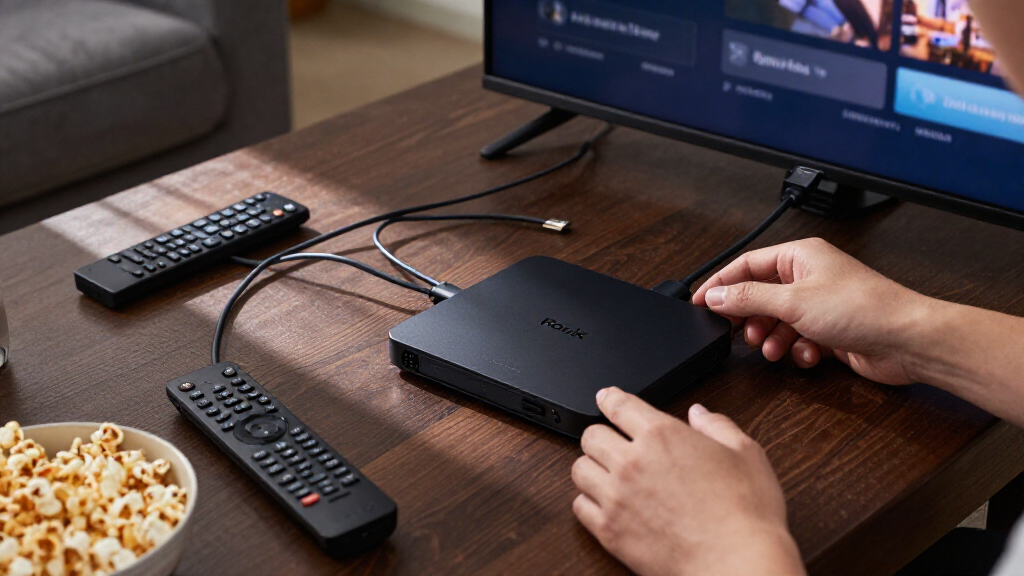

The best movie streaming device for most viewers is the Google TV Streamer (4K), thanks to its roomy storage, useful interface, and 4K support. For a simpler setup, the Roku Streaming Stick Plus offers a straightforward route to 4K streaming, while the NVIDIA SHIELD TV Pro is better suited to viewers who want advanced playback and extra versatility. The main tradeoffs are HD versus 4K, a stick’s compact simplicity versus a box’s connections and performance, and each platform’s approach to finding apps and content. Your TV, Wi-Fi, and preferred streaming services can matter as much as the device itself. Read on for the full comparison and guidance on choosing among these 15 movie streaming devices.

Get movie nights delivered free with Prime
- Fast, free delivery on millions of items
- Prime Video, Amazon Music and more included
- Member-only deals all year
Key Takeaways
- The Google TV Streamer (4K) is the strongest all-around fit in this lineup for viewers who want 4K, a current Google TV interface, and 32 GB of storage; its Porcelain and Hazel versions offer the same core choice in different finishes.
- Roku and Fire TV sticks favor low-fuss setups, while the Google TV Streamer, Roku Ultra, Fire TV Cube, and NVIDIA SHIELD TV Pro suit buyers who want a dedicated player with more room for features or connections.
- HD sticks remain sensible for older 1080p TVs; paying for 4K capability makes little difference if the screen cannot display it.
- Premium features solve specific problems, not every streaming problem: Wi-Fi 6E, Wi-Fi 6, extra storage, or a more advanced player matter most when the home setup or viewing habits can use them.
- Platform preference is a real separator: Google TV, Fire TV, Roku, and Android TV organize apps and discovery differently, so familiar navigation may matter more than a small spec advantage.
| Amazon Fire TV Stick HD with Alexa Voice Remote |  | Best for Alexa Households | Model: Fire TV Stick HD | Resolution: Full HD | Wireless connectivity: Wi-Fi 6 | VIEW LATEST PRICE | See Our Full Breakdown |
| Roku Streaming Stick HD with Voice Remote |  | Best Simple HD Pick | Model: 3840R | Resolution: 1080p (1920 × 1080) | Connectivity: Bluetooth, Wi-Fi | VIEW LATEST PRICE | See Our Full Breakdown |
| Google TV Streamer (4K), 32 GB, Porcelain |  | Best Overall for 4K Movie Discovery | Model: GRS6B | Video output: 3840 × 2160 | HDR: 4K HDR with Dolby Vision | VIEW LATEST PRICE | See Our Full Breakdown |
| Google Chromecast with Google TV 4K HDR Streaming Media Player, Snow, with Pouch and Cleaning Cloth |  | Best Compact 4K Option | Model: GA01919-US+Pouch-Cloth | Resolution: 4K (3840 × 2160) | Connectivity: Bluetooth, Wi-Fi | VIEW LATEST PRICE | See Our Full Breakdown |
| NVIDIA SHIELD TV Pro 4K HDR Streaming Media Player |  | Best for Home Theater and Media Libraries | Model: 945-12897-2500-101 | Processor: NVIDIA Tegra X1+ | Memory: 3 GB RAM | VIEW LATEST PRICE | See Our Full Breakdown |
| Amazon Fire TV Stick 4K Plus with Alexa Voice Remote |  | Best Overall for Alexa Households | Maximum resolution: 2160p up to 60 fps | HDR formats: Dolby Vision, HDR10, HDR10+, HLG | Audio: Dolby Atmos; up to 7.1 surround sound | VIEW LATEST PRICE | See Our Full Breakdown |
| KICKPI KP1 Android TV Box, 4K Streaming, 2GB RAM, 16GB Storage, Voice Remote, Chromecast Built-In |  | Best for Casting and Google TV Fans | Operating system: Android TV 14 | Maximum resolution: 3840 × 2160 (4K) | Processor: Amlogic S905Y4 quad-core Cortex-A35 | VIEW LATEST PRICE | See Our Full Breakdown |
| Roku Streaming Stick Plus 4K HDR Streaming Device with Voice Remote |  | Best Compact, Outlet-Free Pick | Resolution: 4K | HDR: HDR10+ | Video codecs: H.264/AVC, H.265/HEVC, AV1, VP9 | VIEW LATEST PRICE | See Our Full Breakdown |
| Google TV Streamer 4K with Voice Remote, 32 GB, Hazel |  | Best for Google TV Organization | Maximum resolution: 3840 × 2160 (4K) | HDR: Up to 4K HDR with Dolby Vision | Storage: 32 GB | VIEW LATEST PRICE | See Our Full Breakdown |
| Amazon Fire TV Stick 4K with Alexa+ and Fire TV Remote |  | Best for Alexa+ Voice Features | Resolution: 4K | HDR: HDR10+ | Wireless: Wi-Fi 6 | VIEW LATEST PRICE | See Our Full Breakdown |
| Amazon Fire TV Cube (3rd Gen) 4K Streaming Media Player with Alexa, Wi-Fi 6E |  | Best for Hands-Free Control and Connected Setups | Generation: 3rd Gen | Processor: Octa-core: 4 × 2.2 GHz and 4 × 2.0 GHz | Storage: 16 GB internal | VIEW LATEST PRICE | See Our Full Breakdown |
| onn 4K UHD Android TV Streaming Device with Voice Remote and HDMI Cable |  | Best for a Straightforward Google-Centric Setup | Resolution: 4K UHD (3840 × 2160 pixels) | Operating system: Android TV | Memory: 2 GB RAM | VIEW LATEST PRICE | See Our Full Breakdown |
| Roku Ultra 4K Streaming Player with Wi-Fi 6 and Voice Remote Pro |  | Best for a Feature-Rich Roku Setup | Resolution: 4K (3840 × 2160 pixels) | HDR formats: HDR10, HDR10+, Dolby Vision | Audio: Dolby Atmos | VIEW LATEST PRICE | See Our Full Breakdown |
| Amazon Fire TV Stick 4K Select with Alexa Voice Remote |  | Best Compact Fire TV Pick | Dimensions: 3.9 × 1.2 × 0.6 in | Weight: 1.5 oz (42 g) | Processor: Quad-core 1.7 GHz | VIEW LATEST PRICE | See Our Full Breakdown |
| TiVo Stream 4K Streaming Media Player with Android TV |  | Best for Cross-App Browsing | Device type: Streaming media player | Form factor: TV stick | Operating system: Android TV | VIEW LATEST PRICE | See Our Full Breakdown |
| movie streaming device | Connectivity | Storage |
|---|---|---|
| Amazon Fire TV Stick HD with A | — | — |
| Roku Streaming Stick HD with V | Bluetooth, Wi-Fi | — |
| Google TV Streamer | Ethernet, Wi-Fi | 32 GB |
| Google Chromecast with Google | Bluetooth, Wi-Fi | — |
| NVIDIA SHIELD TV Pro 4K HDR St | Gigabit Ethernet, dual-band AC Wi-Fi, Bluetooth 5.0 | 16 GB |
| Amazon Fire TV Stick 4K Plus w | — | 8 GB |
| KICKPI KP1 Android TV Box | — | 16 GB; expandable via USB |
| Roku Streaming Stick Plus 4K H | Wi-Fi, Bluetooth, HDMI | — |
| Google TV Streamer 4K with Voi | Wi-Fi, Ethernet, HDMI | 32 GB |
| Amazon Fire TV Stick 4K with A | — | — |
| Amazon Fire TV Cube | — | 16 GB internal |
| onn 4K UHD Android TV Streamin | HDMI, Wi-Fi | 8 GB |
| Roku Ultra 4K Streaming Player | Wi-Fi 6, Bluetooth, Ethernet, HDMI, USB | — |
| Amazon Fire TV Stick 4K Select | — | — |
| TiVo Stream 4K Streaming Media | Wi-Fi; HDMI | 8 GB |
More Details on Our Top Picks
Amazon Fire TV Stick HD with Alexa Voice Remote
I’d choose the Fire TV Stick HD for a straightforward movie setup in a bedroom, guest room, or older television that tops out at Full HD. Its Wi-Fi 6 support and Alexa remote make searching and controlling compatible TV or audio equipment easier, while the stick plugs directly into HDMI and can draw power from the TV. Compared with the Roku Streaming Stick HD, this model is the more natural fit for someone who already uses Alexa or wants its compatible smart-home controls; Roku offers a similarly compact HD alternative with Apple AirPlay and HomeKit support. The tradeoff is that this Fire TV Stick does not provide 4K, and TV-powered operation depends on the TV’s USB port supplying suitable power. Some streaming apps also require separate subscriptions.
Pros:- Compact HDMI stick is easy to move between compatible TVs.
- Wi-Fi 6 support is suited to current home wireless networks.
- Alexa remote supports voice search and compatible TV and audio controls.
- Bluetooth headphone support enables private listening.
Cons:- Full HD output lacks the 4K playback offered by the Google TV Streamer and NVIDIA SHIELD TV Pro.
- TV-powered setup depends on the television’s USB port.
- Access to some streaming services requires separate subscriptions.
Best for: Alexa users who want a compact Full HD movie streamer for a secondary TV and value voice search or compatible smart-home controls.
Not ideal for: Owners of 4K televisions seeking 4K playback, or buyers whose TV USB port cannot power the stick reliably.
- Model:Fire TV Stick HD
- Resolution:Full HD
- Wireless connectivity:Wi-Fi 6
- Connection:HDMI
- Power:TV-powered via included USB-C cable
- Remote:Alexa Voice Remote with power, volume, and preset app buttons
- Bluetooth:Supports Bluetooth headphones
- Smart-home control:Compatible Alexa smart-home features
Our verdict“Choose this for an Alexa-friendly Full HD setup, but pick a 4K streamer if your television can take advantage of higher resolution.”
Roku Streaming Stick HD with Voice Remote
The Roku Streaming Stick HD suits viewers who want a small, uncomplicated way to reach HD movies and popular streaming apps. Its 1080p output is a sensible match for a non-4K television, and the compact body is designed to stay clear of neighboring HDMI ports. The voice remote handles playback, search, TV power, and volume, while Bluetooth Headphone Mode offers a practical option for late-night viewing. Compared with the Amazon Fire TV Stick HD, Roku adds listed compatibility with Apple AirPlay and HomeKit as well as Alexa and Google Home, making it a flexible fit across smart-home setups. The compromise is resolution: unlike the 4K Google TV Streamer or Chromecast with Google TV, this Roku cannot deliver 4K. It also needs an HDMI-equipped TV and an internet connection.
Pros:- Small stick is designed not to block neighboring HDMI ports.
- Voice remote controls streaming, TV power, and volume.
- Bluetooth Headphone Mode supports private listening.
- Lists compatibility with Alexa, Google Home, Apple AirPlay, and HomeKit.
Cons:- Resolution is limited to 1080p, below the 4K options in this roundup.
- Requires an internet connection for streaming.
- TV-powered operation depends on a compatible television USB port.
Best for: Viewers with an HD television who want a compact streamer, a voice remote, and compatibility with Apple, Alexa, or Google smart-home ecosystems.
Not ideal for: People with 4K TVs who want 4K movie playback, or households without reliable internet access.
- Model:3840R
- Resolution:1080p (1920 × 1080)
- Connectivity:Bluetooth, Wi-Fi
- Connector:HDMI
- Video codecs:H.264/AVC, AV1
- Voice-assistant compatibility:Alexa, Google Home
- Additional compatibility:Apple AirPlay and HomeKit; Roku Smart Home
- Weight:60 g
Our verdict“Pick Roku for a compact, capable HD setup with broad smart-home compatibility, not for a 4K screen.”
Google TV Streamer (4K), 32 GB, Porcelain
I’d make the Google TV Streamer my general-purpose pick for a 4K movie setup, especially for viewers who want a single interface to organize services and watchlists. It supports 4K HDR with Dolby Vision, and its personalized recommendations can make it easier to find films across supported apps rather than opening each one in turn. The 32 GB of storage and 4 GB of RAM also give it more listed capacity than the Google Chromecast with Google TV 4K HDR. Compared with the Chromecast, this is the more capable box-style option, with Ethernet as well as Wi-Fi. That extra capability comes with setup requirements: an HDMI 2.1 cable is required but not included, and Dolby Atmos needs compatible speakers. Buyers who only need simple 4K streaming may find the Chromecast’s included pouch and cable accessories a better fit.
Pros:- 4K HDR with Dolby Vision supports high-resolution viewing on compatible equipment.
- Personalized recommendations and a watchlist bring services together.
- 32 GB storage and 4 GB RAM are listed for the device.
- Ethernet provides a wired network option alongside Wi-Fi.
Cons:- HDMI 2.1 cable is required and sold separately.
- Dolby Atmos playback requires compatible speakers.
- Its box-style form is less discreet than the Fire TV and Roku streaming sticks.
Best for: Movie-focused 4K viewers who want Dolby Vision, cross-service recommendations, a watchlist, and the option of wired Ethernet.
Not ideal for: Buyers seeking a ready-to-connect package with an HDMI cable included, or viewers who do not need 4K and expanded storage.
- Model:GRS6B
- Video output:3840 × 2160
- HDR:4K HDR with Dolby Vision
- Audio:Dolby Atmos support
- Storage:32 GB
- Installed RAM:4 GB
- Connectivity:Ethernet, Wi-Fi
- Form factor:TV box
Our verdict“Choose this as a flexible 4K movie hub if you want Google TV discovery and can supply the required HDMI cable.”
Google Chromecast with Google TV 4K HDR Streaming Media Player, Snow, with Pouch and Cleaning Cloth
The Chromecast with Google TV 4K HDR is a good match for viewers who want 4K movie access and recommendations in a compact HDMI-connected device. Its voice remote with Google Assistant means you can search by voice rather than relying on casting from a phone, while recommendations draw from supported streaming services. Compared with the newer Google TV Streamer, this Chromecast is the smaller, simpler alternative; the newer box lists more storage and RAM and includes Ethernet, while this package includes a pouch and cleaning cloth. The core tradeoff is that 4K HDR depends on compatible content and equipment, and you still need Wi-Fi and an HDMI port. Its listed video codec is H.264, so buyers wanting the newer Streamer’s listed H.265 support may prefer that model.
Pros:- Supports up to 4K HDR playback on compatible equipment.
- Personalized recommendations help surface films across supported services.
- Google Assistant voice remote supports searches and TV controls.
- Included pouch and cleaning cloth add useful accessories for storage or travel.
Cons:- Requires a TV with an HDMI port and a Wi-Fi connection.
- 4K playback depends on compatible content and equipment.
- Lacks the Ethernet connection and listed 32 GB storage of the Google TV Streamer.
Best for: Viewers who want a compact Google TV device for 4K HDR movies and prefer a voice remote over phone-only casting.
Not ideal for: People who need Ethernet, want the larger storage and RAM listed for the Google TV Streamer, or lack a 4K-compatible TV and content.
- Model:GA01919-US+Pouch-Cloth
- Resolution:4K (3840 × 2160)
- Connectivity:Bluetooth, Wi-Fi
- Connector:HDMI
- Video codec:H.264
- Controls:Remote control, voice control
- Supported services:Amazon Instant Video, Google TV, Hulu, Netflix, YouTube
- Included items:Chromecast, voice remote, power adapter, USB-C power cable, 2 AAA batteries, pouch, cleaning cloth
Our verdict“Choose the Chromecast for compact 4K Google TV streaming, and step up to the Google TV Streamer if you need Ethernet or more listed storage.”
NVIDIA SHIELD TV Pro 4K HDR Streaming Media Player
The NVIDIA SHIELD TV Pro is the most expandable choice here for movie fans with a home theater or personal media library. It combines 4K HDR, Dolby Vision, and Dolby Atmos with AI upscaling that can make HD video look sharper on a 4K screen. Its two USB 3.0 ports, Gigabit Ethernet, and built-in Plex Media Server give it a broader role than the simpler Google TV Streamer, which is better suited to app-based streaming and cross-service discovery. The SHIELD’s remote adds backlighting and a locator, useful in a dim viewing room. This extra flexibility is not for everyone: it has 16 GB of storage, less than the Google streamer’s listed 32 GB, and USB-connected expansion or Plex features may appeal mainly to people with a library to manage. Dolby formats also require compatible gear.
Pros:- AI upscaling processes HD video for viewing on a 4K screen.
- Supports 4K, Dolby Vision, Dolby Atmos, and Dolby Digital Plus.
- Two USB 3.0 ports allow storage and peripheral expansion.
- Gigabit Ethernet and built-in Plex Media Server suit home media libraries.
Cons:- 16 GB of built-in storage is less than the Google TV Streamer’s listed 32 GB.
- Dolby Vision and Atmos benefits depend on compatible displays and audio equipment.
- The gaming controller is sold separately.
Best for: Home-theater owners and Plex users who want AI upscaling, wired networking, USB expansion, and support for advanced audio and video formats.
Not ideal for: Viewers who only want basic app streaming, need larger built-in storage, or do not have compatible Dolby Vision and Atmos equipment.
- Model:945-12897-2500-101
- Processor:NVIDIA Tegra X1+
- Memory:3 GB RAM
- Storage:16 GB
- Video:4K with Dolby Vision
- Audio:Dolby Atmos and Dolby Digital Plus
- USB ports:2 × USB 3.0
- Connectivity:Gigabit Ethernet, dual-band AC Wi-Fi, Bluetooth 5.0
- Built-in features:Plex Media Server, Chromecast 4K, Google Assistant
Our verdict“Pick the SHIELD TV Pro for a feature-rich home theater or Plex library, but choose a simpler streamer if you only need mainstream apps.”
Amazon Fire TV Stick 4K Plus with Alexa Voice Remote
The Fire TV Stick 4K Plus is a strong fit for viewers who want broad 4K format support and Alexa controls in a small device. Dolby Vision, HDR10+, and Dolby Atmos cover a range of capable TVs and audio setups, while Wi-Fi 6 can help keep streams steady on a busy compatible network. Its remote also handles TV power and volume, reducing the need to juggle controllers.
Compared with the Roku Streaming Stick Plus, this model adds Dolby Vision and Atmos support, but it needs a separate Wi-Fi 6 router to use its newer wireless standard. The 8 GB of storage is modest, and its smart-home controls and cloud gaming depend on compatible devices or services. I’d choose it for an Alexa-centered setup, not for buyers seeking ample local storage.
Pros:- Supports 4K, Dolby Vision, HDR10+, and Dolby Atmos for compatibility with capable TVs and audio systems.
- Wi-Fi 6 support can help with streaming on a crowded network when paired with a compatible router.
- Alexa remote provides voice search and TV power and volume controls.
- Alexa can control compatible smart-home devices.
Cons:- Wi-Fi 6 benefits require a compatible router.
- The 8 GB storage capacity leaves limited room for apps.
- 4K streaming requires a compatible TV and high-speed internet; some remote functions may not work with every IR device.
Best for: Viewers with a 4K Dolby Vision TV, an Alexa-based smart home, and a Wi-Fi 6 router who want a compact device with voice-operated TV controls.
Not ideal for: People with a 1080p television, no high-speed Wi-Fi, or a priority on substantial onboard storage; its 4K features and 8 GB capacity may not suit them.
- Maximum resolution:2160p up to 60 fps
- HDR formats:Dolby Vision, HDR10, HDR10+, HLG
- Audio:Dolby Atmos; up to 7.1 surround sound
- Wireless:Dual-band Wi-Fi 6; Bluetooth 5.2 + BLE
- Processor:Quad-core 1.7 GHz
- Storage:8 GB
- Remote:Alexa Voice Remote; Fire TV app support
- Dimensions and weight:99 × 30 × 14 mm housing; 43.5 g
Our verdict“Choose the Fire TV Stick 4K Plus if you want strong 4K format support and Alexa control in a compact streamer.”
KICKPI KP1 Android TV Box, 4K Streaming, 2GB RAM, 16GB Storage, Voice Remote, Chromecast Built-In
The KICKPI KP1 suits viewers who regularly send videos from a phone, tablet, or laptop to the TV. Its built-in Chromecast makes casting a central part of the experience, while Android TV 14 and the Google Assistant remote provide familiar voice search and compatible smart-home controls. The supplied HDMI cable and power adapter also give buyers the main connection accessories in the box.
Compared with the stick-shaped Roku Streaming Stick Plus, the KP1 is a small set-top box with Ethernet and USB-expandable storage, which can be useful when Wi-Fi or built-in space is a concern. Its 2 GB of RAM is limited, though, and the extra box and power adapter are less discreet than a TV-powered stick. I’d pick it for casting flexibility, not for a minimal, outlet-free installation.
Pros:- Built-in Chromecast makes sending compatible content from other devices straightforward.
- Google Assistant voice remote supports search and compatible smart-home controls.
- USB-expandable storage provides an option beyond the built-in 16 GB.
- Includes an HDMI cable and power adapter.
Cons:- The 2 GB of RAM may limit performance with demanding apps or heavy multitasking.
- Its set-top-box form and power adapter take more installation space than a TV-powered stick.
- 4K streaming requires a compatible TV and an internet connection.
Best for: Households that cast from Android phones, tablets, or laptops and want Google Assistant, Ethernet connectivity, and expandable storage.
Not ideal for: Viewers who want a hidden HDMI stick with no separate power adapter, or buyers who need generous RAM for demanding apps.
- Operating system:Android TV 14
- Maximum resolution:3840 × 2160 (4K)
- Processor:Amlogic S905Y4 quad-core Cortex-A35
- Memory:2 GB RAM
- Storage:16 GB; expandable via USB
- Video codecs:AV1, H.264, H.265, MPEG, VP9
- Connectivity and casting:Wi-Fi, Ethernet, Bluetooth, HDMI; built-in Chromecast
- Dimensions and weight:3.78 × 3.78 × 0.91 in; 122 g
Our verdict“Choose the KP1 if casting and Google Assistant matter more to you than the discreet installation of a streaming stick.”
Roku Streaming Stick Plus 4K HDR Streaming Device with Voice Remote
The Roku Streaming Stick Plus is the simplest choice here for a tidy installation: it plugs into HDMI, draws power from the TV, and keeps the streamer itself out of sight. Its voice remote handles Roku searches as well as TV power and volume, while HDR10+ adds a high-dynamic-range option for compatible displays. Bluetooth Headphone Mode is a useful extra for private listening.
Compared with the Amazon Fire TV Stick 4K Plus, Roku’s stick skips Dolby Vision and Dolby Atmos, so it is less suited to buyers matching a premium picture-and-audio setup. In return, it avoids a separate wall outlet and supports AirPlay and HomeKit. I’d choose it for compactness and uncomplicated TV controls, but not if Dolby Vision is a must-have.
Pros:- TV-powered design avoids needing a separate wall outlet.
- Compact HDMI stick is easy to place and carry.
- HDR10+ and 4K support suit compatible TVs.
- Voice remote controls the streamer, TV power, and volume; Bluetooth Headphone Mode supports private listening.
Cons:- Supports HDR10+ but not Dolby Vision, unlike the Fire TV Stick 4K Plus.
- Requires a compatible 4K television and an internet connection.
- TV-powered setup depends on the television and HDMI port being suitable.
Best for: Travelers and viewers with limited outlet access who want a small 4K streamer, simple voice controls, and private listening options.
Not ideal for: Owners of Dolby Vision TVs or Atmos sound systems who want those formats from their streaming device.
- Resolution:4K
- HDR:HDR10+
- Video codecs:H.264/AVC, H.265/HEVC, AV1, VP9
- Connectivity:Wi-Fi, Bluetooth, HDMI
- Power:TV-powered
- Remote:Voice remote with TV power and volume controls
- Compatibility:Alexa, Google Home, AirPlay, and HomeKit
- Dimensions and weight:3.7 × 0.8 × 0.5 in; 80 g
Our verdict“Choose the Roku Streaming Stick Plus if you want a compact, TV-powered 4K streamer and do not need Dolby Vision.”
Google TV Streamer 4K with Voice Remote, 32 GB, Hazel
The Google TV Streamer 4K is the most compelling pick here for viewers who want help organizing what to watch across supported services. Google TV brings supported content and personalized recommendations together on the home screen, while 32 GB of storage and 4 GB of RAM give it more capacity than the KICKPI KP1’s 16 GB and 2 GB. Dolby Vision support also makes it a strong match for compatible 4K televisions.
Unlike the compact Roku Streaming Stick Plus, this is a separate streamer rather than a plug-in stick, and it needs an HDMI 2.1 cable that is sold separately. Ethernet is available, but buyers who value a ready-to-connect, outlet-free setup may prefer Roku’s TV-powered design. I’d pick Google for its content hub and extra memory, while factoring in the missing cable.
Pros:- Google TV brings supported services and personalized recommendations together on the home screen.
- 32 GB of storage and 4 GB of RAM exceed the KICKPI KP1’s listed capacity.
- Supports up to 4K HDR with Dolby Vision.
- Ethernet provides a wired network option.
Cons:- An HDMI 2.1 cable is required and sold separately.
- The separate streamer is less discreet than a stick that plugs directly into HDMI.
- Recommendations cover supported services, not every possible streaming source.
Best for: Viewers who use several supported streaming services and want a Google TV home screen, Dolby Vision, and more memory and storage than the KP1 offers.
Not ideal for: Buyers seeking a stick powered directly by the TV or a complete HDMI-ready package; the required HDMI 2.1 cable is not included.
- Maximum resolution:3840 × 2160 (4K)
- HDR:Up to 4K HDR with Dolby Vision
- Storage:32 GB
- Memory:4 GB RAM
- Connectivity:Wi-Fi, Ethernet, HDMI
- Supported services:Google TV, Hulu, Netflix, Prime Video, YouTube
- Included items:Streamer, power adapter, 1.8 m power cable, voice remote, 2 AAA batteries
- Dimensions and weight:6.4 × 3 × 1 in; 5.7 oz
Our verdict“Choose the Google TV Streamer if you want Google’s content-organizing home screen, Dolby Vision, and roomier memory and storage.”
Amazon Fire TV Stick 4K with Alexa+ and Fire TV Remote
The Amazon Fire TV Stick 4K with Alexa+ is aimed at viewers who want a compact 4K streamer with Alexa+ and a remote that can handle TV power and volume. HDR10+ support and Wi-Fi 6 cover two practical priorities: high-dynamic-range video on a compatible TV and wireless streaming on a suitable modern network. Bluetooth headphone support also gives viewers a private-listening option without relying on the TV speakers.
Compared with the Fire TV Stick 4K Plus, this model’s listed video support highlights HDR10+ but does not specify Dolby Vision or Dolby Atmos, so buyers with those formats should check the Plus instead. Its TV-powered design avoids a wall adapter, though it still needs an HDMI port and internet access. I’d choose it for Alexa+ and a lean setup, not for the fullest stated format support.
Pros:- Supports 4K resolution and HDR10+.
- Wi-Fi 6 support is suited to compatible modern home networks.
- Alexa+ voice remote includes TV power and volume controls plus shortcut buttons.
- Bluetooth headphone support enables private listening.
Cons:- Dolby Vision and Dolby Atmos are not listed, unlike on the Fire TV Stick 4K Plus.
- Requires a television with an HDMI port and an internet connection.
- Some content may require separate subscriptions.
Best for: Alexa users who want a TV-powered 4K stick with Alexa+, TV controls, and Bluetooth headphone support.
Not ideal for: Viewers who specifically need Dolby Vision or Dolby Atmos support, since those formats are not listed for this model.
- Resolution:4K
- HDR:HDR10+
- Wireless:Wi-Fi 6
- Connection:HDMI
- Power:Direct power from TV; no wall adapter necessary
- Voice assistant:Alexa+
- Remote:Voice remote with TV power, volume, and shortcut buttons
- Audio connectivity:Bluetooth headphone support
Our verdict“Choose this Fire TV Stick if Alexa+ and Bluetooth listening are priorities and HDR10+ meets your format needs.”
Amazon Fire TV Cube (3rd Gen) 4K Streaming Media Player with Alexa, Wi-Fi 6E
The Fire TV Cube is the lineup’s most capable choice for buyers who want a streaming player to control more than streaming. Its hands-free Alexa and HDMI input and output let it work with compatible equipment such as cable boxes and game consoles, a broader setup than the simpler Fire TV Stick 4K Select. The octa-core processor, Wi-Fi 6E, Dolby Vision and Dolby Atmos support suit a well-equipped home theater, while the microphone-off button gives you a direct privacy control. That flexibility comes with a larger, heavier box and more connection and network requirements than a compact stick. Its 16 GB of storage is also limited for buyers expecting extensive local storage, and Wi-Fi 6E benefits require compatible network equipment. Choose it for voice-led control and connected devices, not just basic 4K playback.
Pros:- Hands-free Alexa voice control can manage compatible entertainment and smart-home devices
- HDMI input and output support connections to compatible cable boxes and game consoles
- Supports 4K up to 60 fps, Dolby Vision, HDR formats and Dolby Atmos
- Wi-Fi 6E, Ethernet and an electronic microphone-off control add connection and privacy options
Cons:- Larger and heavier than the Fire TV Stick 4K Select, so it is less suited to a discreet behind-the-TV setup
- Wi-Fi 6E requires compatible network equipment, and full 4K playback requires a compatible TV and HDMI connection
- Streaming services, subscriptions and 4K or HDR availability vary by provider
Best for: People with a 4K home theater and compatible cable or gaming equipment who want hands-free Alexa control across devices
Not ideal for: Viewers who only need an inexpensive, compact player for 4K apps or who lack compatible Wi-Fi 6E networking and connected equipment
- Generation:3rd Gen
- Processor:Octa-core: 4 × 2.2 GHz and 4 × 2.0 GHz
- Storage:16 GB internal
- Wi-Fi:Wi-Fi 6E tri-band; supports 802.11a/b/g/n/ac/ax
- Maximum output resolution:2160p up to 60 fps
- Video formats:Dolby Vision, HDR 10, HDR10+, HLG
- Audio:Dolby Atmos; 7.1 surround sound; HDMI audio pass-through up to 5.1
- Ports:HDMI 2.1 input and output, IR extender, USB-A 2.0, 10/100 Mbps Ethernet, power
- Privacy control:Microphone-off button electronically disconnects microphones
Our verdict“Choose the Fire TV Cube if you want hands-free Alexa and connections for other entertainment devices; skip it if a compact stick is all your 4K setup needs.”
onn 4K UHD Android TV Streaming Device with Voice Remote and HDMI Cable
The onn 4K UHD Android TV device is a practical pick for viewers who want Google Play apps and casting without assembling a separate HDMI cable. Its built-in Chromecast makes sending video from Android or iOS devices straightforward, while Google Assistant voice control adds hands-free search through the remote. Compared with the TiVo Stream 4K, this device is a more direct choice for casting and basic app access; TiVo puts more emphasis on bringing cross-service search and watch lists together. The onn’s 4K output is useful with a compatible television, but its 8 GB of storage leaves less room for apps than the Fire TV Cube’s 16 GB. Its clearest limitation is regional: it is designed for use in the United States. Buyers also need Wi-Fi and an available HDMI port.
Pros:- Supports 4K UHD output with a compatible television
- Built-in Chromecast supports casting from Android and iOS devices
- Google Assistant voice control is available through the included remote
- Includes an HDMI cable for connecting to a television
Cons:- Designed for use in the United States and not compatible with other regions
- 8 GB of storage is less than the Fire TV Cube’s 16 GB
- Requires Wi-Fi and an available HDMI port
Best for: U.S. viewers who use Google Play apps, cast from phones or tablets, and want an HDMI cable included
Not ideal for: People outside the United States, or buyers who want more storage or cross-service browsing features such as those on the TiVo Stream 4K
- Resolution:4K UHD (3840 × 2160 pixels)
- Operating system:Android TV
- Memory:2 GB RAM
- Storage:8 GB
- Connectivity:HDMI, Wi-Fi
- Casting:Chromecast built-in
- Voice control:Remote control with voice control
- Included cable:HDMI cable
- Region compatibility:United States only
Our verdict“Pick the onn device for U.S.-based Google app users who want simple casting and an included HDMI cable, but choose another option if regional compatibility or extra storage matters.”
Roku Ultra 4K Streaming Player with Wi-Fi 6 and Voice Remote Pro
The Roku Ultra is the strongest fit here for viewers who want a full-featured Roku player with a remote that does more than basic navigation. Its rechargeable Voice Remote Pro has backlit buttons, hands-free voice control and a lost-remote finder, while Ethernet gives you a wired alternative to Wi-Fi 6. Dolby Vision, HDR10+ and Dolby Atmos cover a wide range of compatible home theater equipment. Compared with the Fire TV Stick 4K Select, the Ultra offers Ethernet and Bluetooth headphone pairing, but it takes a more prominent place beside the television rather than hiding behind it. The tradeoff is that the listing does not specify internal storage or processor details, and the features only help if your TV, audio gear and internet connection support them.
Pros:- Supports 4K, Dolby Vision, HDR10+ and Dolby Atmos
- Rechargeable remote includes backlit buttons, hands-free voice control and a lost-remote finder
- Offers Wi-Fi 6 and Ethernet for wireless or wired connections
- Bluetooth headphone pairing supports private listening
Cons:- The player is less discreet than the Fire TV Stick 4K Select, which connects directly through HDMI
- Streaming requires a compatible TV and an internet connection
- Internal storage and processor specifications are not provided in the product data
Best for: Roku users who want Ethernet, private Bluetooth headphone listening and a rechargeable remote with backlighting
Not ideal for: People seeking a discreet HDMI stick or buyers who prioritize published processor and storage specifications
- Resolution:4K (3840 × 2160 pixels)
- HDR formats:HDR10, HDR10+, Dolby Vision
- Audio:Dolby Atmos
- Connectivity:Wi-Fi 6, Bluetooth, Ethernet, HDMI, USB
- Remote:Rechargeable Voice Remote Pro with backlit buttons, hands-free voice control and lost-remote finder
- Video codecs:H.264/AVC, H.265/HEVC, AV1, VP9
- Dimensions:5 × 4.9 × 1 in
- Weight:18 g
Our verdict“Choose the Roku Ultra if you want Roku with Ethernet and an unusually capable remote; choose a stick if compact placement matters more.”
Amazon Fire TV Stick 4K Select with Alexa Voice Remote
The Fire TV Stick 4K Select is the compact choice for viewers who want 4K streaming and Alexa search without the Fire TV Cube’s larger footprint or connected-device focus. It plugs into HDMI, draws power through micro-USB and uses dual-band Wi-Fi, so it suits a straightforward TV setup with compatible equipment. HDR10+, HDR10 and HLG add picture-format support beyond basic 4K, while the included remote can control the stick and compatible IR devices such as TVs and soundbars. Unlike the Roku Ultra, it does not list Ethernet or Bluetooth headphone connectivity, and its 8 GB storage is modest. Cloud gaming is available only with a subscription and compatible controller, so buyers should not treat that feature as an all-in-one gaming setup.
Pros:- Compact HDMI stick form factor keeps the setup unobtrusive
- Supports 2160p output and HDR10, HDR10+ and HLG
- Alexa Voice Remote can search for and launch content across apps
- Dual-band MIMO Wi-Fi and Bluetooth 5.0 support wireless connectivity and compatible accessories
Cons:- No Ethernet port is listed, unlike the Roku Ultra
- 8 GB of internal storage limits room for installed apps
- Cloud gaming requires a separate subscription and compatible controller
Best for: Viewers who want a small Fire TV player, Alexa voice search and 4K HDR on a television with HDMI and Wi-Fi
Not ideal for: People who need Ethernet, private Bluetooth headphone listening, more internal storage or the Fire TV Cube’s HDMI device connections
- Dimensions:3.9 × 1.2 × 0.6 in
- Weight:1.5 oz (42 g)
- Processor:Quad-core 1.7 GHz
- Internal storage:8 GB
- Wi-Fi:Dual-band, dual-antenna MIMO; 802.11a/b/g/n/ac
- Bluetooth:Bluetooth 5.0 and Bluetooth Low Energy
- Supported resolutions:2160p, 1080p and 720p up to 60 fps
- Video formats:HDR10, HDR10+, HLG, H.265, H.264, VP9, AV1
- Ports:HDMI output; micro-USB for power
Our verdict“Choose the Fire TV Stick 4K Select for compact Alexa-controlled 4K streaming, but opt for the Roku Ultra or Fire TV Cube if you need more connection options.”
TiVo Stream 4K Streaming Media Player with Android TV
The TiVo Stream 4K puts cross-app discovery at the center of its appeal: search, recommendations and watch lists are brought together across streaming services. That makes it a different proposition from the onn 4K UHD Android TV device, whose strongest points are Chromecast and its included HDMI cable. The TiVo adds Dolby Vision and Dolby Atmos support, plus Google Assistant voice control, for buyers who want both a unified browsing layer and home theater formats. Its stick form factor and included remote and Micro USB charger keep setup simple, but it relies on Wi-Fi and has only 8 GB of storage. Buyers who prefer to browse within each streaming app, or who want more room for apps, may find the Fire TV Cube’s 16 GB a better fit.
Pros:- Combines cross-app search, recommendations and watch lists
- Supports 4K UHD with Dolby Vision HDR and Dolby Atmos
- Google Assistant supports voice search and smart-home controls
- Includes a media remote and Micro USB charger
Cons:- Requires Wi-Fi to stream services
- 8 GB of storage is less than the Fire TV Cube’s 16 GB
- The listed video codec support is limited to VP9 Profile 2
Best for: Viewers who use several streaming services and want cross-app search, recommendations and watch lists in one interface
Not ideal for: People without reliable Wi-Fi or buyers who need more than 8 GB of storage for apps
- Device type:Streaming media player
- Form factor:TV stick
- Operating system:Android TV
- Video resolution:4K UHD
- HDR format:Dolby Vision
- Audio format:Dolby Atmos
- RAM:2 GB
- Storage:8 GB
- Connectivity:Wi-Fi; HDMI
Our verdict“Choose the TiVo Stream 4K if finding movies across services matters more than storage capacity or an Ethernet connection.”
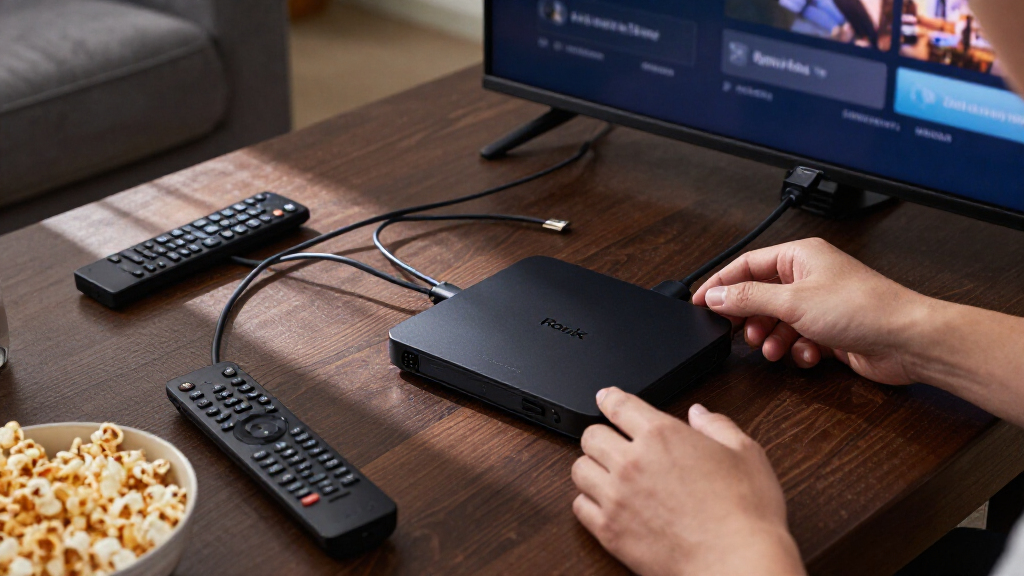
How We Picked
I ranked these movie streaming devices by how well their hardware and software fit common movie-watching setups: 1080p or 4K TVs, compact or full-size installations, and viewers who want either a simple app launcher or a more capable media hub. I weighed picture-format support, storage, connectivity, remote usability, platform clarity, and how much extra complexity a device adds. I also separated products by their likely role rather than treating every 4K player as interchangeable.
The order favors useful performance for the broadest group before specialized strengths. The Google TV Streamer leads for its balanced 4K feature set and storage; compact Roku and Fire TV sticks rank well for straightforward installs, while premium boxes and players rise for buyers who can benefit from their added capabilities. HD models, less-established options, and devices with narrower appeal sit lower because they make more sense for particular TVs, budgets, or platform preferences—not because every buyer needs the most elaborate hardware.
Factors to Consider When Choosing Movie Streaming Devices
Choosing a streaming player is less about chasing the longest feature list and more about matching the device to your TV, network, and habits. These factors can help you avoid paying for capabilities your setup cannot use—or buying a basic stick when you need more flexibility.
Match Resolution to the TV You Own
Start with the screen, not the device: a 1080p television cannot show a 4K stream at its full resolution. An HD model such as the Fire TV Stick HD or Roku Streaming Stick HD can be a sensible match for an older TV, while a 4K model leaves room for a future screen upgrade. Check that the TV has an available HDMI port and supports the formats you care about; a 4K label alone does not mean every picture feature is supported by every television. Also check the streaming service and plan, since access to a higher-resolution stream can depend on both. Avoid buying an advanced player solely for a format your display or subscriptions cannot use.
Choose a Platform You Will Enjoy Using
Each platform has its own home screen, search habits, voice features, and way of surfacing content. If you already use a particular brand’s smart-home tools or have a familiar account setup, staying in that ecosystem can make daily use smoother. A device with many apps is not automatically easier to live with if you find its menus distracting or its recommendations hard to scan. Think about who will use the TV: shared households often benefit from an interface everyone can learn without coaching. Before choosing, check that your must-have streaming apps are available in your region and on that platform.
Treat Wi-Fi as Part of the Streaming Setup
A more capable streaming device cannot compensate for weak Wi-Fi at the TV. Test the connection in the room where you watch, since a signal that works well near the router may struggle through walls or across floors. Wi-Fi 6 or 6E can be useful when your router and household devices support those standards, but the benefit depends on the whole network. A wired connection, where available, can be a better remedy for a consistently unstable stream than replacing a working player. If the router is the bottleneck, improving placement or coverage may help more than choosing a premium box.
Decide Whether You Need a Stick or a Larger Player
Streaming sticks keep the TV area tidy and fit well when you want a device tucked behind the screen with minimal setup. Larger players such as the Roku Ultra, Fire TV Cube, and NVIDIA SHIELD TV Pro may suit buyers seeking a more substantial hub or specific extra capabilities. Check the space around the TV and the available power and HDMI connections before choosing a form factor. A stick can be less convenient if the TV’s ports are cramped or hard to reach, while a larger player may add clutter and features you rarely use. Pick based on your actual installation and routine, not on size alone.
Voice search can speed up finding a film, but it does not replace a remote that feels easy to use for everyday navigation. Check which buttons are available, how the remote handles playback, and whether its controls make sense for everyone sharing the TV. Some households prefer direct access to familiar services; others care more about a simple layout with fewer distractions. Voice functions can also vary by platform and service, so do not assume a spoken request will work identically everywhere. If you often misplace remotes or control multiple devices, check whether the player’s remote features address that specific annoyance.
Pay for Extra Storage or Power Only When It Helps
More storage can make a difference if you install many apps or want room for additional features, but most viewers mainly open a small set of streaming services. A premium processor or more elaborate device can be worthwhile for buyers who want more than basic video playback; it is a poor fit if the TV is used only for a few familiar apps. Keep the cost of the entire setup in mind, including a suitable TV, reliable network, and any subscriptions needed for the content you watch. Avoid treating higher specifications as a guarantee of better movie access or fewer service limitations. Match the extra capability to a real use case before moving up from a simple stick.
Frequently Asked Questions
Should I buy a 4K streaming device for a 1080p TV?
A 4K player can connect to a 1080p TV, but the television will display the picture at its own resolution rather than showing true 4K detail. If you do not expect to replace the TV soon, an HD device may meet your needs without paying for unused resolution capability. A 4K model can make sense if you plan to upgrade the screen or want a device that can move to a newer TV later. Check the TV’s HDMI compatibility before buying, especially if it is an older model. The best choice depends on your upgrade plans, not on the device’s headline resolution alone.
Can I use a streaming stick if my TV is not near the router?
Yes, but stable playback depends on the Wi-Fi signal reaching the TV reliably. Walls, floors, distance, and interference can affect streaming even when other devices elsewhere in the home work well. Try checking the signal at the TV’s location before deciding that the player is the problem. If the connection is weak, a router adjustment, mesh access point, or wired option may help more than upgrading from one stick to another. Choose Wi-Fi 6 or 6E features only if your router and network conditions can make use of them.
Is a streaming box better than a stick for watching movies?
Neither form is automatically better for movie playback; both can deliver streaming apps, and the right choice depends on the features and TV setup you need. A stick is appealing when you want a compact installation with minimal equipment around the screen. A box may be a better fit if you want particular connectivity, a more capable media player, or features associated with models such as the Roku Ultra, Fire TV Cube, or SHIELD TV Pro. Check the player’s actual specifications rather than assuming a larger case always means a better picture. For a basic app-based setup, a stick is often enough.
Will a new streaming device make every movie available in 4K?
No. The title must be offered in 4K by the streaming service, your plan may need to include that format, and the TV must support it. The connection also needs enough stability for high-resolution playback. Some older films or versions of a title may only be available in lower resolutions. Before upgrading for 4K, check the services and movies you actually watch, along with your display’s capabilities. A 4K device expands compatibility, but it cannot change the source video or service access.
How do I choose between Roku, Fire TV, and Google TV?
Focus on the interface and ecosystem you prefer, rather than assuming one platform is best for every household. Compare how each home screen organizes apps and recommendations, and check that your regular services are available. Existing use of Alexa, Google services, or a preferred Roku setup may make one platform feel more familiar. If several people share the TV, prioritize a remote and menu layout everyone can use comfortably. A platform that suits your daily habits is often a better fit than a small hardware advantage you rarely notice.
Conclusion
For most viewers, I recommend the Google TV Streamer (4K) as the best overall choice because it pairs 4K playback with 32 GB of storage and a current Google TV experience. For a compact, straightforward 4K setup, the Roku Streaming Stick Plus is a strong value-oriented pick; the HD Roku and Fire TV sticks make more sense when the TV is limited to 1080p. Beginners should start with whichever platform feels most familiar, with Roku’s stick options standing out for a simple, low-clutter installation. For a premium setup, consider the NVIDIA SHIELD TV Pro, Roku Ultra, or Fire TV Cube according to the extra capabilities you actually want. If your priority is Google TV with more storage, choose either Google TV Streamer finish; if you want a compact Amazon device, compare the Fire TV Stick 4K options by their specific features. Match the device to your TV, Wi-Fi, and preferred interface, and you can skip hardware that adds little to your movie nights.
Black Friday Picks

Bose QuietComfort Headphones (2nd Gen), Wireless Noise-Cancelling Over-Ear Headphones, Black
As an affiliate, we earn on qualifying purchases.