If you’re looking for the best equatorial mount with a belt drive system for precision astrophotography, I recommend considering models known for high tracking accuracy, durable belts, and quiet operation. These mounts reduce backlash and vibration, ensuring smooth long exposures. They also tend to be lightweight and portable, making setup easier. Choosing one with reliable guiding, easy maintenance, and compatibility with your gear is key. Keep exploring further, and you’ll discover detailed options for your perfect astrophotography setup.
Key Takeaways
- Look for mounts with high-torque stepper motors and reinforced belt systems for stable, precise long-exposure tracking.
- Choose lightweight, portable models with quick setup features suitable for field astrophotography.
- Ensure compatibility with your telescope’s weight and mounting interfaces for seamless integration.
- Prioritize mounts with low noise operation and minimal vibration for optimal image stability.
- Select models with durable belts, periodic error correction, and easy maintenance to ensure long-term accuracy.
iEXOS-100-2 PMC-Eight Astrophotography Tracker System Tripod
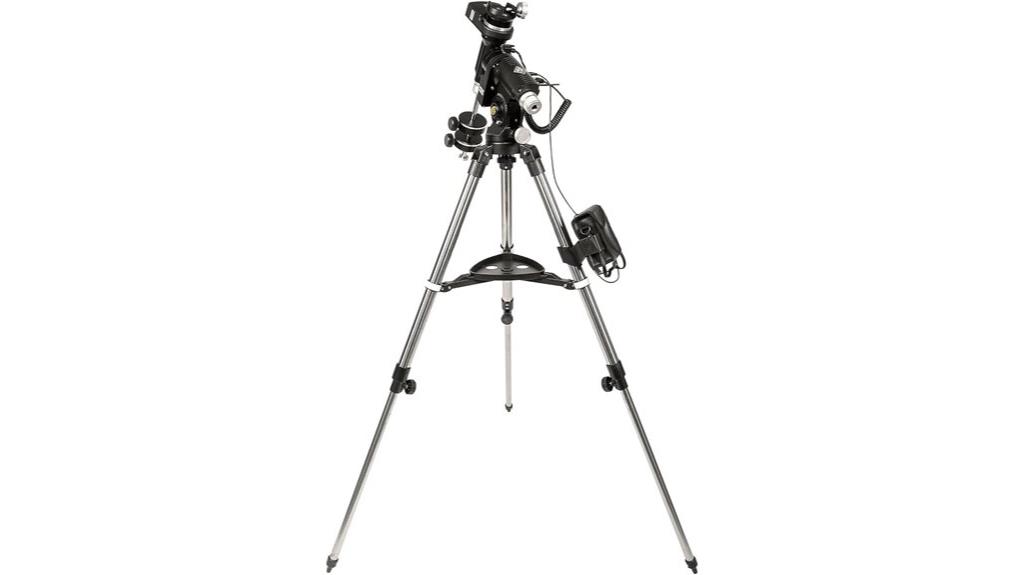
If you’re serious about astrophotography and want a tracker system that delivers both speed and precision, the iEXOS-100-2 PMC-Eight is an excellent choice. Its integrated PMC-Eight technology uses eight independent CPUs, boosting responsiveness and reliability. The system’s dual-axis worm gears and quiet belt drives guarantee smooth, vibration-free movement. Quick polar alignment is possible with its built-in sight hole and altitude controls, eliminating the need for extra tools. Plus, the compatibility with ExploreStars app and wireless connectivity makes setup and control straightforward. This robust hardware and intuitive interface make the iEXOS-100-2 perfect for both amateurs and pros seeking high-performance tracking.
Best For: amateur and professional astronomers seeking a high-precision, fast, and reliable astrophotography tracker system with easy setup and intuitive control.
Pros:
- Utilizes advanced PMC-Eight technology with eight independent CPUs for superior responsiveness and reliability
- Smooth, vibration-free movement thanks to dual-axis worm gears and quiet belt drives
- Quick and accurate polar alignment with built-in sight hole and altitude controls, no extra tools needed
Cons:
- May be heavier and bulkier compared to simpler tracking systems
- Higher cost due to advanced features and robust hardware
- Requires familiarity with app-based controls, which might have a learning curve for some users
Factors to Consider When Choosing Equatorial Mounts With Belt Drive Systems
When choosing an equatorial mount with a belt drive system, I focus on precision and tracking accuracy to get sharp images. I also consider the belt drive’s durability and how noisy the motor is during operation, since these impact long-term use and convenience. Finally, I look at setup simplicity, portability, and compatibility with my equipment to make certain it fits my astrophotography needs.
Precision and Tracking Accuracy
Choosing an equatorial mount with a belt drive system hinges on its ability to deliver exceptional precision and tracking accuracy. Belt drives reduce gear backlash, resulting in smoother, more reliable tracking during long exposures. High-torque stepper motors help maintain accurate positioning, even over extended observation sessions. Proper belt tension and quality pulleys are essential—they minimize periodic error and ensure consistent tracking performance. Additionally, belt drives produce less vibration than traditional gear systems, enhancing stability. Many advanced mounts incorporate periodic error correction algorithms, further refining accuracy during astrophotography. Overall, these features allow for precise, stable tracking, making belt drive mounts ideal for capturing sharp, detailed images of celestial objects. When choosing a mount, prioritize those with proven tracking capabilities and high-quality components.
Belt Drive Durability
Belt drive durability is essential for ensuring your equatorial mount remains reliable over time, especially during long astrophotography sessions. Unlike gear trains, belts are generally more resistant to wear and tear, which helps maintain consistent tracking. The material quality of the belt, such as reinforced rubber or polyurethane, plays a critical role in its longevity, resisting stretching and cracking. Proper tensioning is key; too tight, and it causes premature wear, too loose, and it leads to slipping and inaccuracies. Regular inspection and maintenance are crucial for catching signs of deterioration early, extending the lifespan of the system. Advances in belt technology, like low-stretch, high-torque belts, have considerably boosted the durability and reliability of belt drive mounts, making them a smart investment for serious astrophotographers.
Motor Noise Levels
Motor noise levels are a crucial factor to contemplate because they directly impact the quietness and stability of your astrophotography sessions. Belt drive systems generally produce less noise than traditional gear trains, making for a quieter experience. The quality of the belt material and the tension applied considerably influence noise levels; high-quality belts help reduce vibrations and sound. Some mounts feature silent or near-silent motors, further minimizing auditory disturbances during long exposures. Keep in mind that motor noise varies with movement speed—slewing faster can generate more sound, while slow, precise tracking remains quieter. Regular maintenance, including proper belt tightening, is essential to sustain low noise levels and prevent vibrations that could compromise image quality. Overall, quieter mounts enhance both comfort and imaging accuracy.
Setup and Portability
When selecting an equatorial mount for astrophotography, portability is often a top priority, especially for field use. Belt drive systems are typically lightweight, making them easier to transport and set up compared to traditional gear-based mounts. Many models feature quick-attach mechanisms and modular components, allowing for rapid assembly and disassembly, which saves valuable time during field sessions. Compact designs with integrated motors and minimal cabling further enhance portability, simplifying transport and setup. Additionally, belt drives streamline setup procedures like polar alignment, reducing the time needed to get your equipment ready for imaging. Overall, these design considerations make belt drive equatorial mounts ideal for astrophotographers who need reliable, easy-to-transport gear for on-the-go observations.
Compatibility With Equipment
Choosing an equatorial mount with a belt drive system requires careful attention to how well it integrates with your existing astrophotography gear. First, confirm the mount’s payload capacity matches or exceeds the weight of your equipment to keep everything stable. Verify compatibility with your telescope’s mounting interface, like dovetail sizes and screw thread standards, to avoid fitting issues. It’s also important to check if the belt drive system supports your mount’s size and design for smooth, precise movement. Make sure the control software and firmware are compatible with your imaging and guiding accessories to streamline operation. Finally, consider if the belt drive allows for proper cable management and future upgrades, ensuring your setup remains flexible as your needs evolve.
Maintenance and Longevity
Since belt drive systems generally require less lubrication and maintenance than gear-driven mounts, they can offer a more reliable long-term solution for astrophotographers. However, the durability of these systems depends heavily on the quality of belts and pulleys, which can wear out over time with repeated use. Regularly inspecting belts for stretching, cracking, or fraying is essential to prevent unexpected failures during imaging sessions. Proper tension adjustment is also critical; too loose or tight belts can reduce lifespan and impair tracking accuracy. High-quality mounts often feature replaceable belts and pulleys, making maintenance easier and extending their longevity. Overall, investing in a well-built system and performing routine checks ensures consistent performance and a longer lifespan for your equatorial mount.
Frequently Asked Questions
How Do Belt Drive Systems Improve Tracking Accuracy?
Belt drive systems improve tracking accuracy by reducing backlash and gear slop, which often cause errors during long exposures. I’ve found that they provide smoother, more consistent movement, minimizing vibrations and jitter. This precision guarantees my telescope stays on target longer, capturing sharper images. Overall, belt drives make my astrophotography more reliable and enjoyable by delivering steadier tracking, especially during extended imaging sessions.
Are Belt Drive Mounts Suitable for Beginner Astrophotographers?
Yes, belt drive mounts are suitable for beginner astrophotographers. They offer smoother tracking and quieter operation, making the learning curve easier. Plus, many models come with user-friendly features and solid stability, helping new users capture better images without needing advanced skills. I’ve found that starting with a belt drive mount boosts confidence and allows beginners to enjoy astrophotography while gradually learning more complex techniques.
What Maintenance Is Required for Belt Drive Equatorial Mounts?
Honestly, maintaining belt drive mounts is as easy as remembering to feed your pet goldfish. I regularly check the belts for signs of wear, keep them clean, and guarantee the tension stays just right—no need for rocket science. Lubrication isn’t usually necessary, but I do keep the gears and motors dust-free. Basically, with a little routine, these mounts stay smooth and reliable, making astrophotography a breeze.
Can Belt Drive Systems Handle Heavy Astrophotography Equipment?
Absolutely, belt drive systems can handle heavy astrophotography gear, but it depends on the mount’s build and specifications. I’ve found that high-quality mounts designed for astrophotography often support substantial loads, ensuring stability and precision. Just make sure to check the weight limits and choose a mount rated for your gear. Proper setup and balancing are key to preventing strain and ensuring smooth, accurate tracking during long exposures.
How Does Belt Drive Noise Compare to Gear-Based Systems?
Honestly, belt drive systems are much quieter than gear-based systems—think whisper rather than a clunky metal grind. I used to dread the noise during late-night sessions, but belts make everything so much more peaceful. You can focus on your shot instead of the racket. It’s like upgrading from a noisy motorcycle to a smooth electric car. Noise levels really do make a huge difference in the serenity of your astrophotography experience.
Conclusion
Choosing the right equatorial mount with a belt drive system is like finding the perfect dance partner—steady, reliable, and in perfect harmony with your astrophotography dreams. When you select one that combines precision, durability, and quiet operation, you’ll uncover the universe’s secrets with ease. So, gear up, trust your instincts, and let your mount be the steady heartbeat that guides your celestial adventures through the night’s vast, starry canvas.