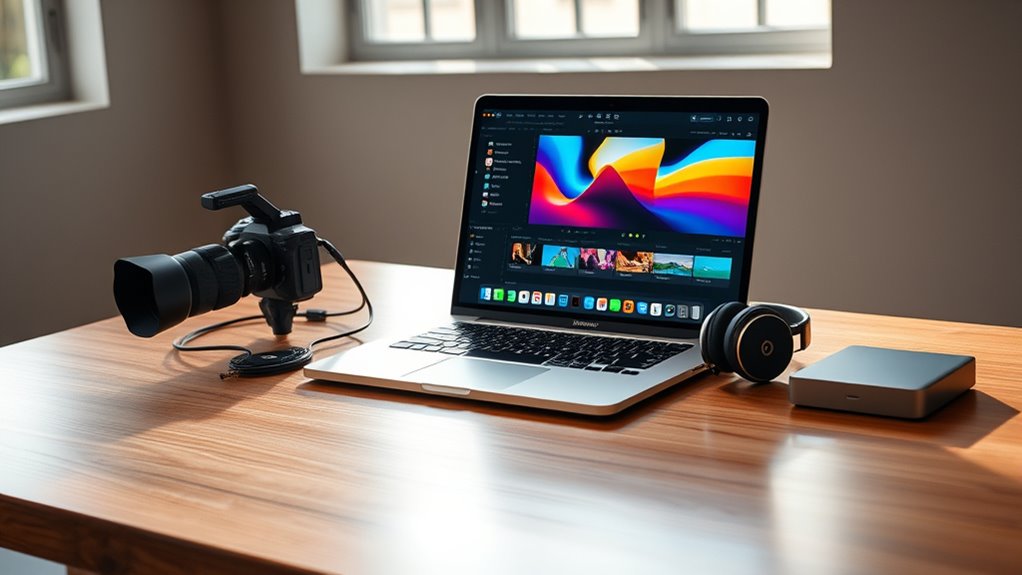

When searching for the best MacBook Pro for video editing in 2026, the key factors are performance, display quality, and portability. The Apple MacBook Pro Late 2021 with M1 Pro stands out as the best overall choice thanks to its powerful performance and reliable build. The 2024 MacBook Pro with M4 Chip offers cutting-edge speed, ideal for demanding editing workflows, while the 2026 MacBook Pro with M5 Max pushes the limits with maximum power but comes at a higher cost. However, these top-tier options involve tradeoffs in price and portability. Continue reading to see the full breakdown of these models and more, helping you find the perfect fit for your video editing needs.

Get movie nights delivered free with Prime
- Fast, free delivery on millions of items
- Prime Video, Amazon Music and more included
- Member-only deals all year
Key Takeaways
- Performance gains from newer chips (M4, M5 Max) significantly improve editing workflows but come with higher price tags.
- Display quality, especially Liquid Retina XDR, remains essential for color accuracy and detailed editing work.
- RAM and storage configurations vary widely, impacting multitasking and project management—upgrading is worth considering for serious editors.
- Older models like the 2019 MacBook Pro still handle editing well but lack the speed and display quality of newer options.
- Portability versus power is a key tradeoff; larger screens and higher specs tend to increase weight and cost.
| Apple MacBook Pro Late 2021 with M1 Pro Chip (16-inch, 16GB RAM, 512GB SSD) – Space Gray (Renewed) |  | Best Overall for Power and Display | Processor: Apple M1 Pro chip | Display Size: 16 inches | Display Resolution: 3456 x 2234 pixels | VIEW ON AMAZON | See Our Full Breakdown |
| Apple 2024 MacBook Pro Laptop with M4 Chip, 14.2-inch Liquid Retina XDR Display, 16GB RAM, 512GB SSD, Space Black |  | Best for Raw Performance and Portability | Processor: M4 chip with 10-core CPU and GPU | Display: 14.2-inch Liquid Retina XDR | Memory: 16GB Unified Memory | VIEW ON AMAZON | See Our Full Breakdown |
| Apple MacBook Pro Late 2019 with 16-inch Retina Display, 2.6GHz Intel Core i7, 16GB RAM, 512GB SSD, Space Gray (Renewed) | 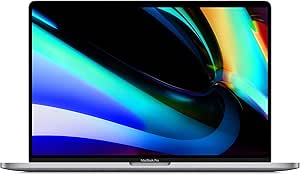 | Best for Budget-Conscious Professionals | Processor: 2.6 GHz Intel Core i7 (9th Gen) | Display: 16-inch Retina, 3072 x 1920 | RAM: 16GB DDR4 | VIEW ON AMAZON | See Our Full Breakdown |
| Apple 2025 MacBook Pro Laptop with M5 Chip, 14.2-inch Liquid Retina XDR Display, 16GB RAM, 512GB SSD, Silver |  | Best for Future-Ready Performance | Processor: Apple M5 chip with 10-core CPU and GPU | Display: 14.2-inch Liquid Retina XDR | Memory: 16GB Unified Memory | VIEW ON AMAZON | See Our Full Breakdown |
| Apple MacBook Pro 16-inch (2021) with M1 Pro chip, 16GB RAM, 1TB SSD – Space Gray |  | Best for Extended Heavy-Duty Editing | Processor: M1 Pro chip with 10-core CPU | Display Size: 16 inches | Display Resolution: 3456 x 2234 pixels | VIEW ON AMAZON | See Our Full Breakdown |
| Apple 2026 MacBook Pro Laptop with M5 Max Chip, 16.2-inch Liquid Retina XDR Display, 36GB Memory, 2TB SSD, Space Black |  | Best Overall for Power Users | Processor: Apple M5 Max chip with 18-core CPU and 32-core GPU | Display: 16.2-inch Liquid Retina XDR | Memory: 36GB Unified Memory | VIEW ON AMAZON | See Our Full Breakdown |
| Apple 2025 MacBook Pro Laptop with M5 Chip, 14.2-inch Liquid Retina XDR Display, 24GB RAM, 1TB SSD, Space Black |  | Best for High-Performance Creatives on the Go | Processor: Apple M5 chip with 10-core CPU and GPU | Display: 14.2-inch Liquid Retina XDR | Memory: 24GB Unified Memory | VIEW ON AMAZON | See Our Full Breakdown |
| Apple 2023 MacBook Pro with M3 Pro Chip, 14-inch, 18GB RAM, 1TB SSD, Space Black (Renewed) |  | Best for Budget-Conscious Power Users | Processor: Apple M3 Pro with up to 12-core CPU and 18-core GPU | Display: 14.2-inch Liquid Retina XDR | Memory: 18GB | VIEW ON AMAZON | See Our Full Breakdown |
| Apple 2020 MacBook Pro (13-inch, 16GB RAM, 512GB SSD, Space Gray, Renewed) |  | Best for Budget-Friendly Reliable Performance | Model Year: 2020 | Display Size: 13.3 inches | Display Resolution: 2560 x 1600 | VIEW ON AMAZON | See Our Full Breakdown |
| Apple 2023 MacBook Pro Laptop with M3 Pro Chip, 16.2-inch Liquid Retina XDR Display, 18GB RAM, 512GB SSD, Space Black | | Best for High-Performance Portability | Processor: M3 Pro 12-core CPU, 18-core GPU | Display: 16.2-inch Liquid Retina XDR | Memory: 18GB | VIEW ON AMAZON | See Our Full Breakdown |
| macbook pro for video editing | Processor | Storage | Battery Life | Display |
|---|---|---|---|---|
| Apple MacBook Pro Late 2021 wi | Apple M1 Pro chip | 512GB SSD | Up to 17 hours | — |
| Apple 2024 MacBook Pro Laptop | M4 chip with 10-core CPU and GPU | 512GB SSD | All-day | 14.2-inch Liquid Retina XDR |
| Apple MacBook Pro Late 2019 wi | 2.6 GHz Intel Core i7 (9th Gen) | 512GB SSD | — | 16-inch Retina, 3072 x 1920 |
| Apple 2025 MacBook Pro Laptop | Apple M5 chip with 10-core CPU and GPU | 512GB SSD | All-day | 14.2-inch Liquid Retina XDR |
| Apple MacBook Pro 16-inch | M1 Pro chip with 10-core CPU | 1TB SSD | Up to 21 hours | — |
| Apple 2026 MacBook Pro Laptop | Apple M5 Max chip with 18-core CPU and 32-core GPU | 2TB SSD | All-day | 16.2-inch Liquid Retina XDR |
| Apple 2025 MacBook Pro Laptop | Apple M5 chip with 10-core CPU and GPU | 1TB SSD | All-day | 14.2-inch Liquid Retina XDR |
| Apple 2023 MacBook Pro with M3 | Apple M3 Pro with up to 12-core CPU and 18-core GPU | 1TB SSD | Up to 18 hours | 14.2-inch Liquid Retina XDR |
| Apple 2020 MacBook Pro | 2.0GHz Intel Core i5 | 512GB SSD | 10 hours | — |
| Apple 2023 MacBook Pro Laptop | M3 Pro 12-core CPU, 18-core GPU | 512GB SSD | Up to 22 hours | 16.2-inch Liquid Retina XDR |
More Details on Our Top Picks
Apple MacBook Pro Late 2021 with M1 Pro Chip (16-inch, 16GB RAM, 512GB SSD) – Space Gray (Renewed)
This MacBook Pro Late 2021 with the M1 Pro chip stands out for its formidable processing power and stunning Liquid Retina XDR display, making it ideal for demanding video editing workflows. Compared to the newer M4 models, it offers slightly less efficiency but remains a powerhouse in CPU and GPU performance. Its high-resolution display provides accurate colors and deep contrast, essential for professional editing. However, the model’s weight and limited 512GB storage are tradeoffs for its performance, which may be less ideal for editors needing extensive local storage or portability. This pick is perfect for professionals who prioritize raw power and a high-quality display, accepting some portability and storage limitations.
Pros:- Exceptional CPU and GPU performance thanks to the M1 Pro chip
- Stunning 16-inch Liquid Retina XDR display with high color accuracy
- Long battery life of up to 17 hours, suitable for extended editing sessions
- Renewed product offers reliable performance at a lower cost
Cons:- Heavy at 4.6 pounds, less portable for on-the-go editing
- Limited to 512GB SSD, which may be insufficient for large projects
- Premium price point — not the most budget-friendly option
Best for: Video editors who need a reliable, high-performance machine with a large, color-accurate display, and prioritize processing power over portability.
Not ideal for: Editors with tight budgets or those who need lightweight, portable solutions with expandable storage, as this model is heavier and has limited storage capacity.
- Processor:Apple M1 Pro chip
- Display Size:16 inches
- Display Resolution:3456 x 2234 pixels
- RAM:16GB
- Storage:512GB SSD
- Graphics:Up to 32-core GPU
- Battery Life:Up to 17 hours
- Weight:4.6 pounds
Our verdict“This is best suited for professional editors who need a powerful, display-centric machine and are okay with some weight and storage tradeoffs.”
Apple 2024 MacBook Pro Laptop with M4 Chip, 14.2-inch Liquid Retina XDR Display, 16GB RAM, 512GB SSD, Space Black
The 2024 MacBook Pro with M4 chip offers a leap in processing speed and efficiency, with a compact 14.2-inch display that still delivers excellent color accuracy thanks to its Liquid Retina XDR technology. Compared to the older M1 Pro models, the M4 provides faster multitasking and rendering, making it a strong contender for video editors who value portability without sacrificing power. Its high-brightness display ensures visibility in various lighting conditions, and the all-day battery life supports long editing sessions. The main tradeoff is its limited storage and higher price, which might be a concern for editors handling large files regularly. This model is ideal for mobile professionals who want cutting-edge performance in a lightweight package, but may not be suitable for those needing extensive local storage.
Pros:- Exceptional performance with the new M4 chip and 10-core CPU/GPU
- High-brightness Liquid Retina XDR display with vivid colors
- All-day battery life ensures uninterrupted editing
- Compact design enhances portability
Cons:- Limited storage options without upgrades
- Premium price may be prohibitive for some users
- Port selection could be more extensive for certain workflows
Best for: Mobile video editors and creatives who need high performance in a lightweight, portable device with excellent display quality.
Not ideal for: Editors with large storage needs or on a tight budget, as the 512GB SSD and premium price may be limiting for extensive local project files.
- Processor:M4 chip with 10-core CPU and GPU
- Display:14.2-inch Liquid Retina XDR
- Memory:16GB Unified Memory
- Storage:512GB SSD
- Battery Life:All-day
- Ports:Three Thunderbolt 4, MagSafe 3, SDXC, HDMI, headphone
Our verdict“This is best for on-the-move professionals who need top-tier performance and a portable form factor for video editing tasks.”
Apple MacBook Pro Late 2019 with 16-inch Retina Display, 2.6GHz Intel Core i7, 16GB RAM, 512GB SSD, Space Gray (Renewed)
The 2019 MacBook Pro with Intel i7 remains a viable option for video editing, especially for those who prioritize cost savings over the latest hardware. Its 16-inch Retina display provides sharp visuals and good color fidelity, although it lacks the newer Liquid Retina XDR technology. Compared to the M1 and M4 models, its Intel processor may lag behind in efficiency and rendering speed, but it still handles demanding editing tasks reasonably well. The 16GB RAM and 512GB SSD support multitasking and quick access to files. The main drawback is its weight and shorter battery life, making it less portable. This renewed device offers a good balance of performance and affordability, but may not match the speed of newer models for intensive workflows. This option is suitable for budget-conscious users who need decent editing power without the latest features.
Pros:- Powerful 9th Gen Intel Core i7 processor for demanding tasks
- Good quality Retina display with accurate colors
- 16GB RAM and fast SSD support smooth multitasking
- Renewed product offers affordable entry to professional editing
Cons:- Heavier at 4 pounds, less portable
- Shorter battery life of around 11 hours
- Older hardware may lag in rendering speed compared to newer models
Best for: Budget-conscious professionals or students needing a capable editing machine without the latest hardware, and who don’t mind some weight and shorter battery life.
Not ideal for: Editors requiring the fastest performance or the latest display technology, as this model falls behind newer chips and screens in those areas.
- Processor:2.6 GHz Intel Core i7 (9th Gen)
- Display:16-inch Retina, 3072 x 1920
- RAM:16GB DDR4
- Storage:512GB SSD
- Graphics:AMD Radeon Pro 5300M (4GB GDDR6)
- Weight:4 pounds
Our verdict“This is best for budget-aware editors who need a reliable machine with decent performance, accepting some compromises on weight and battery life.”
Apple 2025 MacBook Pro Laptop with M5 Chip, 14.2-inch Liquid Retina XDR Display, 16GB RAM, 512GB SSD, Silver
The 2025 MacBook Pro with M5 chip delivers cutting-edge performance with its 10-core CPU and GPU, making it highly suitable for complex video editing and multitasking. Its high-brightness Liquid Retina XDR display ensures vibrant visuals, even under challenging lighting. Compared to earlier M4 models, the M5 offers faster AI processing and improved efficiency, which can translate into quicker rendering times. Its battery life supports all-day work, and the extensive port options provide versatile connectivity. The main tradeoff is the premium price and limited storage options unless upgraded. This model is best for professionals who want the latest technology and maximum performance, though it might be overkill for casual editors or those on a budget.
Pros:- Most powerful M5 chip with 10-core CPU and GPU
- Vivid, high-brightness Liquid Retina XDR display
- Extended port options including SDXC and HDMI
- Long battery life for extended editing sessions
Cons:- High price point — may be out of reach for some users
- Limited storage without upgrades
- Premium build may be overkill for casual editing tasks
Best for: High-end professional video editors who need top-tier processing power and future-proof features, and are willing to invest in the latest tech.
Not ideal for: Editors seeking a more affordable or portable solution with less demanding performance needs, due to its cost and extensive feature set.
- Processor:Apple M5 chip with 10-core CPU and GPU
- Display:14.2-inch Liquid Retina XDR
- Memory:16GB Unified Memory
- Storage:512GB SSD
- Battery Life:All-day
- Ports:Three Thunderbolt 4, MagSafe 3, SDXC, HDMI, headphone
Our verdict“This is ideal for professional editors seeking the latest performance and features, and willing to pay a premium for future-proofing.”
Apple MacBook Pro 16-inch (2021) with M1 Pro chip, 16GB RAM, 1TB SSD – Space Gray
The 2021 16-inch MacBook Pro with M1 Pro excels in delivering professional-grade performance, especially with its 1TB SSD and large display. Its M1 Pro chip provides substantial speed boosts over earlier Intel-based models, making rendering and multitasking more efficient. The larger 16-inch screen enhances workspace and detail clarity, crucial for complex editing. Compared with the 2021 16-inch model with 512GB SSD, this version offers more storage capacity, which is critical for handling large video files. The main tradeoff is its weight, making it less ideal for frequent portability. This machine is perfect for editors who prioritize long session endurance, storage, and display size over ultra-lightweight design.
Pros:- Exceptional performance with M1 Pro chip
- Large 16-inch Liquid Retina XDR display for detailed editing
- Ample 1TB SSD storage for large projects
- Long battery life supporting extended work sessions
Cons:- Heavy at over 4.6 pounds, less portable
- Premium price for high-end specs
- Limited to only 16GB RAM, which may be restrictive for some workflows
Best for: Professional editors working on large projects who need extensive storage and a spacious display for detailed workflows.
Not ideal for: Mobile editors or those with strict weight restrictions, as this laptop is heavier and less portable than smaller alternatives.
- Processor:M1 Pro chip with 10-core CPU
- Display Size:16 inches
- Display Resolution:3456 x 2234 pixels
- RAM:16GB
- Storage:1TB SSD
- Graphics:16-core GPU
- Battery Life:Up to 21 hours
- Weight:4.62 pounds
Our verdict“This is the go-to for professional editors needing extensive storage and a large display, accepting portability challenges.”
Apple 2026 MacBook Pro Laptop with M5 Max Chip, 16.2-inch Liquid Retina XDR Display, 36GB Memory, 2TB SSD, Space Black
This model stands out for its powerful M5 Max chip, which surpasses even the M5 in the 2025 MacBook Pro for handling complex editing tasks and AI workflows. Its 16.2-inch Liquid Retina XDR display offers exceptional color accuracy and brightness, ideal for detailed video editing. The 36GB of unified memory and 2TB SSD ensure smooth multitasking and ample storage for large project files. Compared to the 2025 M5-based model, this version delivers a significant performance boost, though it comes with a hefty price tag and increased weight. Its extensive port selection, including Thunderbolt 5 and SDXC, benefits professional workflows that demand multiple peripherals. However, its size and cost may limit portability and accessibility for casual users. This pick is best suited for high-end professional editors and creatives working on large, complex projects.
Pros:- Exceptional processing power with M5 Max chip and 18-core CPU
- Large 16.2-inch Liquid Retina XDR display for precise color grading
- Massive 36GB unified memory and 2TB SSD for multitasking and storage
- Robust connectivity with Thunderbolt 5, SDXC, HDMI, and more
Cons:- High price may be prohibitive for some users
- Heavy and large, reducing portability
- Limited compatibility outside Apple ecosystem
Best for: Professional video editors requiring top-tier processing and display quality for demanding workflows
Not ideal for: Casual or hobbyist editors who prioritize portability or have budget constraints
- Processor:Apple M5 Max chip with 18-core CPU and 32-core GPU
- Display:16.2-inch Liquid Retina XDR
- Memory:36GB Unified Memory
- Storage:2TB SSD
- Battery Life:All-day
- Ports:Three Thunderbolt 5, MagSafe 3, SDXC, HDMI, headphone jack
Our verdict“This is the top choice for advanced professionals who need maximum power and display quality for video editing.”
Apple 2025 MacBook Pro Laptop with M5 Chip, 14.2-inch Liquid Retina XDR Display, 24GB RAM, 1TB SSD, Space Black
This model makes the most sense for professionals who need a balance between power and portability. Its M5 chip with 10-core CPU and GPU offers fast performance that rivals the 2026 M5 Max in many editing tasks, but with a lighter form factor. The 14.2-inch Liquid Retina XDR display provides excellent image clarity and contrast, suitable for color grading and detail work. Compared to the 2023 M3 Pro models, the M5 delivers a noticeable performance leap, especially in rendering and multitasking. The 24GB RAM and 1TB SSD provide a good mix of speed and storage capacity, though some may find the base storage limiting for larger projects. Its compact size and weight make it ideal for mobile workflows, but fewer ports could be a constraint in complex setups. This is best for mobile professionals who need strong editing performance without sacrificing portability.
Pros:- Powerful M5 chip with 10-core CPU and GPU
- Compact, lightweight design for mobility
- Excellent Liquid Retina XDR display for accurate video work
- Long battery life suitable for on-the-go editing
Cons:- Limited port options for extensive peripherals
- Storage may be insufficient for very large projects
- Premium price for a smaller form factor
Best for: Videographers and editors needing high performance combined with portability
Not ideal for: Heavy workstation setups or users who require extensive connectivity options
- Processor:Apple M5 chip with 10-core CPU and GPU
- Display:14.2-inch Liquid Retina XDR
- Memory:24GB Unified Memory
- Storage:1TB SSD
- Battery Life:All-day
- Weight:3.41 pounds
Our verdict“Ideal for creative professionals who prioritize high performance in a portable form factor for video editing tasks.”
Apple 2023 MacBook Pro with M3 Pro Chip, 14-inch, 18GB RAM, 1TB SSD, Space Black (Renewed)
This renewed model offers a compelling choice for those who want high-end hardware at a more accessible price. Its M3 Pro chip with up to 12-core CPU and 18-core GPU provides solid processing power for editing, rivaling the 2025 M5 models in many tasks, though it may lag behind the latest M5 Max in extremely demanding workflows. The 14.2-inch Liquid Retina XDR display ensures accurate colors and high contrast, essential for professional editing. Its 18GB RAM and 1TB SSD strike a good balance for most editing needs, especially for users on a budget. Compared to newer models, this version’s battery life and performance are slightly less optimized, but it still handles intensive editing reasonably well. The main tradeoff involves its status as a renewed product, which may have limited warranty and minor cosmetic imperfections. This is best suited for users who need a powerful MacBook Pro but are willing to accept some compromises for cost savings.
Pros:- Decent processing power with M3 Pro chip
- Good display quality for video editing
- Affordable compared to new flagship models
- Long battery life for portable editing
Cons:- Refurbished status may limit warranty and assurance
- Slightly lower performance ceiling compared to newer chips
- Limited to 1TB SSD, which may be restrictive
Best for: Budget-conscious video editors who need solid performance without the latest flagship hardware
Not ideal for: Pro workflows involving very large files or intensive rendering that push hardware to its limits
- Processor:Apple M3 Pro with up to 12-core CPU and 18-core GPU
- Display:14.2-inch Liquid Retina XDR
- Memory:18GB
- Storage:1TB SSD
- Battery Life:Up to 18 hours
- Weight:3.1 pounds
Our verdict“A smart choice for budget-conscious professionals who need capable performance for video editing tasks.”
Apple 2020 MacBook Pro (13-inch, 16GB RAM, 512GB SSD, Space Gray, Renewed)
This refurbished 13-inch MacBook Pro offers a solid foundation for video editing, especially for those on a tight budget. Its 16GB RAM and 512GB SSD deliver enough capacity for moderate editing projects, and the Retina display provides sharp visuals for color correction. Compared to newer 14- and 16-inch models, it lacks the latest M-series chips and the high-end display technology, but it remains a dependable choice for lighter editing tasks. The Intel Core i5 processor ensures decent performance for basic workflows, though it may struggle with more intensive rendering. Its compact size and weight make it highly portable, but the lack of dedicated GPU and limited warranty are drawbacks. This model suits users who want a reliable MacBook Pro at a lower cost, accepting some performance tradeoffs. Not ideal for heavy or complex editing projects requiring the latest hardware.
Pros:- High-resolution Retina display for clear visuals
- Reliable performance for basic editing
- Lightweight and portable design
- Refurbished and inspected to look and work like new
Cons:- Limited to 512GB storage, which may be restrictive
- No dedicated GPU, only integrated graphics
- Older Intel processor may lag behind newer chips
Best for: Beginners or casual editors needing a dependable, affordable MacBook Pro
Not ideal for: Pro users working on large, complex projects or demanding workflows
- Model Year:2020
- Display Size:13.3 inches
- Display Resolution:2560 x 1600
- Processor:2.0GHz Intel Core i5
- RAM:16GB
- Storage:512GB SSD
- Battery Life:10 hours
Our verdict“A dependable and affordable option for entry-level or casual video editing needs.”
Apple 2023 MacBook Pro Laptop with M3 Pro Chip, 16.2-inch Liquid Retina XDR Display, 18GB RAM, 512GB SSD, Space Black
This 2023 MacBook Pro balances powerful M3 Pro hardware with a large, stunning display, making it suitable for serious video editors who need portable yet capable equipment. Its 12-core CPU and 18-core GPU handle demanding workflows, and the 16.2-inch Liquid Retina XDR display offers excellent HDR performance for color grading. The 18GB RAM and 512GB SSD provide a good foundation for multitasking and storing projects, though some may prefer larger storage options. Compared to the 2025 M5 models, the M3 Pro is slightly less powerful but still delivers robust performance for most editing tasks. Its weight and size make it a good choice for mobile professionals, but the premium price and limited ports may be limiting factors. This is best for editors who want strong performance in a portable package but don’t require the absolute latest hardware.
Pros:- Strong M3 Pro chip with 12-core CPU and 18-core GPU
- Large, bright 16.2-inch Liquid Retina XDR display
- Lightweight and portable design
- Excellent battery life up to 22 hours
Cons:- Limited storage at 512GB for large files
- Premium pricing for hardware still not the latest generation
- Fewer ports may require adapters
Best for: Creative professionals who prioritize mobile editing without sacrificing performance
Not ideal for: Workstations or users needing extensive connectivity or max raw power for large projects
- Processor:M3 Pro 12-core CPU, 18-core GPU
- Display:16.2-inch Liquid Retina XDR
- Memory:18GB
- Storage:512GB SSD
- Battery Life:Up to 22 hours
- Color:Space Black
Our verdict“A highly capable portable workstation for demanding editing tasks with a focus on mobility.”

How We Picked
All models included in this roundup were evaluated based on their performance capabilities, build quality, display quality, and value for professional video editing. We prioritized recent or upcoming chips (M4, M5 series) for their speed and efficiency, as well as models with high-quality displays like Liquid Retina XDR for accurate color grading. Battery life, expandability, and overall usability were also considered, ensuring the options cater to different workflows and budgets. The ranking reflects a balance between cutting-edge performance and practical value, helping buyers identify the best fit for their editing demands.
Factors to Consider When Choosing Macbook Pro For Video Editing
Choosing the right MacBook Pro for video editing involves understanding several key factors that influence performance, workflow, and budget. While all these models run macOS, their hardware differences can significantly impact editing efficiency and user experience. Being aware of these considerations helps avoid common pitfalls, like overspending on unnecessary power or underestimating the importance of display quality.
Processor Power and Performance
The CPU and GPU capabilities directly influence rendering times, real-time editing, and multitasking. M4 and M5 chips offer substantial improvements over earlier models, making them better suited for complex projects. However, for casual or hobbyist editing, slightly older or lower-spec models might suffice. Always match your processor choice to your workload to avoid bottlenecks or overspending.
Display Quality and Color Accuracy
A high-quality display is critical in video editing for accurate color grading and detailed previews. Liquid Retina XDR screens provide exceptional contrast and color fidelity but typically come with a higher price. Cheaper models with standard Retina displays may still work for basic editing but can hinder precise color work. Consider your needs carefully—if color accuracy is paramount, invest in the best display your budget allows.
Memory (RAM) and Storage
More RAM improves multitasking and handles larger files smoothly, especially with 4K or higher resolutions. 16GB is often a baseline, but 24GB or more benefits heavy editing workflows. Storage capacity affects how many projects and assets you can keep locally; 1TB or more is advisable for professional use. Balancing these specs against your budget prevents future bottlenecks and workflow frustrations.
Portability vs. Power
Larger MacBook Pros with bigger screens and more powerful hardware tend to be heavier and pricier. If you travel frequently or prefer a lighter setup, a 14-inch model with high-end specs might be preferable. Conversely, desktop replacements with larger screens and maximum specs are better for stationary, intensive editing. Weigh your mobility needs against your performance requirements to pick the right size.
Price and Future-proofing
While higher-end models offer longer-lasting performance and better features, they come with increased costs. Investing in the latest chips and maximum RAM can extend the lifespan of your device but may not be necessary for less demanding workflows. Consider your current needs and growth plans—sometimes, a slightly lower-spec model with upgrade options offers better value.
Frequently Asked Questions
Can a MacBook Pro with an M1 chip handle professional video editing?
Yes, MacBook Pros with M1 chips are capable of handling professional video editing, especially with optimized software like Final Cut Pro or Adobe Premiere. While they may not match the raw power of newer M4 or M5 chips, they still deliver solid performance for most editing tasks, including 4K workflows. For very heavy or multi-layered projects, newer models with more advanced chips and higher RAM are preferable, but the M1 remains a capable choice for many users.
Is it worth upgrading to a MacBook Pro with Liquid Retina XDR display for video editing?
Upgrading to a MacBook Pro with Liquid Retina XDR significantly enhances color accuracy, contrast, and detail, which are vital for precise color grading and professional video work. While this display adds to the cost, it can make a noticeable difference in workflow quality, especially for color-sensitive projects. If your work depends on exact color reproduction, investing in this display is a wise choice, but for less color-critical projects, a standard Retina display may suffice.
How much RAM do I need for smooth 4K editing on a MacBook Pro?
For smooth 4K editing, a minimum of 16GB of RAM is recommended, but 24GB or more provides additional buffer for multitasking and complex timelines. Higher RAM reduces the risk of slowdowns during rendering or when working with multiple layers and effects. The decision depends on your typical project size; if you frequently work with high-resolution footage or heavy effects, opting for more RAM is a worthwhile investment.
Should I prioritize CPU or GPU when choosing a MacBook Pro for video editing?
Both CPU and GPU are important for video editing, but the relative importance depends on your workflow. The CPU handles general processing tasks, while the GPU accelerates rendering and effects processing, especially in software optimized for GPU acceleration. For most editing workflows, a balanced combination—like the M5 Max with high-core count and a powerful GPU—is ideal. Prioritizing both ensures smoother performance across the board.
Is it better to buy a refurbished MacBook Pro for video editing?
Refurbished MacBook Pros can offer significant savings and still deliver high performance, especially if sourced from reputable sellers with warranties. They often come with recent hardware updates, making them suitable for professional editing. However, it’s important to verify the refurbisher’s reliability and warranty terms. For critical work, buying factory-refurbished models directly from Apple can provide peace of mind and ensure reliability.
Conclusion
For those seeking the best overall performance, the Apple MacBook Pro Late 2021 with M1 Pro balances power, display quality, and value effectively. If you want cutting-edge speed and are willing to invest, the 2026 MacBook Pro with M5 Max offers unmatched performance but at a premium. Beginners or casual editors may find the older or mid-range models sufficient, especially when budget-conscious. For professionals focused on color accuracy, models with Liquid Retina XDR displays best serve their needs. Ultimately, your choice depends on your workflow demands, mobility needs, and budget—matching the right MacBook Pro to your specific video editing tasks ensures smooth, efficient work.