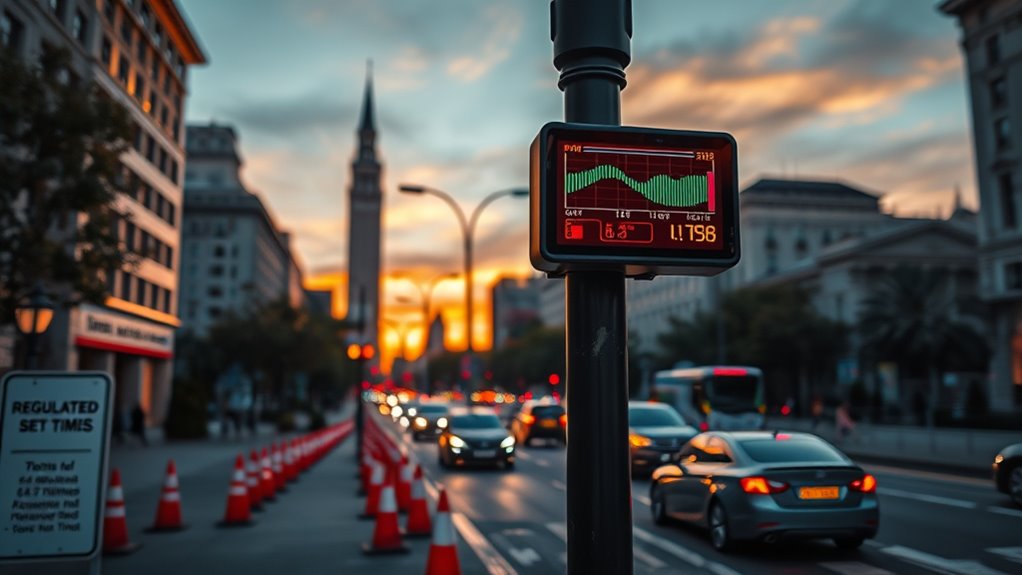

Noise regulation limits set specific times to help you balance activities with peace in your community. They typically restrict louder noises during nighttime hours to protect residents’ sleep and allow higher noise levels during the day for tasks like yard work or construction. Understanding these timeframes helps you know when your activities might be considered noise violations. If you want to learn more about how these limits are determined and enforced, there’s plenty more to discover.

Get movie nights delivered free with Prime
- Fast, free delivery on millions of items
- Prime Video, Amazon Music and more included
- Member-only deals all year
Key Takeaways
- Noise limits are typically stricter during nighttime hours to prevent sleep disturbances.
- During daytime, higher noise levels are allowed for activities like lawn mowing and construction.
- Set times for noise restrictions help balance activity needs with community peace.
- Violating noise limits during designated quiet hours can result in fines or enforcement actions.
- Understanding local noise ordinances ensures compliance and promotes respectful neighborhood behavior.

Have you ever wondered how noise levels are managed in your community? It’s a good question, especially if you’ve ever been kept awake by loud neighbors or noisy construction during late hours. Local authorities set legal noise limits to ensure everyone can enjoy a peaceful environment, but understanding how these limits work can help you stay within acceptable boundaries. These legal noise limits specify the maximum allowable noise levels during different times of the day, typically stricter during nighttime to prevent disturbance. For example, daytime noise limits might be higher, allowing activities like lawn mowing or construction, while nighttime limits are lower to protect residents’ sleep. Knowing these limits helps you determine when noise becomes a problem and when it’s legally permissible. Having a clear understanding of noise regulation basics can also help you advocate for fair enforcement in your area.
To reduce noise and stay within these legal limits, soundproofing techniques are your best tools. Soundproofing isn’t just for recording studios or concert halls; it’s practical for homes and businesses too. By adding insulation, installing soundproof windows, or sealing gaps around doors and walls, you can considerably cut down on noise transmission. These measures help you create a quieter indoor environment, especially during late hours, ensuring you respect community standards and avoid complaints. Soundproofing techniques also benefit you by minimizing external noise, making your space more comfortable and relaxing. If you’re hosting a party or working from home, investing in soundproofing can be a game-changer, allowing you to enjoy your space without disturbing others or breaking noise regulations.
Understanding and respecting legal noise limits isn’t just about avoiding penalties; it’s also about being considerate of your neighbors. When you’re aware of the set times for louder activities, you can plan accordingly and use soundproofing techniques to buffer noise during sensitive hours. Many communities have specific quiet hours, often late at night, where noise restrictions are more stringent. During these times, it’s especially important to minimize loud sounds and use soundproofing strategies to ensure you’re compliant. If you’re unsure about the noise limits in your area, check local ordinances or consult with community authorities. Staying informed helps you avoid fines and fosters a respectful, harmonious environment for everyone.
soundproof windows for noise reduction
As an affiliate, we earn on qualifying purchases.
As an affiliate, we earn on qualifying purchases.
Frequently Asked Questions
How Are Noise Levels Measured Accurately?
You measure noise levels accurately by using a sound level meter to perform decibel measurement. Verify the device is calibrated correctly for precise readings. Place the meter at the appropriate distance from the noise source and avoid obstructions that could affect the sound level. Record multiple readings if needed, especially during different times, to get an accurate representation of the sound level. This method helps you ensure compliance with noise regulations effectively.
What Are Common Penalties for Exceeding Noise Limits?
When you exceed noise limits, you typically face penalty fines and violation notices. Local authorities enforce these penalties to guarantee compliance, and fines can range from small fees to substantial amounts depending on the severity of the violation. Ignoring violation notices may lead to legal actions or higher fines. Always stay within the set noise limits to avoid penalties, maintain good community relations, and prevent unnecessary legal complications.
Can Noise Regulations Vary by Neighborhood?
Yes, noise regulations can differ by neighborhood due to neighborhood variability and local enforcement. You might find stricter limits in quiet residential areas compared to lively commercial districts. Local authorities enforce these rules differently, so it’s essential to check specific neighborhood ordinances. By understanding your area’s unique noise regulations, you can avoid penalties and ensure you’re compliant with local enforcement policies.
How Do Noise Limits Impact Commercial Businesses?
Did you know that 60% of commercial businesses report noise complaints? Noise limits directly impact your operations by requiring sound barriers and noise mitigation strategies to stay compliant. These measures help you reduce sound pollution, avoid fines, and maintain good neighbor relations. By implementing effective noise control, you can continue your activities without disruption while respecting community standards. Staying within limits is essential for sustainable business growth and harmony.
Are There Exemptions for Special Events or Emergencies?
Yes, there are exemptions for special events and emergencies. Special event exemptions allow you to exceed noise limits temporarily, often with prior permits or notifications. Emergency noise allowances provide flexibility when urgent situations arise, such as public safety or health emergencies. You should check local regulations, as procedures and requirements vary. These exemptions help you manage noise effectively during critical or celebratory times without violating rules unnecessarily.
noise barrier insulation for walls
As an affiliate, we earn on qualifying purchases.
As an affiliate, we earn on qualifying purchases.
Conclusion
Understanding noise limits helps you navigate your community’s harmony like a skilled conductor. When you respect set times, you keep the peace and prevent conflicts from erupting like a storm on the horizon. Remember, these regulations aren’t just rules—they’re the gentle hand guiding us all toward a more peaceful environment. By following them, you become part of a symphony where everyone’s comfort and tranquility are valued, creating a neighborhood that feels like home.
door and window soundproofing kits
As an affiliate, we earn on qualifying purchases.
As an affiliate, we earn on qualifying purchases.
soundproofing foam panels for home
As an affiliate, we earn on qualifying purchases.
As an affiliate, we earn on qualifying purchases.
Halloween Picks
halloween
As an affiliate, we earn on qualifying purchases.