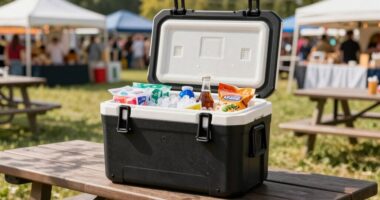
To create an efficient camp kitchen, focus on streamlined processes rather than fancy products. Plan your meals ahead, gather ingredients in advance, and prep everything like chopping vegetables or marinating proteins first. Use clear containers for organization and store perishables properly. Keep frequently used items accessible and separate raw meats to stay safe. By adopting these simple steps, you’ll cook smoothly and avoid clutter—learn more on how process mastery makes all the difference.

Get movie nights delivered free with Prime
- Fast, free delivery on millions of items
- Prime Video, Amazon Music and more included
- Member-only deals all year
Key Takeaways
- Focus on meal planning and prep routines to streamline cooking processes at camp.
- Organize storage with clear, labeled containers and accessible placement for efficiency.
- Prepare ingredients in advance, such as chopping vegetables and marinating proteins, to save time.
- Implement food safety protocols, including proper storage and wildlife prevention, to ensure safety and efficiency.
- Maintain an organized workflow with designated areas for ingredients, tools, and cleanup to minimize chaos.

Ever wondered how a well-organized camp kitchen runs smoothly? It all comes down to effective processes, especially when it comes to meal prep and storage solutions. When you plan your meals ahead of time, you save yourself from chaos during busy cooking moments. Think about what you want to eat, gather all necessary ingredients, and organize them in a way that makes sense. Meal prep is your secret weapon; it allows you to portion out ingredients beforehand, so you don’t waste precious time searching for supplies or cooking items when hunger strikes. You can prepare ingredients in advance, like chopping vegetables or marinating proteins, which streamlines the cooking process at the campsite. This way, you’re not scrambling to assemble everything last minute but instead following a smooth, step-by-step routine.
Equally important is your storage solutions. Proper storage keeps your ingredients fresh, prevents spills, and makes your entire workflow more efficient. Use clear, stackable containers to organize dry goods, snacks, and leftovers, so you can quickly identify what you need without rummaging through clutter. Label each container clearly; it’s a simple step that saves you time and frustration. For perishable items, keep them in a cooler with ice packs, ensuring they stay fresh longer. Position frequently used items at the front of your storage area, so they’re easy to grab when needed. Make sure to keep raw meats separate from other foods to prevent cross-contamination, and always store food in sealed containers to avoid attracting wildlife.
Popular right now

Vitamix 62827 Vita-Prep Blender, Black, 32 oz

De'Longhi Classic Signature Espresso Machine with Adjustable Milk Frother

Dyson Cyclone V10 Origin Cordless Vacuum
As an affiliate, we earn on qualifying purchases.
Frequently Asked Questions
How Can I Minimize Waste in My Camp Kitchen?
To minimize waste in your camp kitchen, you should adopt recycling strategies and composting techniques. Sort recyclables properly and set up designated bins to encourage participation. Compost organic waste like vegetable scraps and coffee grounds, reducing landfill contributions. Plan meals carefully to avoid excess food, and store leftovers properly for later use. These practices help you cut down waste, promote sustainability, and keep your camp kitchen clean and efficient.
What Safety Precautions Are Essential During Camp Cooking?
Your safety’s no small matter—think of it as the backbone of a smooth camping trip. Always practice fire safety by keeping a fire extinguisher nearby and never leaving flames unattended. Prioritize personal hygiene by washing hands regularly and keeping cooking areas clean. Wear appropriate gear, handle hot items carefully, and stay alert to prevent accidents. These precautions safeguard you and ensure everyone enjoys a safe, fun-filled adventure.
How Do I Manage Leftovers Effectively?
To manage leftovers effectively, focus on proper leftover storage by using airtight containers to keep food fresh and prevent spoilage. Label your containers with dates and plan to use leftovers within a few days. Reuse ideas include adding leftovers to salads, soups, or wraps, and repurposing them for breakfast or snacks. This reduces waste, saves time, and guarantees you make the most of your camp cooking efforts.
What Are the Best Methods for Cleaning Camping Cookware?
Think of cleaning your camping cookware like tending a campfire—carefully and steadily. After cooking, scrub your pots and pans with warm water and a gentle brush or sponge. Avoid harsh soaps that can harm the surface. Prioritize campfire safety by ensuring cookware is cool before cleaning. Regular cookware maintenance keeps your gear in top shape, preventing rust and buildup, so your camping adventures stay smooth and enjoyable.
How Can I Organize Ingredients for Quick Access?
To organize ingredients for quick access, set up an efficient prep station with labeled containers or bins for ingredient storage. Arrange items by frequency of use, keeping essentials at eye level or within easy reach. Use clear, stackable containers to see contents easily and prevent clutter. Regularly tidy your prep station, discarding expired items, and replenish supplies promptly. This system helps you work swiftly and keeps your camp kitchen running smoothly.
Conclusion
Remember, a successful camp kitchen isn’t about fancy gadgets; it’s about your process. When you focus on organizing, prepping, and clean-up, you turn chaos into clarity—like turning a jungle into a well-tended garden. Processes shape your experience, making cooking easier, safer, and more enjoyable. So, don’t chase the perfect product—chase the perfect process. Because, in the end, it’s not the tools you hold, but the routines you build that make all the difference.