Behind-the-scenes efforts guarantee that viewing areas, pathways, and toilets are fully accessible by integrating technology, thoughtful design, and staff support. Staff are trained to operate and troubleshoot assistive tools, while regular maintenance keeps everything functioning smoothly. Clear signage, tactile cues, and accessible routes make navigation easier for everyone. These behind-the-scenes actions make your experience more inclusive and seamless, so if you want to learn how these elements come together, keep exploring.
Key Takeaways
- Regular inspections and maintenance ensure assistive technology like ramps, signage, and toilets remain functional and compliant with accessibility standards.
- Staff receive ongoing training to operate, troubleshoot, and guide visitors through accessible paths, viewing areas, and facilities.
- Strategic placement of tactile signage, audio guides, and accessible pathways enhances the overall visitor experience behind the scenes.
- Coordinated planning between designers, maintenance, and staff optimizes the integration of accessible routes, viewing spots, and restroom facilities.
- Continuous updates and proactive problem-solving prevent barriers, ensuring seamless access to viewing points, pathways, and toilets for all visitors.

Accessibility isn’t just about the visible features you see on a website or app; it’s built into the very fabric of design and development processes behind the scenes. When it comes to physical spaces like viewing areas, pathways, and restrooms, this means integrating inclusive principles into every stage of planning and maintenance. To truly make these spaces accessible, you need to understand how assistive technology plays a role and how staff training ensures that everyone’s needs are met effectively.
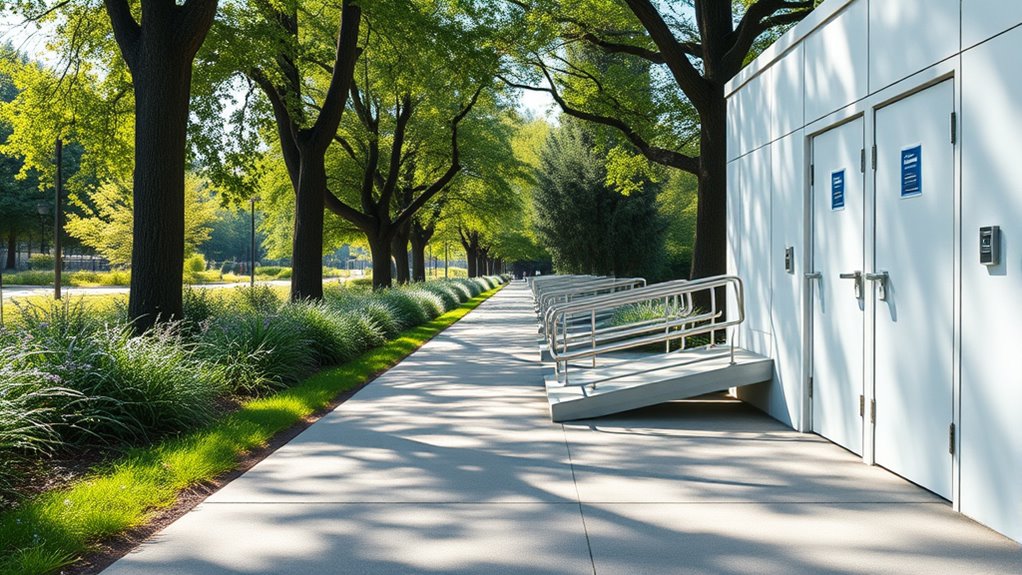
Assistive technology is essential in making viewing areas and pathways usable for people with disabilities. For example, installing audio guides or tactile signage helps visually impaired visitors navigate spaces confidently. Automatic doors and ramps equipped with sensors allow easier access for wheelchair users, and clear, contrasting markings on steps and handrails provide additional cues. Behind the scenes, designing and maintaining these features requires a nuanced understanding of assistive tech and a commitment to keeping it functional. Regular inspections and updates ensure that these tools operate smoothly, preventing frustrations and barriers for users.
Assistive tech like audio guides, tactile signage, and ramps ensures accessible, barrier-free viewing and pathways for all visitors.
Staff training is equally critical. Your team must understand how to support visitors who rely on assistive technology or have specific accessibility needs. Proper training empowers staff to assist without overstepping or creating discomfort. For instance, staff should know how to operate or troubleshoot assistive devices, guide visitors to accessible routes, and communicate effectively with those who may have sensory or cognitive impairments. This education isn’t a one-time event; ongoing training keeps staff informed about new tools, standards, and best practices. Well-trained staff act as the backbone of an accessible environment, ensuring that visitors feel welcomed, safe, and supported at every step—whether they’re viewing a presentation, walking along a pathway, or using the restrooms.
Behind the scenes, accessibility planning involves careful coordination between designers, maintenance teams, and staff. Every decision—from the placement of assistive technology to the layout of pathways—has a direct impact on user experience. Continuous staff training ensures your team can promptly address issues, provide accurate information, and adapt to evolving accessibility standards. Additionally, understanding projector technology and its role in accessible environments can further enhance interpretive experiences for all visitors. By investing in these behind-the-scenes efforts, you’re not just ticking boxes—you’re creating an environment where everyone can participate fully and independently. Accessibility isn’t static; it’s a dynamic process that requires ongoing commitment, awareness, and proactive measures. When you prioritize assistive technology and staff training, you lay the groundwork for spaces that truly serve all visitors, making inclusion a fundamental part of your facility’s fabric.
Frequently Asked Questions
How Are Accessibility Features Tested Before Installation?
You can expect accessibility features to undergo rigorous testing protocols before installation. First, specialists conduct accessibility audits to identify potential issues and guarantee compliance with standards. Then, they simulate real-world scenarios, checking pathways, viewing areas, and facilities for usability by diverse users, including those with disabilities. This thorough process helps catch problems early, allowing adjustments to be made, so the features are fully functional and inclusive once installed.
Who Is Responsible for Maintaining Accessibility Infrastructure?
You’re responsible for maintaining accessibility infrastructure, guaranteeing it meets policies and stays functional. Did you know that over 60% of accessibility issues are due to poor maintenance? Accessibility policies clearly define who handles upkeep, typically facility managers or designated staff. You need to regularly inspect, repair, and update features like ramps, toilets, and pathways to ensure everyone can access facilities safely and comfortably.
Are Staff Trained in Assisting Visitors With Disabilities?
Yes, staff are trained in assisting visitors with disabilities. You’re encouraged to participate in regular staff training that focuses on accessibility awareness, ensuring you understand how to support all visitors effectively. This training covers proper communication, safe assistance techniques, and awareness of accessibility needs, so you can confidently help visitors navigate paths, viewings, and toilets. Your proactive approach helps create a welcoming, inclusive environment for everyone.
How Is Feedback on Accessibility Improvements Collected?
You can share your accessibility feedback through designated mechanisms like comment forms, surveys, or online portals. Staff often facilitate this process, encouraging honest input. Accessibility audits regularly review these feedback mechanisms to identify areas for improvement. Your insights help guarantee the site remains inclusive, allowing staff to make targeted adjustments based on visitor suggestions. This ongoing dialogue ensures accessibility enhancements stay effective and responsive to visitor needs.
What Are Future Plans for Enhancing Accessibility Behind the Scenes?
You can expect future plans to focus on technology upgrades and increased community engagement. We’re working on implementing new tools to improve accessibility behind the scenes, making it easier for everyone to navigate. Additionally, your feedback will help us tailor these upgrades to meet your needs better. By involving the community, we aim to create a more inclusive environment that continually evolves based on your insights and experiences.
Conclusion
As you explore the behind-the-scenes world of accessibility, you realize that every path, viewing area, and toilet is designed with intention—sometimes revealing surprising details. It’s no coincidence that these features often go unnoticed until you need them most, reminding you how important accessibility truly is. When you take a moment to see the effort woven into these spaces, you’ll appreciate the quiet work that makes everyone’s experience better—sometimes, just by coincidence, the most overlooked details matter most.