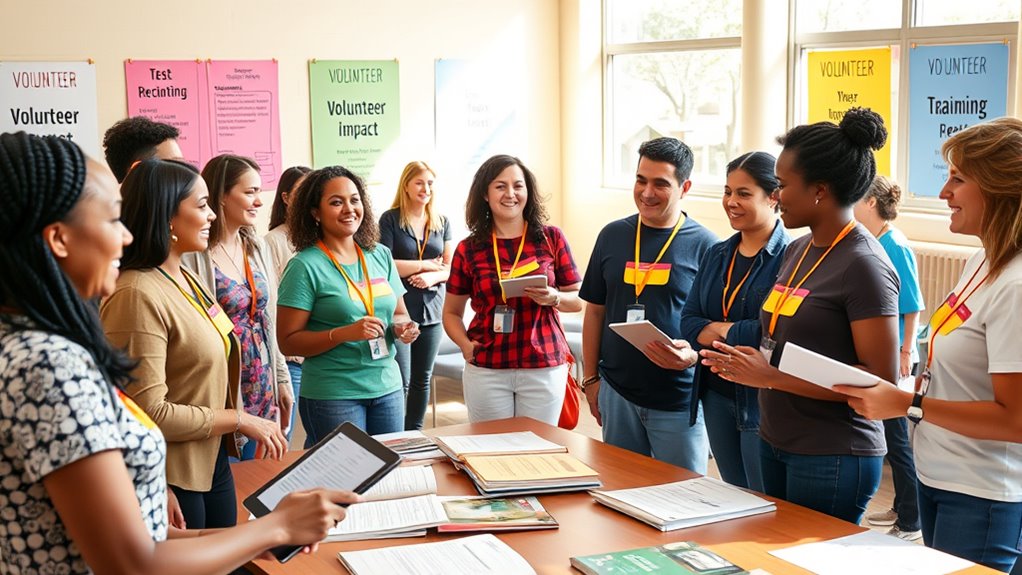

To build successful volunteer programs, focus on strategic recruiting by clearly communicating your mission and offering meaningful incentives like recognition or skill-building opportunities. Provide thorough training to guarantee volunteers feel confident and prepared. To keep volunteers engaged, use genuine recognition, personalized appreciation, and tangible rewards that foster a sense of belonging and purpose. If you want to learn how to create a thriving volunteer team, explore the key strategies that make a difference.

Get movie nights delivered free with Prime
- Fast, free delivery on millions of items
- Prime Video, Amazon Music and more included
- Member-only deals all year
Key Takeaways
- Effective volunteer recruitment involves clear messaging, targeted outreach, and highlighting the benefits and impact of volunteering.
- Comprehensive training programs equip volunteers with necessary skills, boost confidence, and foster commitment.
- Incentives like recognition, certificates, and skill development opportunities motivate volunteers to stay engaged.
- Regular recognition and appreciation reinforce volunteers’ value, increasing retention and fostering a sense of community.
- Creating a positive environment with ongoing support and meaningful incentives encourages long-term volunteer involvement.

Have you ever wondered how you can make a meaningful difference in your community? One powerful way is by engaging in volunteer programs that not only benefit others but also bring personal fulfillment. When you start volunteering, it’s crucial to understand how organizations motivate and retain dedicated individuals like you. Volunteer incentives and volunteer recognition play critical roles in creating a rewarding experience that encourages ongoing commitment. These strategies show volunteers that their efforts are valued and appreciated, making it more likely that they’ll stay involved long-term.
Discover how volunteer incentives and recognition foster lasting community engagement and personal fulfillment.
Volunteer incentives don’t always have to be monetary. Many organizations offer tangible rewards such as certificates, gift cards, or exclusive access to events. But more often, incentives are about recognition and appreciation. For example, public acknowledgment during events or newsletters highlights your contributions, boosting your sense of achievement and belonging. These gestures reinforce that your work makes a difference, motivating you to continue your service. You might also find that some organizations offer professional development opportunities, like workshops or training sessions, which can enhance your skills and resume, adding another layer of motivation.
Volunteer recognition is equally essential. Genuine acknowledgment from leadership or peers makes you feel seen and appreciated. This can take the form of personalized thank-you notes, awards, or shout-outs on social media. When organizations prioritize volunteer recognition, they foster a positive environment where your efforts are celebrated, not taken for granted. Recognition isn’t just about feeling good; it’s a powerful motivator that sustains your enthusiasm and commitment. It reminds you that your time and energy are valued, encouraging you to invest even more in your volunteer role.
As you become more involved, you’ll notice that organizations that implement thoughtful volunteer incentives and recognition programs tend to retain volunteers longer. These initiatives help build a sense of community and loyalty. When you see your efforts appreciated, you naturally develop a stronger connection to the cause and the organization’s mission. This sense of belonging motivates you to recruit friends or family, spreading the impact even further. In essence, recognizing and incentivizing volunteers creates a cycle of engagement that benefits everyone involved.
volunteer recognition certificates
As an affiliate, we earn on qualifying purchases.
As an affiliate, we earn on qualifying purchases.
Frequently Asked Questions
How Do We Measure Volunteer Program Success?
You measure volunteer program success by tracking volunteer engagement levels, such as participation rates and retention. Conduct program evaluation through surveys and feedback to understand volunteer satisfaction and impact. Additionally, assess how well volunteers meet your program’s goals and objectives. By combining engagement metrics and evaluation results, you gain a clear picture of your program’s effectiveness, identify areas for improvement, and celebrate your volunteers’ contributions.
What Legal Considerations Are Involved in Volunteer Programs?
You need to guarantee legal compliance by understanding local labor laws and volunteer regulations. Address liability issues by providing appropriate insurance coverage and clearly defining volunteer roles and responsibilities. Draft detailed agreements that outline expectations and limits of liability. Regularly review your policies to stay current with legal standards. By proactively managing these legal considerations, you protect your organization and create a safe, compliant environment for volunteers.
How Can We Attract Diverse Volunteer Demographics?
You need to hit the nail on the head by practicing inclusive outreach and cultural competency. Reach out through diverse channels like community centers, social media, and local events tailored to different backgrounds. Highlight the impact of varied perspectives within your program. By showing genuine respect and understanding of different cultures, you’ll attract a broader, more diverse volunteer base that enriches your organization and strengthens community ties.
What Are Effective Ways to Recognize Volunteer Contributions?
You can effectively recognize volunteer contributions by implementing targeted recognition strategies like personalized thank-you notes, public acknowledgments, and awards. Volunteer appreciation events also boost morale and make volunteers feel valued. Regularly celebrating milestones and highlighting individual achievements fosters a sense of belonging. These strategies demonstrate your genuine appreciation, motivate continued engagement, and strengthen your volunteer community, ensuring they feel recognized and inspired to contribute wholeheartedly.
How Do We Handle Volunteer Turnover and Burnout?
Imagine a garden where volunteers bloom with enthusiasm, but without proper care, they can wilt. To handle volunteer burnout and turnover prevention, you need to recognize signs early and offer support like flexible schedules and appreciation. Regular check-ins and meaningful tasks help maintain their passion. By nurturing your volunteers, you keep your program vibrant, preventing burnout and ensuring your team stays committed and energized for the long haul.
volunteer training workshop materials
As an affiliate, we earn on qualifying purchases.
As an affiliate, we earn on qualifying purchases.
Conclusion
As you step into the world of volunteer programs, imagine the ripple effect your efforts create—smiles lighting up faces, hearts warmed by kindness, and communities growing stronger with each act. Your dedication plants seeds of hope, nurturing a future where compassion blooms. Keep recruiting, training, and retaining with passion, knowing that your commitment transforms lives, including your own. Together, you weave a tapestry of change, brightening the world one volunteer at a time.
As an affiliate, we earn on qualifying purchases.
As an affiliate, we earn on qualifying purchases.
Halloween Picks
halloween
As an affiliate, we earn on qualifying purchases.