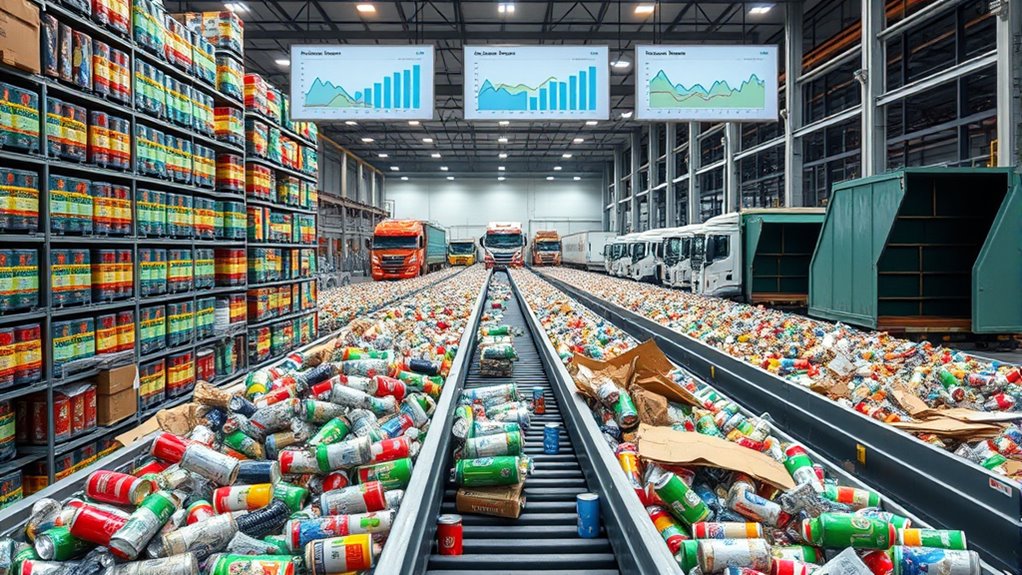

To handle waste management at scale effectively, you need to implement advanced sorting technologies, such as AI-powered systems and sensor-based machinery, to improve recycling quality and reduce landfill waste. Optimize hauling routes with real-time data to cut emissions and costs, while ensuring that collection schedules prevent overflows. Accurate reporting and data management help track progress and maintain compliance. If you keep exploring, you’ll discover more strategies to streamline your waste management operations.
Key Takeaways
- Implement AI-powered sorting systems to enhance recycling efficiency and material recovery at scale.
- Optimize hauling routes using data-driven planning to reduce emissions and operational costs.
- Utilize digital reporting tools for accurate data collection, compliance, and transparency.
- Adopt advanced security measures to safeguard waste facility operations and sensitive information.
- Incorporate innovative strategies to reduce landfill volume and extend waste management sustainability.
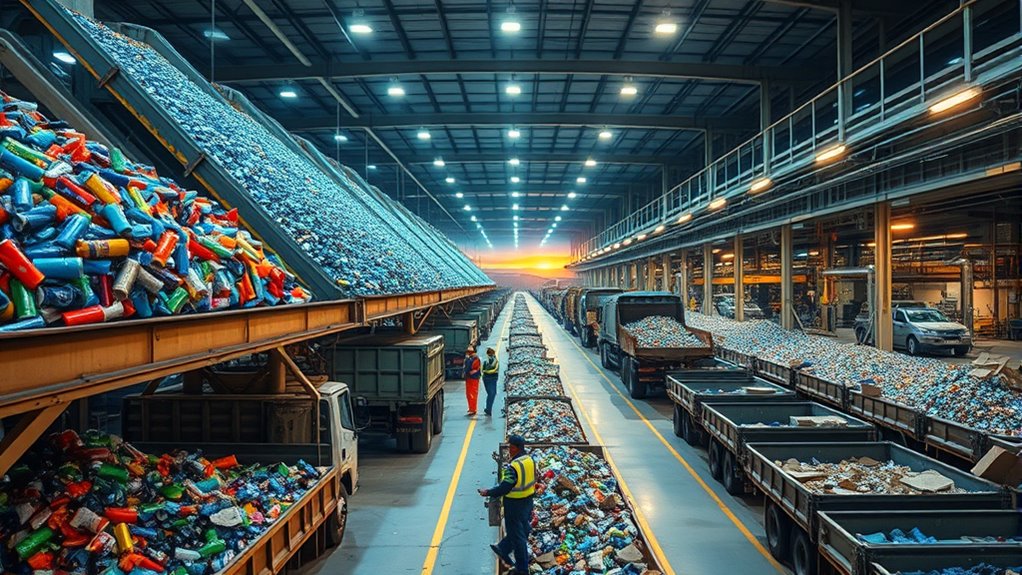
Managing waste at scale presents a complex challenge that demands innovative solutions and coordinated efforts. As someone involved in waste management, you recognize that effective sorting, hauling, and reporting are essential for addressing this challenge. Recycling innovation plays a pivotal role in transforming how waste is processed, making it possible to recover more materials and reduce the overall volume sent to landfills. Advanced sorting technologies, such as AI-powered systems and sensor-based machinery, allow you to efficiently separate recyclables from general waste, increasing the quality and quantity of materials that can be reused. This not only boosts recycling rates but also markedly contributes to landfill reduction, easing the burden on landfills and extending their lifespan. The adoption of advanced security systems in waste facilities can also enhance safety and prevent theft or vandalism, ensuring continuous operation.
When it comes to hauling, you need to optimize routes and schedules to minimize fuel consumption and emissions. Implementing data-driven route planning tools helps you reduce unnecessary trips, saving costs and lowering your environmental footprint. Efficient hauling means less congestion and pollution, which benefits communities and aligns with sustainability goals. Additionally, integrating smart technology into collection trucks enables real-time monitoring of waste levels, ensuring pickups happen only when necessary. This proactive approach prevents overflows and reduces the number of trips needed, further supporting landfill reduction efforts.
Reporting forms the backbone of transparent waste management practices. As someone managing these operations, you understand the importance of accurate data collection and analysis. Proper reporting allows you to track recycling innovation progress, measure landfill reduction outcomes, and identify areas for improvement. Digital tools and dashboards help you visualize key metrics, streamline compliance with regulations, and communicate results to stakeholders. Transparent reporting fosters trust and accountability, encouraging community participation and support for waste management initiatives. Furthermore, staying informed about new security measures can help protect sensitive data and infrastructure involved in waste management systems.
Frequently Asked Questions
How Is Data Privacy Maintained in Waste Reporting Systems?
You guarantee data privacy in waste reporting systems by implementing strong data encryption, protecting sensitive information during storage and transmission. You also use strict access controls, limiting system access to authorized personnel only. Regular audits and secure authentication methods further safeguard data. These measures help prevent unauthorized access, ensuring your waste data remains confidential and secure throughout the reporting process.
What Are the Latest Innovations in Waste Sorting Technology?
You’ll find that the latest innovations in waste sorting technology include robotic sorting systems equipped with AI waste detection. These advanced robots can quickly identify and separate recyclables from waste streams with high accuracy. AI enhances their ability to adapt to different materials, improving efficiency and reducing contamination. This combination streamlines sorting processes, minimizes human error, and accelerates recycling efforts, making waste management more sustainable and cost-effective.
How Do Regulations Vary Across Different Regions for Waste Hauling?
Regulations for waste hauling vary across regions like a patchwork quilt, reflecting regional disparities. You need to navigate diverse rules on vehicle emissions, licensing, and disposal methods to guarantee regulatory compliance. In some areas, strict standards demand advanced tracking systems, while others prioritize cost-efficiency. Staying informed about local policies helps you adapt operations smoothly, avoiding penalties and promoting sustainable waste management practices across different jurisdictions.
What Training Is Required for Waste Management Personnel?
You need specialized training to handle waste management safely, especially when dealing with hazardous materials. Your training should cover safety protocols, proper handling procedures, and emergency responses. You’ll learn how to identify hazardous substances, use protective equipment, and follow regulations to prevent accidents. Staying updated on safety standards guarantees you protect yourself, your team, and the environment while efficiently managing waste at scale.
How Can Small Communities Implement Scalable Waste Management Solutions?
You can implement scalable waste management solutions in your small community by focusing on community engagement and effective funding strategies. Start by educating residents about recycling and composting, encouraging participation. Seek grants or local government support to fund necessary infrastructure. Collaborate with local organizations to develop sustainable practices and leverage volunteer efforts. This approach helps you create a manageable, adaptable waste system that grows with your community’s needs.
Conclusion
Now that you understand the importance of sorting, hauling, and reporting, you see how each step connects and amplifies the other. You realize that efficient waste management relies on clear organization, timely transportation, and accurate data. By mastering these elements, you’re not just managing waste—you’re creating a cleaner environment, a healthier community, and a sustainable future. Embrace the process, stay committed, and make every action count in your waste management journey.