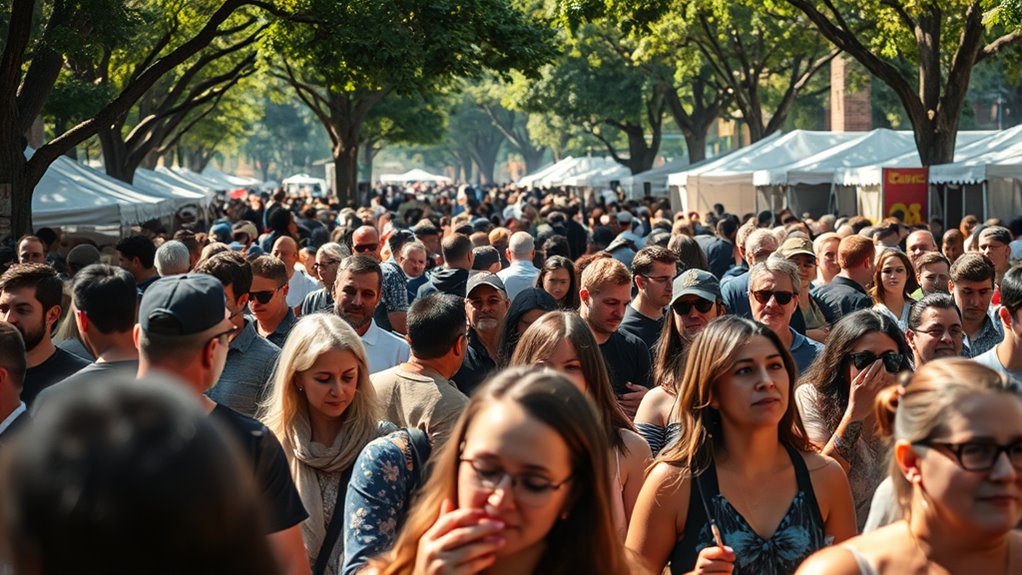

In crowded settings, respect others’ personal space by moving intentionally and politely saying “excuse me” when passing. Keep your movements smooth to avoid bumping into people and be mindful of blocking views or obstructing others’ sightlines. Show consideration by adjusting your pace, acknowledging boundaries, and respecting social cues. Maintaining awareness helps create a comfortable environment for everyone. To guarantee you’re practicing proper crowd etiquette and fostering mutual respect, continue exploring essential tips.
Open a free Amazon Business account
Business pricing, bulk buying and tax-exempt orders.
As an affiliate, we earn on qualifying purchases.
Key Takeaways
- Respect personal space by avoiding unnecessary contact and using polite phrases like “excuse me” when passing others.
- Maintain visibility by not blocking others’ views and adjusting your position if needed.
- Be considerate by observing body language and respecting boundaries, both physical and emotional.
- Adapt your behavior to crowd density, slowing down and giving others room to breathe.
- Foster a welcoming environment through kindness, patience, and mindful awareness of surroundings.

Moving through crowds can be challenging, but practicing good etiquette helps guarantee everyone feels comfortable. When steering through busy spaces, respecting personal space becomes essential. You might be in a rush, but remember that everyone around you is trying to move about as well. Keep your movements deliberate and avoid invading others’ personal space. If you need to pass someone, do so politely by saying “excuse me” or giving a gentle nod. This shows consideration and helps prevent discomfort or accidental contact. Pay attention to body language—if someone steps back or shifts away, respect their boundaries without pressing further. Good crowd steering involves being aware of your surroundings and adjusting your pace accordingly. If the crowd is dense, slow down and give others room to breathe; rushing or pushing only increases tension and discomfort. Use your peripheral vision to gauge how much space you’re taking up and aim to keep your movements smooth and predictable. This way, you help maintain a sense of order and ease for everyone involved. Noticing the size and density of the crowd can also help you better adapt your behavior and avoid causing congestion or frustration.
Visibility is another important aspect of crowd etiquette. When you’re in a group or near someone who might need to see ahead, avoid blocking their view. For example, if you’re standing in line or at an event, don’t stand directly in front of someone who’s trying to see or hear. Move aside slightly or adjust your position to allow others to have a clear line of sight. If you’re carrying something large or bulky, be mindful of how it might obstruct others’ view or movement. Offering to step aside or shift your position shows respect and consideration. In crowded spaces, keeping a low profile—such as avoiding loud talking, unnecessary noise, or sudden movements—helps maintain a comfortable environment for everyone. Remember, visibility isn’t just about seeing; it’s also about being seen and acknowledged as a respectful participant in the crowd.
Respect plays a crucial role in crowd etiquette. Treat everyone with kindness and patience, recognizing that everyone’s experience is different. If someone bumps into you, a simple apology goes a long way. If you accidentally invade someone’s personal space, acknowledge it politely without making a big deal out of it. Respect also means honoring personal boundaries, not just physically but emotionally as well. Avoid intrusive questions or gestures that could make others uncomfortable. When in doubt, observe and follow the lead of those around you—most people appreciate when others show awareness of social cues. By practicing these principles—mindful crowd steering, respecting personal space, and maintaining visibility—you create a more pleasant environment for yourself and everyone else. Good etiquette in crowds isn’t just about rules; it’s about fostering mutual respect and consideration, making even the busiest places feel more welcoming and comfortable.
personal space awareness wristband
As an affiliate, we earn on qualifying purchases.
As an affiliate, we earn on qualifying purchases.
Frequently Asked Questions
How Should I Handle Personal Space in Crowded Public Transport?
You should prioritize personal space awareness on crowded public transport by avoiding unnecessary physical contact and respecting others’ physical boundaries. Keep a safe distance when possible, and be mindful of your movements to prevent accidental invasions of someone’s space. If you’re standing close, stand still and steady, and avoid leaning on others. Small gestures like offering your seat or stepping aside can help maintain comfort and show respect for everyone’s personal boundaries.
What Is the Best Way to Politely Excuse Myself in a Crowded Event?
You can politely excuse yourself by gently catching someone’s eye, offering a warm smile, and saying, “Excuse me, I need to step away for a moment.” This respects personal space boundaries while signaling your need to leave. To make a smooth exit, use polite gestures like a nod or small wave, and say thank you. This approach guarantees your departure is courteous and unobtrusive in a crowded event.
How Can I Avoid Blocking Views at Concerts or Performances?
To avoid blocking views at concerts or performances, you should pay attention to audience positioning and choose your spot wisely. Stand or sit slightly off-center or towards the back if possible, ensuring you don’t obstruct stage visibility for others. Keep your arms and belongings close, and avoid leaning forward or moving around unnecessarily. Being considerate of others’ sightlines helps everyone enjoy the show while maintaining good etiquette.
What Are Respectful Behaviors When Taking Photos in Crowded Places?
When taking photos in crowded places, don’t rock the boat—be mindful of photo composition and respect privacy. Keep your camera steady and avoid blocking others’ views, especially during events. Ask permission before snapping close-ups of people, and be considerate if someone seems uncomfortable. Remember, a little courtesy goes a long way; you’re in their space, so respect their right to enjoy the moment without feeling exposed or overlooked.
How Do Cultural Differences Influence Crowd Etiquette?
Cultural differences greatly influence crowd etiquette by shaping how you perceive personal boundaries and acceptable behaviors. In some cultures, close proximity and physical touch are normal, while others value more personal space and limiting eye contact. You should observe local customs and adapt accordingly, respecting cultural norms about space and visibility. This awareness helps you avoid misunderstandings and shows respect, ensuring positive interactions in diverse crowded environments.
As an affiliate, we earn on qualifying purchases.
Conclusion
As you navigate crowded spaces, remember that respecting others’ space and visibility isn’t just etiquette—it’s a reflection of your kindness. Coincidentally, the small act of being mindful often leads to smoother, more enjoyable encounters for everyone. When you choose respect over impatience, you create a ripple effect, making crowds feel less overwhelming. So next time you’re in a sea of people, trust that your courtesy can turn chaos into comfort—sometimes, it’s the simplest gestures that matter most.
portable visibility sign for crowded events
As an affiliate, we earn on qualifying purchases.
As an affiliate, we earn on qualifying purchases.
compact noise-canceling earplugs
As an affiliate, we earn on qualifying purchases.
As an affiliate, we earn on qualifying purchases.
Fall Picks
fall essentials
As an affiliate, we earn on qualifying purchases.