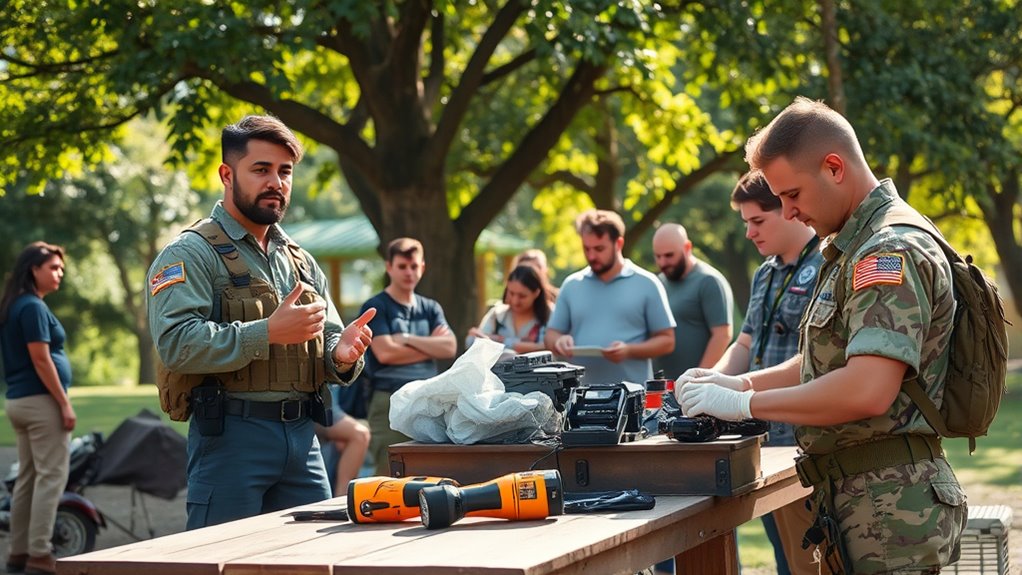

To prevent stress within your team, clearly define roles like the lead, quartermaster, and medic. As the lead, guide your team with transparent goals and open communication. The quartermaster manages resources and keeps everyone informed about supplies, avoiding shortages. The medic fosters trust and addresses emotional needs, creating a supportive environment. When roles are clear and communication flows smoothly, stress decreases. Continuing to explore how these roles work together can help you build a more resilient team.
Key Takeaways
- Clear role definitions for lead, quartermaster, and medic reduce confusion and prevent overlapping responsibilities.
- Effective communication strategies from each role foster transparency and team cohesion.
- The lead guides goals and clarifies expectations, minimizing misunderstandings and stress.
- The quartermaster manages resources efficiently, preventing shortages and delays that cause frustration.
- The medic maintains team morale and resolves conflicts, creating a supportive environment that reduces stress.

When working in a group, assuming specific roles can markedly reduce stress and improve overall productivity. One of the key factors in achieving this is establishing clear communication strategies and role clarity. When everyone knows their responsibilities and how they should interact, misunderstandings diminish, and the team functions more smoothly. As you step into the role of a Lead, your main focus is guiding the team toward common goals. You set the tone for communication strategies by ensuring everyone understands the objectives and their individual tasks. Clarifying your role early prevents overlaps and confusion, allowing team members to approach their work with confidence. Effective communication from the lead fosters an environment where questions are welcomed, and feedback is constructive, which keeps everyone aligned.
Clear roles and communication reduce stress and boost team efficiency, with the Lead guiding everyone toward shared goals.
As the Lead, you also need to encourage open dialogue. This means creating channels where team members can voice concerns or ideas without hesitation. Clear communication strategies involve regular updates and check-ins, making sure everyone stays on the same page. When your role is defined with role clarity, you can delegate tasks efficiently, trusting that your team members understand what’s expected of them. This reduces stress because no one feels lost or overwhelmed, and it prevents last-minute surprises. When everyone knows their part and how it connects to the bigger picture, the team operates with purpose and coordination. Additionally, understanding portable camping gear and its maintenance can help prevent resource shortages, ensuring smooth operations during outdoor activities.
The Quartermaster role focuses on resource management, but it’s equally essential in stress prevention. Your job is to ensure that materials, tools, or information are available when needed. Clear communication strategies are essential here too, as you must convey what resources are necessary and coordinate their distribution. Role clarity means everyone understands who manages supplies, so there’s no duplication of effort or miscommunication. When you communicate effectively about resource needs and updates, the team avoids delays and frustration, maintaining a steady workflow. Knowing your responsibilities and having transparent communication channels also empower others to report shortages or issues promptly, reducing last-minute crises.
The Medic role is indispensable for maintaining team morale and addressing conflicts or emotional stress. Your role involves listening actively and offering support, which requires excellent communication strategies. When you’re clear about your purpose, you create an environment where team members feel safe sharing their concerns. Role clarity helps you understand your boundaries—knowing when to intervene, mediate, or suggest professional help. When everyone understands your role as a supporter rather than an authority figure, it fosters trust. Open and honest communication creates a safe space, minimizing misunderstandings and emotional strain. When team members feel supported and understood, stress levels decrease, and cohesion improves. By defining and embracing your role with clarity and effective communication, you help cultivate a resilient, stress-free team environment.
Frequently Asked Questions
How Do These Roles Adapt During Unexpected Team Crises?
During unexpected crises, you adapt by embracing role flexibility, stepping into new responsibilities as needed. You prioritize clear crisis communication, ensuring everyone stays informed and coordinated. As Lead, you guide decision-making; as Quartermaster, you manage resources efficiently; and as Medic, you provide immediate support. Your ability to shift roles quickly and communicate effectively helps the team stay resilient and address challenges head-on, preventing stress from escalating.
What Skills Are Essential for Effective Leadership in Stress Prevention?
To lead effectively in stress prevention, you need strong communication skills and emotional intelligence. You must clearly convey expectations, listen actively, and respond empathetically to team members’ concerns. Recognizing emotional cues helps you address issues early and foster a supportive environment. By staying calm and adaptable, you can guide your team through challenges, reducing stress and maintaining cohesion. These skills are essential for resilient and effective leadership.
How Can Teams Assign These Roles in Diverse Group Settings?
Think of your team as a tapestry, each thread essential for strength. You can assign roles through role rotation, giving everyone a chance to lead, manage supplies, or care for the team. Consider cultural considerations to guarantee roles respect diverse perspectives and skills. By rotating roles and honoring differences, you create a flexible, resilient team that adapts to stress and maintains harmony amidst challenges.
Are There Risks Associated With Over-Reliance on Specific Roles?
Over-relying on specific roles can lead to role dependency, which risks creating bottlenecks and reducing team flexibility. You might find yourself overly dependent on the Lead, Quartermaster, or Medic, risking burnout or gaps if they’re unavailable. To manage this, practice risk management by cross-training team members and encouraging shared responsibilities, ensuring the workload remains balanced and the team stays adaptable in any situation.
How Do These Roles Influence Team Cohesion Under Pressure?
You find that clear roles like Lead, Quartermaster, and Medic boost team cohesion under pressure by promoting role clarity and streamlining team communication. When everyone understands their responsibilities, confusion decreases, and collaboration improves. This clarity fosters trust and resilience, helping your team stay focused and effective during stressful situations. As a result, the team works more cohesively, supporting each other and maintaining performance despite the pressure.
Conclusion
By embracing roles like lead, quartermaster, and medic, you can turn chaos into calm, chaos that would make a hurricane look like a gentle breeze. When you step into these roles, stress doesn’t just fade—it runs for the hills, never to return. Imagine holding the entire group’s stability in your hands, transforming panic into peace with a single decision. These roles aren’t just helpful; they’re your secret superpowers against stress’s unstoppable storm.